RichaR GobouT: Light, Perception, and the Evolving Image
A Five-Decade Inquiry
RichaR GobouT’s current body of work continues an investigation into light, perception, and the changing life of the image that began in the early 1970s. Developed in a Palm Beach County studio, the work brings together analog photography, digital imaging, tactile mixed-media construction, and artist-directed curation. Rather than treating these as separate practices, GobouT works across them as parts of a single, evolving approach to image-making.
The pieces are built from aluminum panels, acrylic spray, pigment, archival photographic material, and layered digital composites. Color, vibration, and material surface are developed together, producing works that move between photographic trace, digital construction, and physical objecthood. Film, Kodachrome, digital technologies, and contemporary algorithmic tools all remain active within this larger lineage.
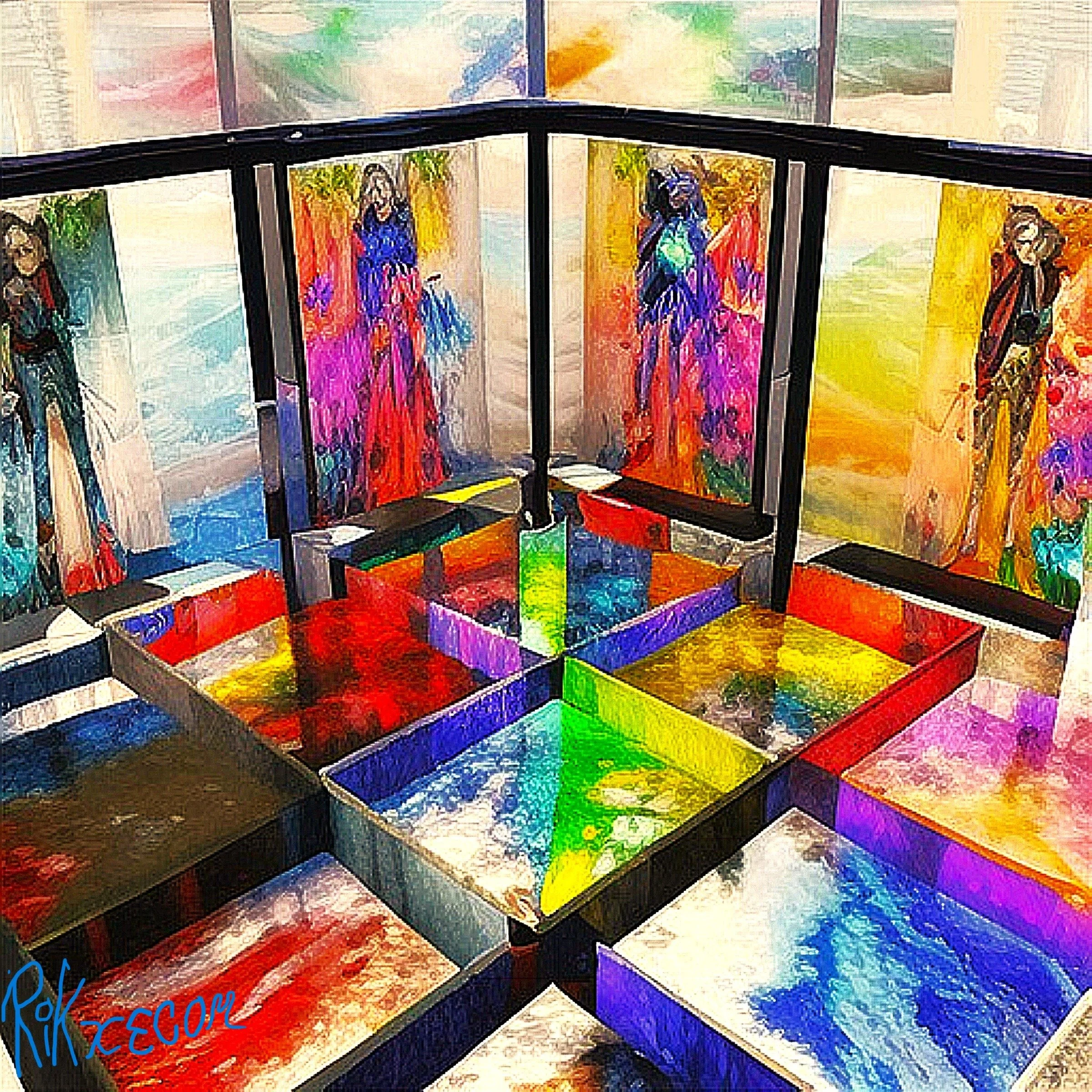
Completed Series
The final rendition satisfying my passion
The practice is also rooted in GobouT’s early experience of medical immobilization related to Marfan Syndrome. During that period, drawing became a way of perceiving and responding to the world. That experience established an enduring relationship between image-making, resilience, structure, and light, one that continues to inform both the work’s conceptual concerns and its multisensory dimension.
The Initial Structural Impulse
A work often begins with an encounter: a fragment of light, a remembered vibration, a photographic trace, or an image drawn from GobouT’s extensive archive. This first element is isolated and studied before it develops into a larger composition.
The earliest version may be a raw digital composite, a scanned Kodachrome fragment, or a minimal RGB field. At this stage, the image functions as what GobouT describes as a visual skeleton, holding the initial energy without yet determining the final work. The process begins with structure, but not with a fixed image.
From there, GobouT moves through a hybrid sequence that combines method and intuition. Digital compositing, archival photography, aluminum-surface preparation, pigment layering, and curatorial decisions are brought into relation gradually. The work’s central “frequency,” its chromatic tension, spatial rhythm, and luminous presence, remains the guiding condition as other aspects of the image are adjusted or removed.
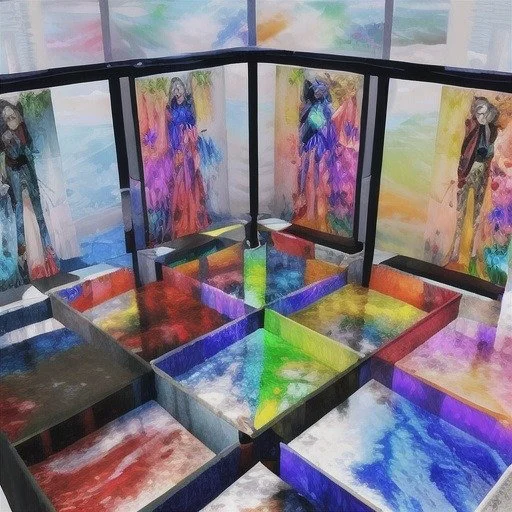
Early Work
Early base formation
Literal reference is often abandoned early. Representational anchors or visual elements that restrict the move toward abstraction are set aside so that the image can resolve through light, color, and spatial relation rather than subject matter alone.
Digital Architecture and Tactile Intervention
GobouT describes the work as evolving through distinct but fluid stages. A seed image, archival photograph, Kodachrome memory, or fragment of light is followed by an architectural phase of digital compositing, spatial calibration, and chromatic mapping. This stage establishes the image’s internal structure and determines how color and form will operate across the surface.
Tactile interventions then deepen the work’s material presence. Aluminum is textured, pigment is layered, acrylic spray is applied, and surfaces may be abraded. These actions do not simply add texture. They alter how the image holds light, how it is encountered physically, and how digital and analog elements are reconciled within a single panel.
Material constraints remain active collaborators. The hardness of aluminum, the behavior of acrylic spray, and the unpredictability of digital artifacts each influence the direction of a piece. GobouT does not regard these conditions as obstacles to overcome. They provide information, redirecting the work toward what the artist considers its most essential state.
Subtraction is often the decisive operation. A composition may change through the removal of representational elements or through an unexpected chromatic shift that reorients its structure. Works may also be revisited or restarted months or years later, allowing another layer of meaning to emerge.
Rhythm, Environment, and Continuity
A work begins to feel resolved when its internal rhythm stabilizes, when light, structure, and chromatic tension align into what GobouT calls a coherent field. The image may have moved substantially from its original form, but it remains connected to the initial impulse through its underlying frequency.
The studio environment shapes this process. Long quiet intervals, ambient sound, and changing light influence chromatic choices, while routine and repetition establish continuity across the wider body of work. This attention to duration is important. The work is not understood as a singular technical result, but as part of a practice sustained across materials, technologies, and time.
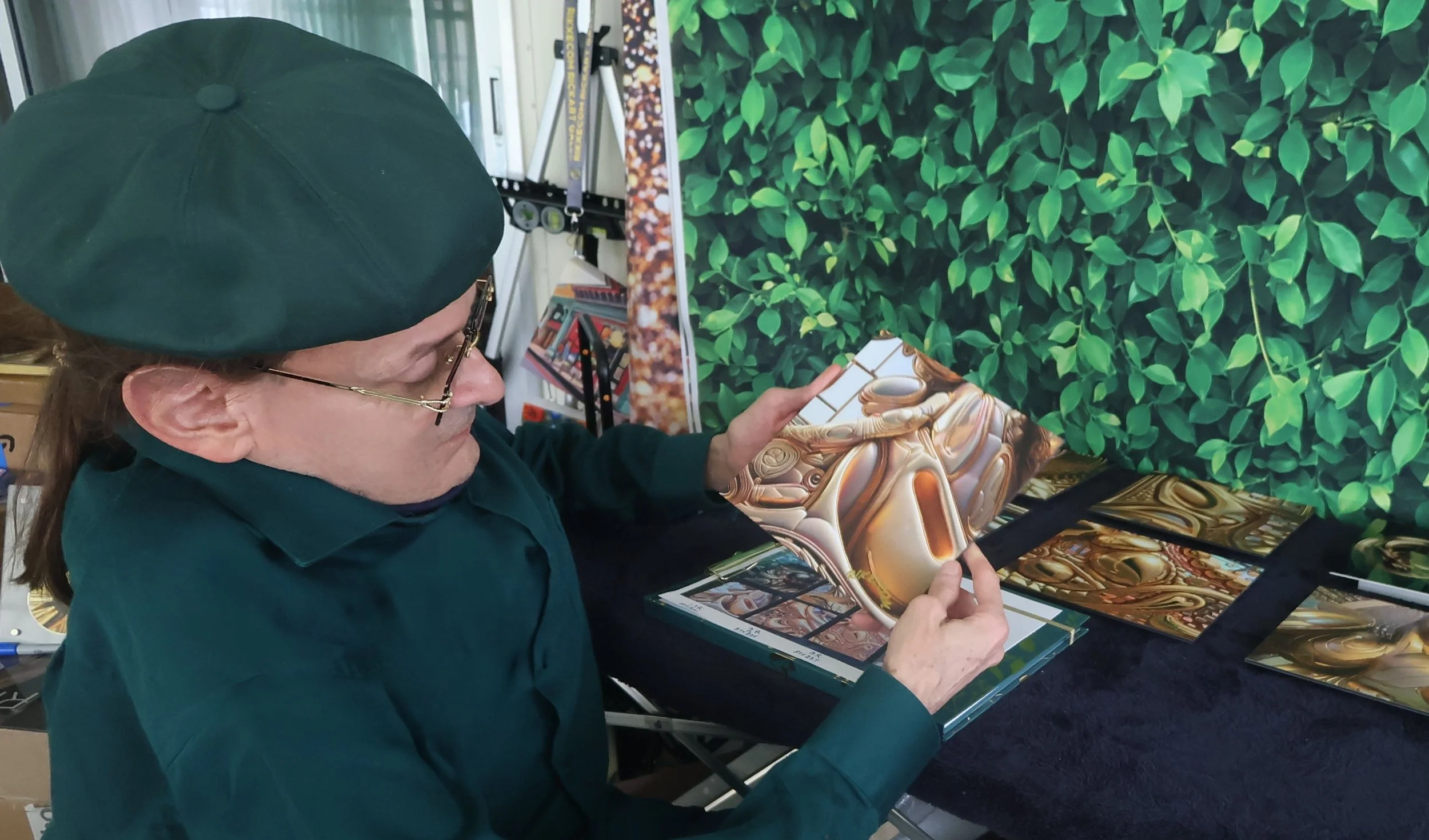
Work in Progress
GobouT’s authorship is therefore hybrid in a precise sense. The work is made with multiple technologies, but also across their histories. Analog photography, digital imaging, and mixed-media construction are not contrasted as old and new. They are treated as mutually informing methods within a continuous practice.
Image-Making as Ongoing Investigation
For GobouT, the image is not fixed once it has been made. It remains a living field, changing in relation to the artist’s own evolving perception and to the tools available at a given time. This view also informs the work’s consideration of visually impaired audiences, extending the image beyond a purely optical encounter and toward material, sensory, and spatial experience.
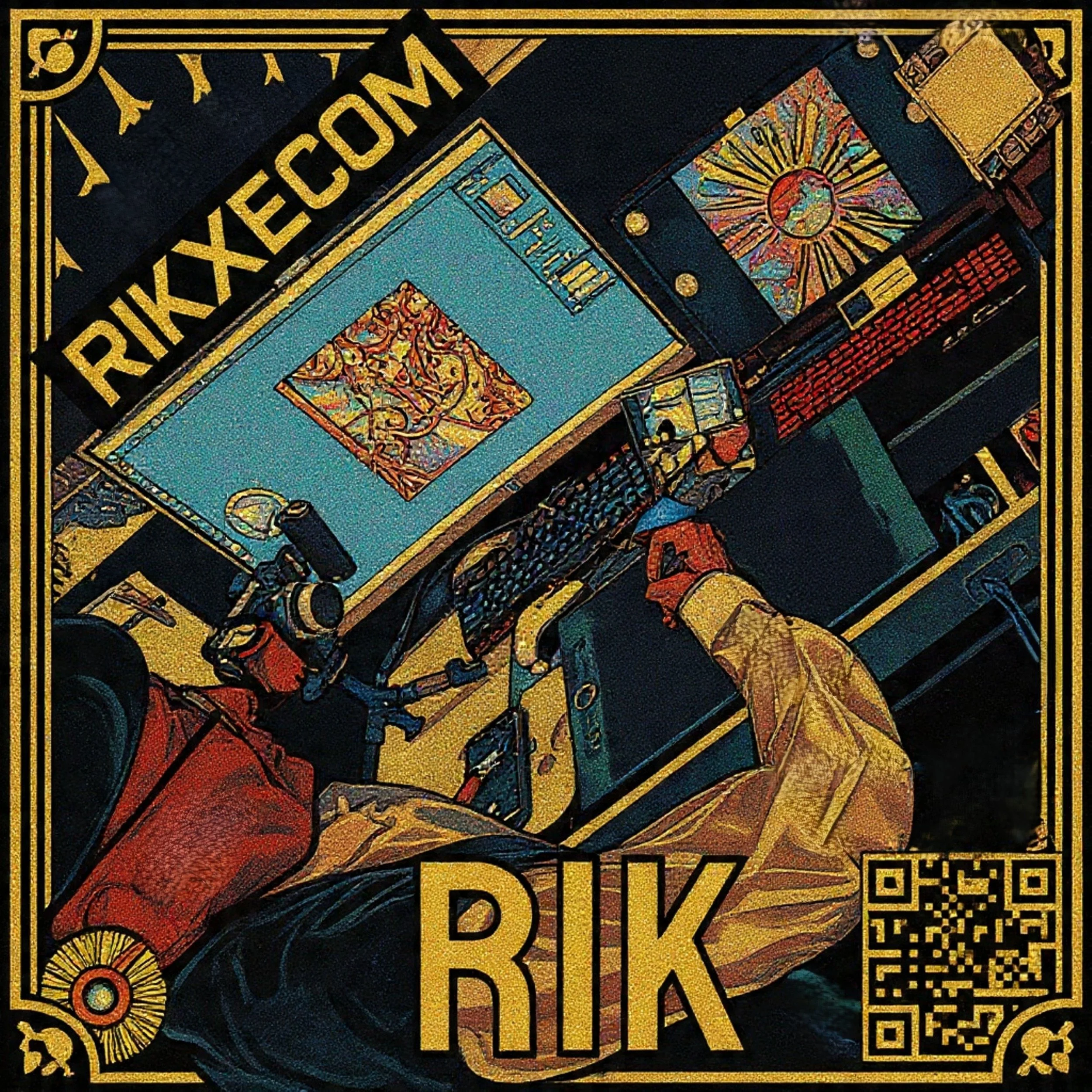
The work does not separate technique from its larger inquiry. Its surfaces are shaped by the question of how light, structure, and consciousness might be held together within an image. Across five decades of practice, GobouT has returned to that question through changing technologies and materials, allowing each work to become another stage in an ongoing investigation rather than a final answer.