A Long-Running Mark-Making Practice
For the past twenty-six years, Katherine Sehr has developed a body of pen-and-ink works through repeated improvised movements. Working from a small studio in her Buffalo, New York home, she uses Micron .05 pens on Stonehenge paper to delineate space through dense networks of writing-like and drawing-like marks.
The works are built from accumulation. Small movements repeat, overlap, and establish areas of pattern or what Sehr calls “non-pattern.” Rather than illustrating a scene or relying on a fixed image, the drawings organize the page through line, rhythm, and the gradual definition of space.
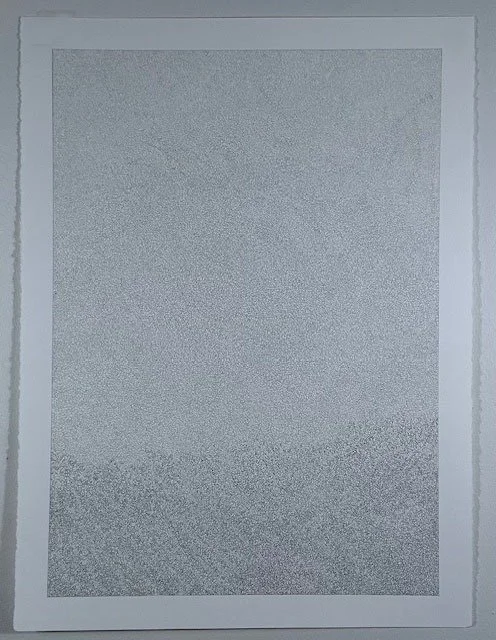
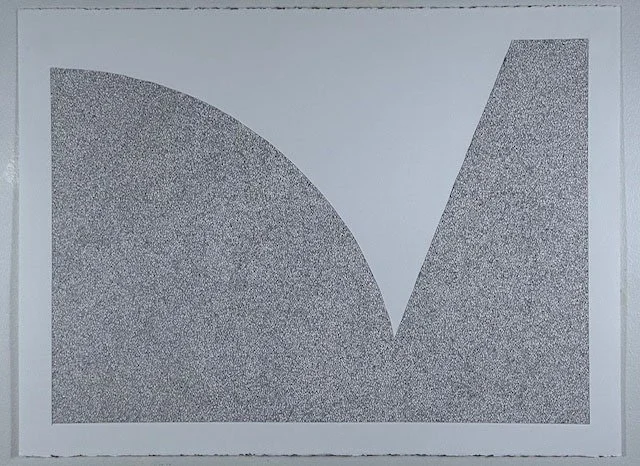
Completed Series
Drawings done in pen and ink on Stonehenge paper from 2022-2026. Sizes vary.
The practice began in painting. As an undergraduate painting major, Sehr was already interested in how marks could construct a surface. Graduate study in printmaking introduced her more directly to paper and pen, shifting the material focus of the work while maintaining an attention to process and composition.
Establishing the Field
A work usually begins with Sehr marking out the shapes or margins that will contain the drawing. These initial boundaries establish the areas that will later be filled through repeated marks.
Within those spaces, the process is both intuitive and methodical. The movement of the hand remains improvised, but the work is also sustained by a consistent formal system: pen on paper, repeated line, and the gradual development of pattern or non-pattern.
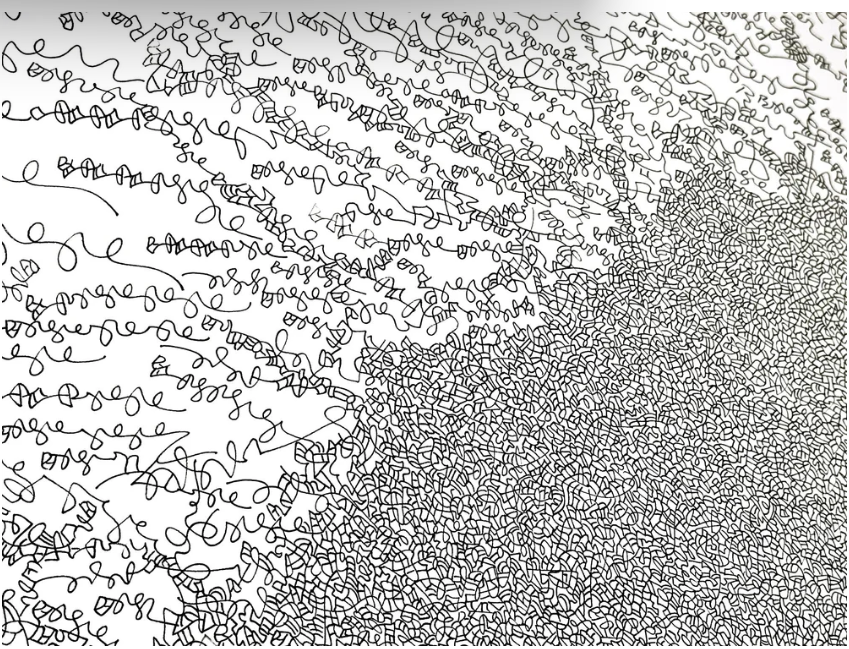
Early and In Progress Work
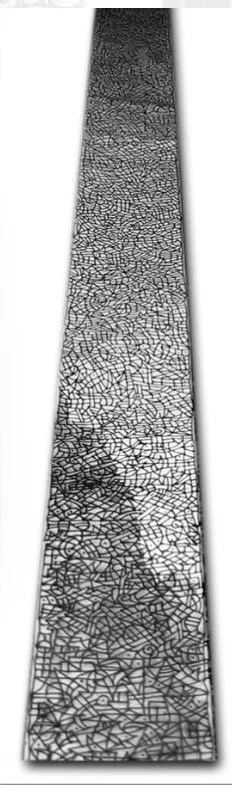
The earliest version of this approach included dots placed in the middle of the designated spaces. Sehr abandoned that element early in her career, allowing the network of lines and gestures to carry the composition without a central point of emphasis.
Repetition and Change
Although the materials and basic structure of Sehr’s practice have remained constant, the mark-making has changed through sustained repetition. Over the years, her line has become looser and more cursive-like.
This development is not a departure from the original practice, but a result of continuing it. The accumulated familiarity of twenty-six years has made the movements faster and more precise while preserving their improvisational character.
Sehr’s drawings hold that balance between discipline and spontaneity. The page is carefully structured, but each network is produced through small decisions made in the moment. Pattern becomes a way of recording time, attention, and the physical rhythm of making.