Lee Ann Heltzel: Evolution
A Door as Threshold
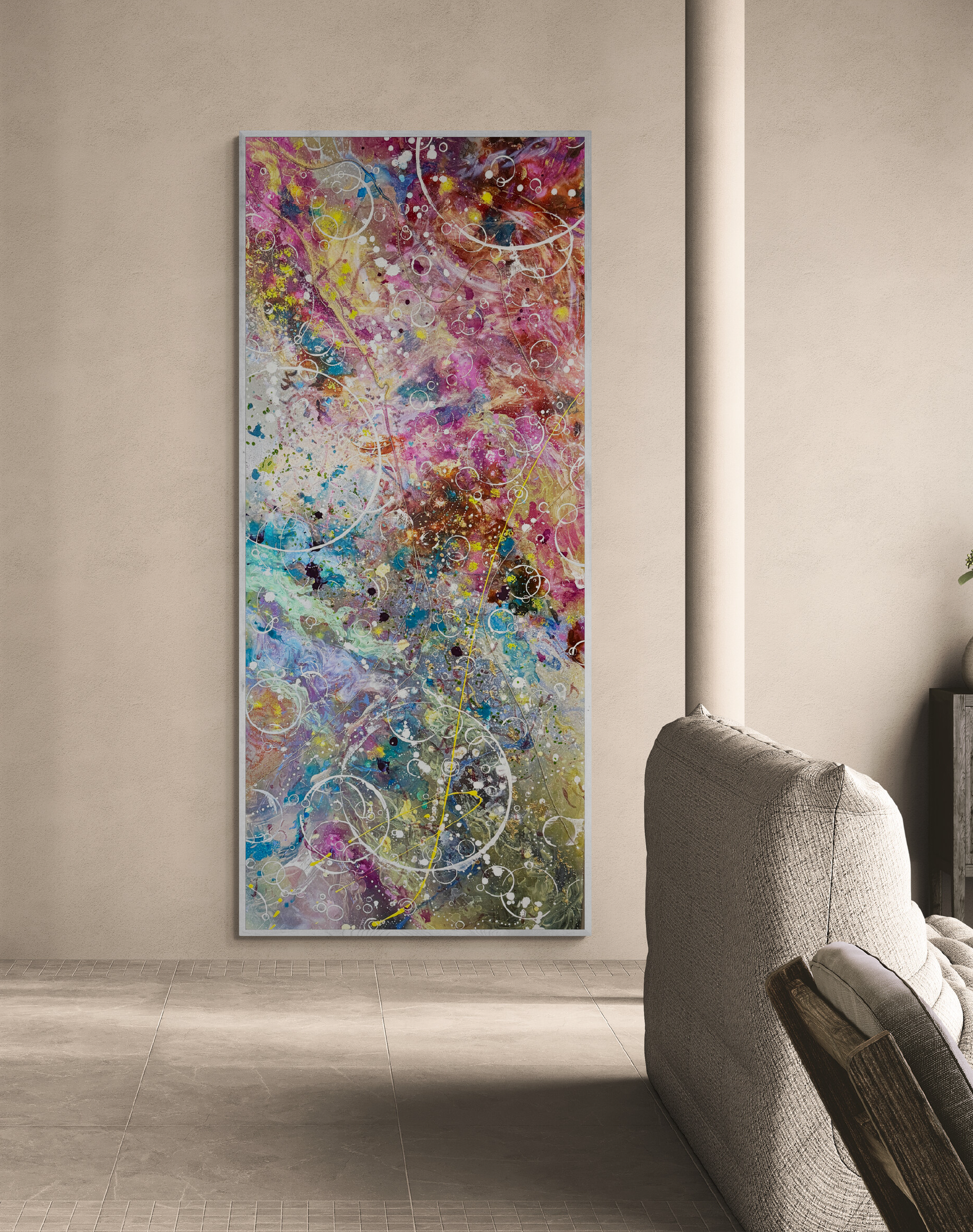
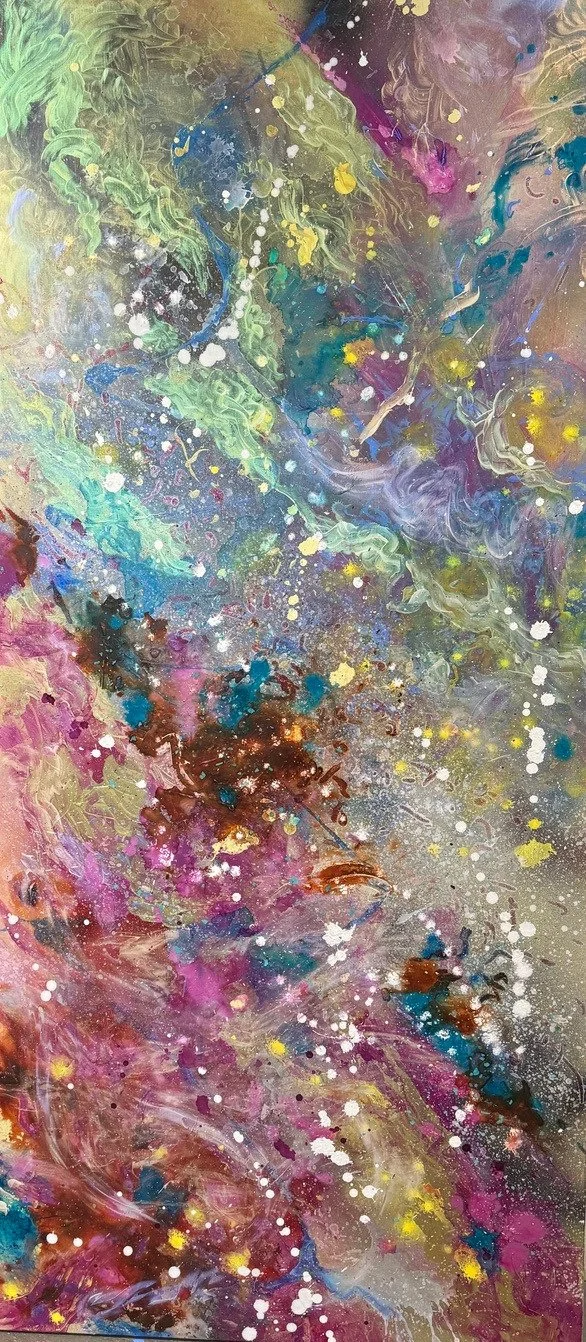
Evolution is a commissioned MetaArt™ painting by Lee Ann Heltzel, created on a physical door with its doorknob intact. The choice of support is intentional. For Heltzel, the door operates as an invitation to cross a threshold, both materially and within the work’s larger spiritual framework.
Completed Series
MetaArt: Evolution
The painting is installed permanently in the Ocular Meditation Space at Sonic Serenity Healing in Carmichaels, Pennsylvania, where it is dedicated to Dr. Michael E. Zalar, O.D. It was unveiled at Sonic Serenity’s grand opening on May 2, 2026.
Heltzel describes Evolution as a frequency-based abstract work concerned with return, wholeness, and reconnection with the Divine. It is accompanied by sacred sound composed by musical alchemist Dovida Goodman, making the completed installation both visual and auditory. The sound emerged near the end of the painting’s development, after Goodman reached out to Heltzel without knowing what she was working on, saying that she had received the music on the final day of the painting.
The painting is intended to be experienced not only as an object on a wall, but through what Heltzel calls Ocular Meditation: an eyes-open practice in which participants sit near the work and hold their attention on a single chosen point.
The MetaArt Framework
Early Work
Temptation explores the meeting point between vulnerability and strength. A young figure kneels before a dragon-like presence, symbolizing the courage to face the unknown and the transformative power of confronting our inner fears.
Heltzel calls this body of work MetaArt, a genre of abstract painting she describes as a meditative portal into higher states of consciousness. Her professional background includes training as a visual artist, work as an art director and graphic designer, and the later founding of a marketing firm. Alongside these professional roles, she identifies as a seeker of human potential and spiritual understanding and has worked as a death doula for thirty years.
MetaArt developed from the convergence of these experiences. Heltzel sees the paintings as a way of communicating without words and as invitations for viewers to explore what she describes as their own inner landscapes. In her terms, each painting carries a particular frequency that can affect the surrounding space or be used as a focus for meditation.
The artist’s language of frequency, guidance, and transmission is central to the work’s authorship. Heltzel does not approach the canvas, door, or other support as a designer working from a completed visual plan. Instead, she describes herself as a channel responding to information received through the process. “Each layer is received, not planned,” she says.
Origin and Commission
Evolution began with a MetaInsights™ session, a soul-level channeled transmission conducted by Heltzel for Tracy Zalar and Shelbee McCann, the mother-daughter founders of Sonic Serenity Healing. According to Heltzel, the session included a transmission she understood as coming from Dr. Zalar, Tracy’s late husband and Shelbee’s late stepfather.
Heltzel describes this experience as providing the painting’s energetic blueprint. The work was initiated not as a conventional commission with a prescribed visual brief, but as a response to what she understood as the frequency of evolution and to the information received during the session.
The painting developed over several months, beginning with the February 2025 transmission and reaching completion in July 2025. Its final public installation followed with the 2026 opening of Sonic Serenity. The process required extended intervals of waiting, painting, and returning. Heltzel did not work to a conventional schedule, but only when she felt that the next layer had become clear.
Layering and Material Decisions
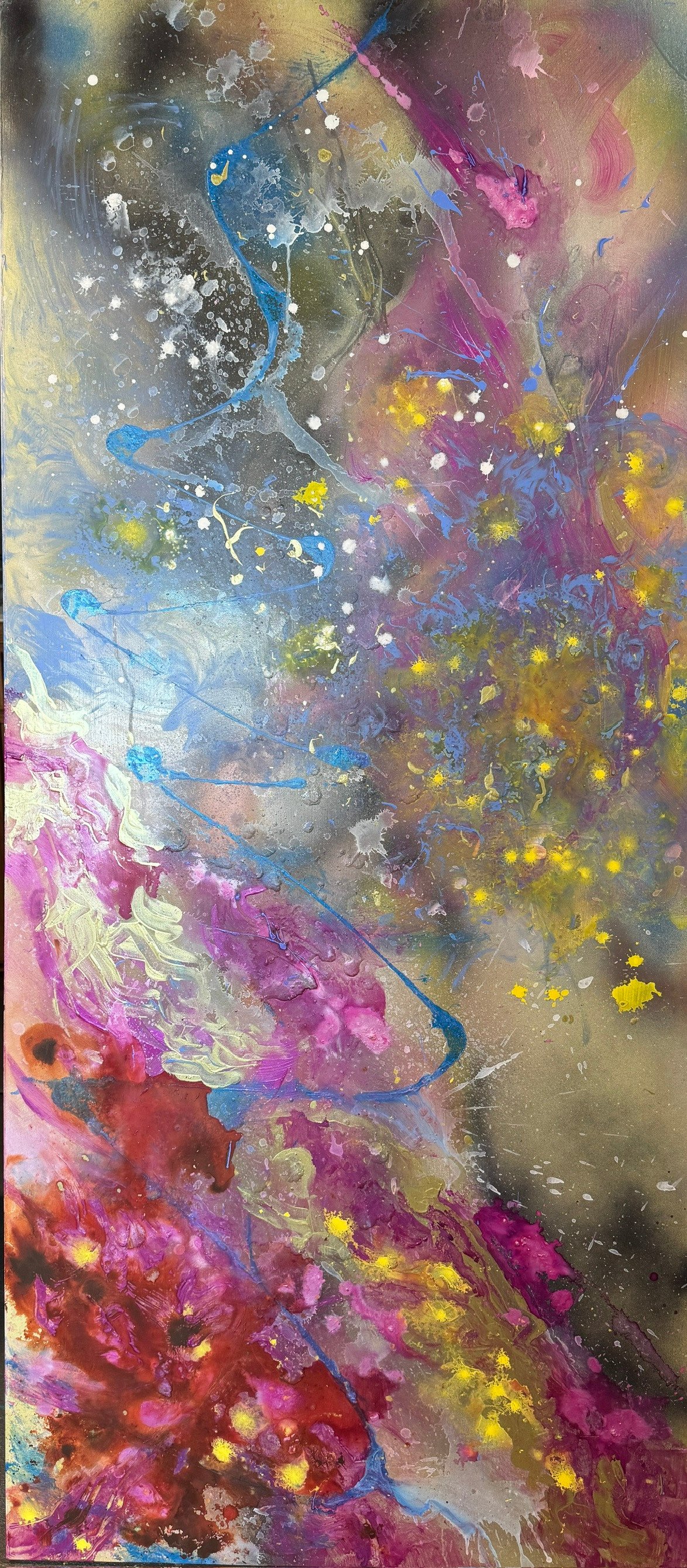
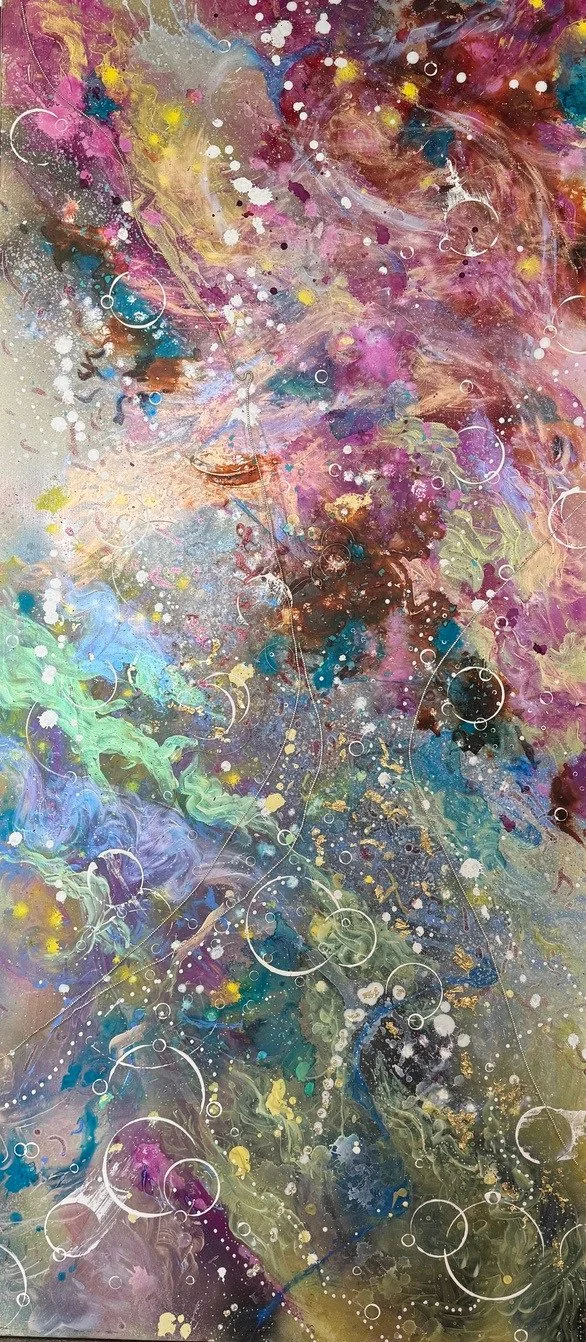
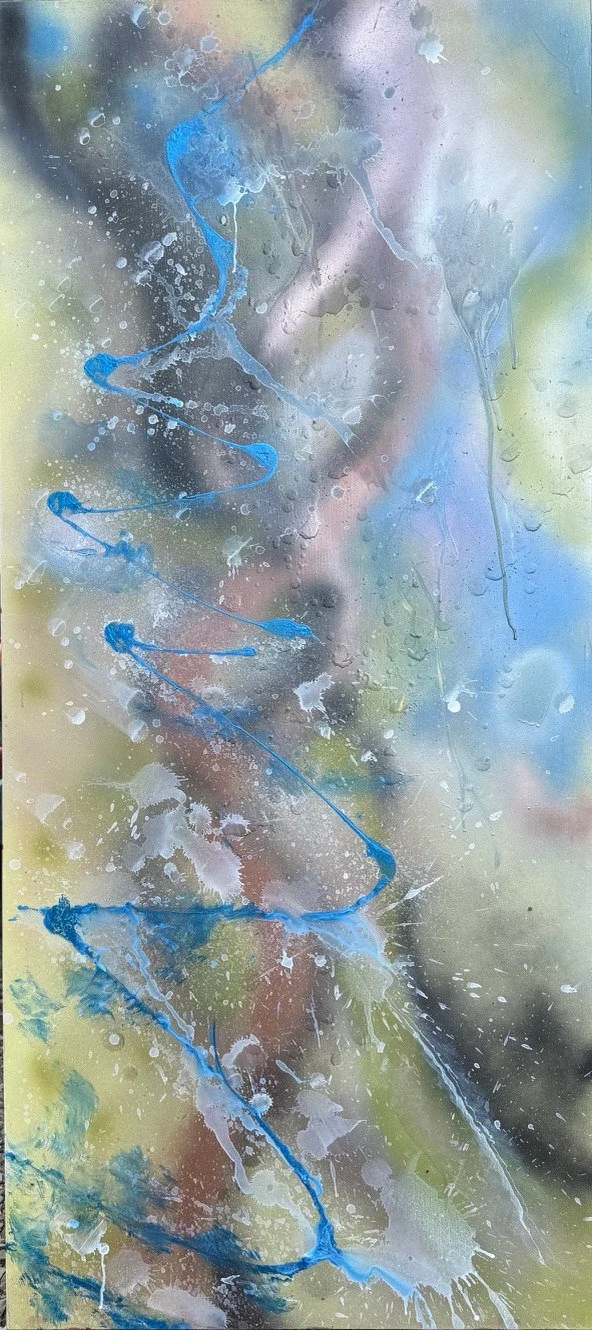
Heltzel created Evolution in her studio outside Pittsburgh using layered acrylic and oil paints, texture media, stains, spray paint, crystals, sacred oils from Egypt, and jewelry. The materials are varied, but in her practice they are selected as part of the larger process of response rather than assembled from a predetermined list.
The door itself established an important set of conditions. It had a fixed size, existing hardware, and a surface history. Heltzel treats these as productive constraints rather than limitations. She was also guided, she says, to a particular doorknob, which became an active part of the piece’s invitation to cross a threshold.
The paintings begin as what Heltzel describes as “pure frequency,” without a clear representational image or explanatory context. Subsequent layers bring increasing definition, not necessarily in terms of recognizable form, but through color, material, and what she identifies as energetic presence. Crystals are not placed early in the process. They arrive later, when a particular area seems to require anchoring in physical space.
Jewelry entered Evolution near the end of the work. Heltzel initially found the direction unexpected, but followed specific guidance concerning particular pieces and their placement. She describes a similar process with the crystals: one amethyst and one clear quartz were placed in the work before Tracy Zalar later shared that she had used the same two kinds of crystals beneath Michael Zalar’s pillow during his final months. Within Heltzel’s account of the work, this correspondence confirmed the personal significance of those materials.
Waiting for Resolution
Heltzel does not restart paintings. A restart, in her view, would assume that earlier layers were mistakes. Even when she does not yet understand what the final work will become, each stage belongs to the painting’s development at the time it was made.
The work may rest for weeks. Heltzel may also rest, waiting until the next layer becomes internally visible enough to execute. The process is not governed by daily production quotas or a fixed studio routine. The studio remains ready, but she enters it only when she feels called to continue.
Resolution is likewise not based primarily on traditional visual balance. Heltzel describes completion as a quieting of the transmission. “It is complete” is the phrase she says she hears when nothing further arrives. This silence, rather than a conventional compositional judgment, tells her that the work has reached its final state.
Sound became an important part of that resolution for Evolution. Heltzel sometimes works in silence and at other times with healing frequencies, depending on what she believes a painting requires. In this case, the painting was understood from the beginning as calling for sound, and Goodman’s composition became integral to the work’s completed multisensory form.
Ocular Meditation and the Viewer
The Ocular Meditation practice associated with MetaArt asks participants to sit near the painting, select one point within it, and maintain their gaze there. Heltzel describes a range of possible experiences during this practice, including apparent movement, changing colors, perceived imagery, and shifts in the work’s visible pattern. She understands these experiences as signs of engagement with the painting’s frequency.
Whether encountered as an abstract painting, a door, a memorial work, or a meditative focus, Evolution is structured around an ongoing relationship between material surface and spiritual intention. Its layers do not illustrate a single narrative. They accumulate through waiting, response, and the artist’s commitment to following the framework through which the commission began.
For Heltzel, the painting’s intention does not belong exclusively to the artist. Her role is to remain open to the process and to execute what arrives, even when a material decision appears unexpected. In that sense, Evolution is both a completed object and a record of a process governed by trust, duration, and the artist’s understanding of guidance.