Jon Feraro: Inner Terrain
Painting Emotional Landscapes
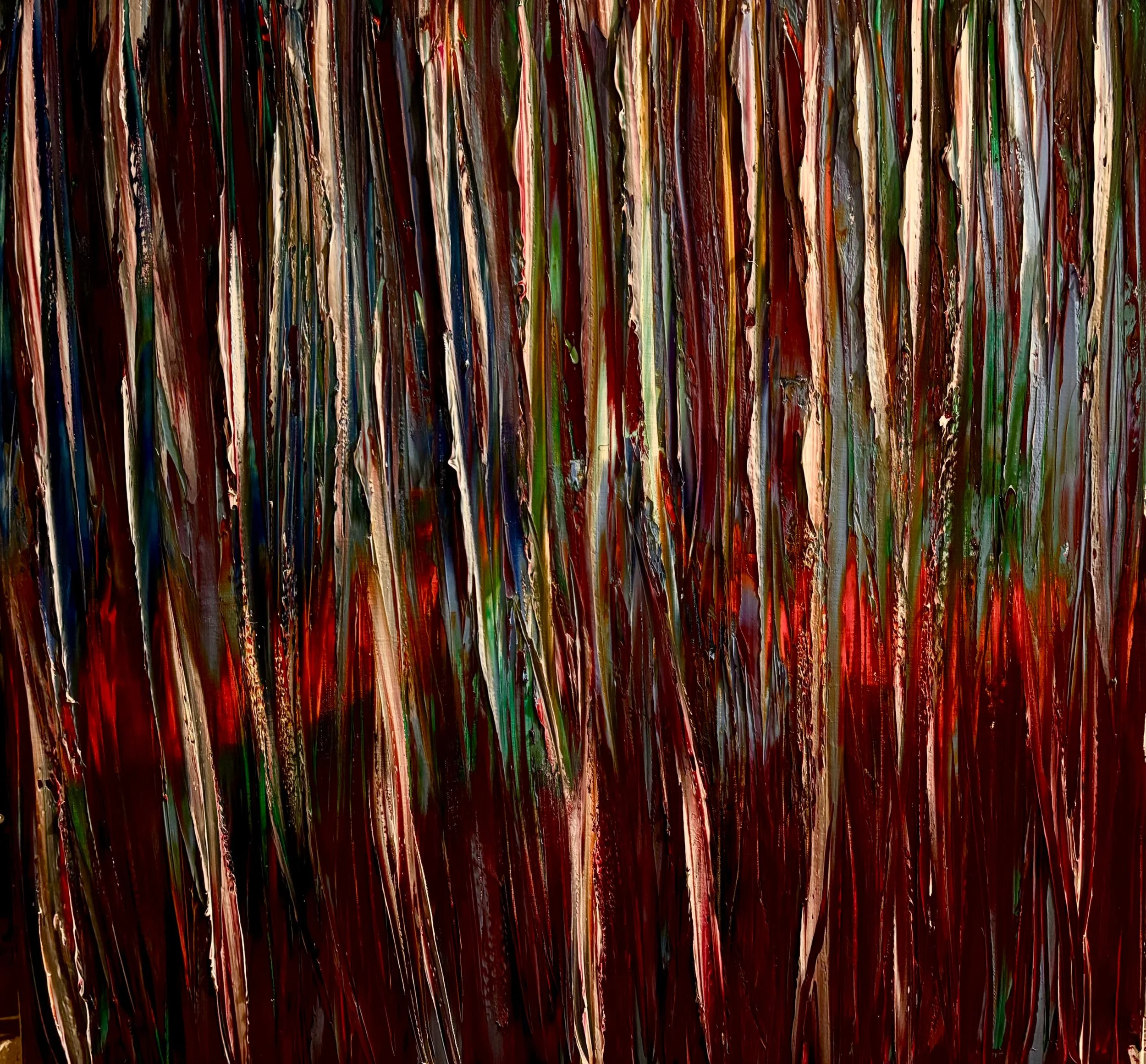
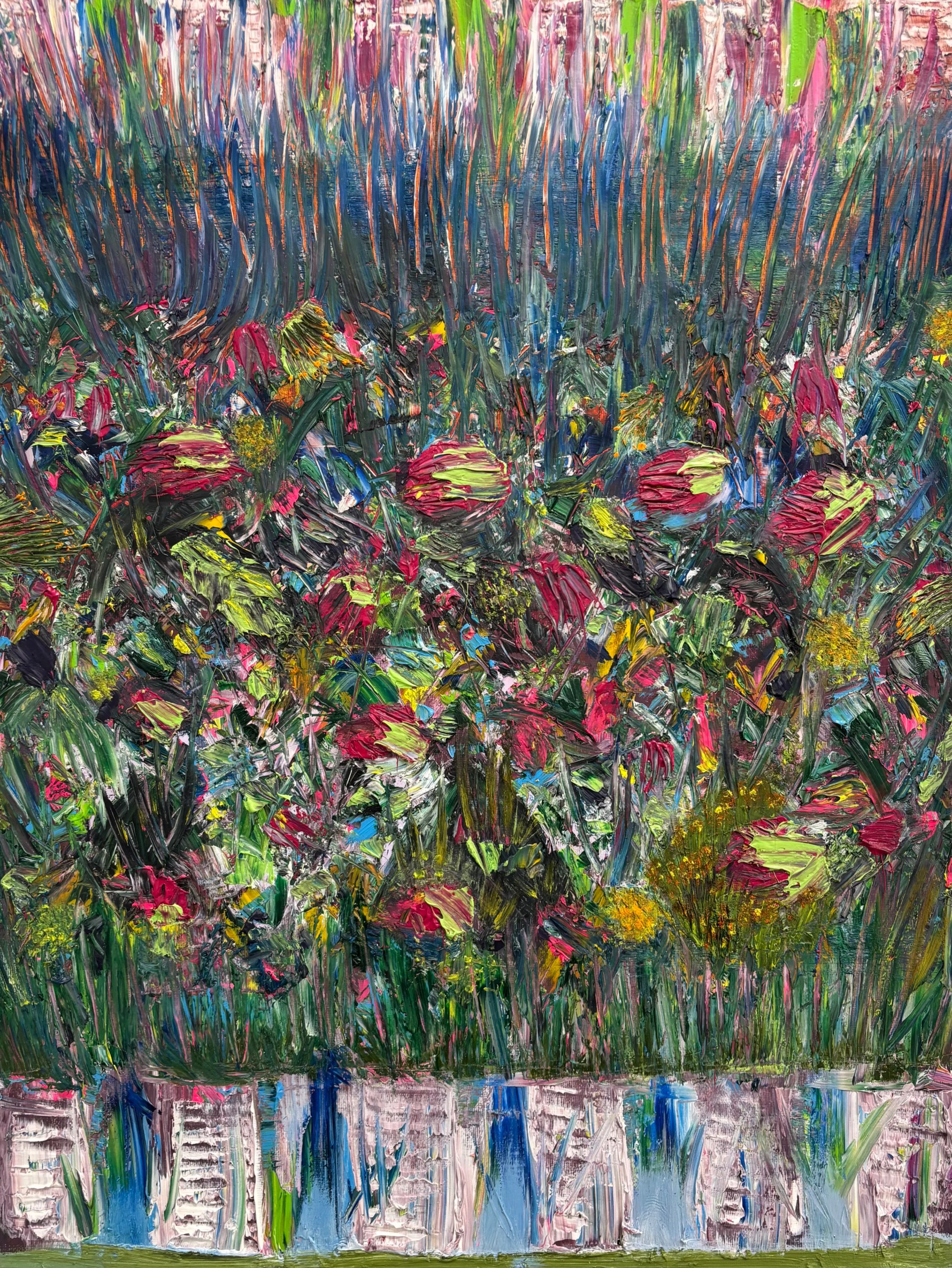
Over the past year, Jon Feraro has developed an ongoing series of abstract oil paintings that examines what he calls “inner terrain”: the emotional landscapes shaped by memory, resilience, uncertainty, hope, and change. The works do not depict physical places. Instead, they use color, movement, light, and heavily built surfaces to consider experiences that are difficult to state directly.
Completed Series
Organic forms and textured passages evoke an imagined landscape, hinting at reeds, grasses, bark, and scattered floral remnants that hover between memory and abstraction.
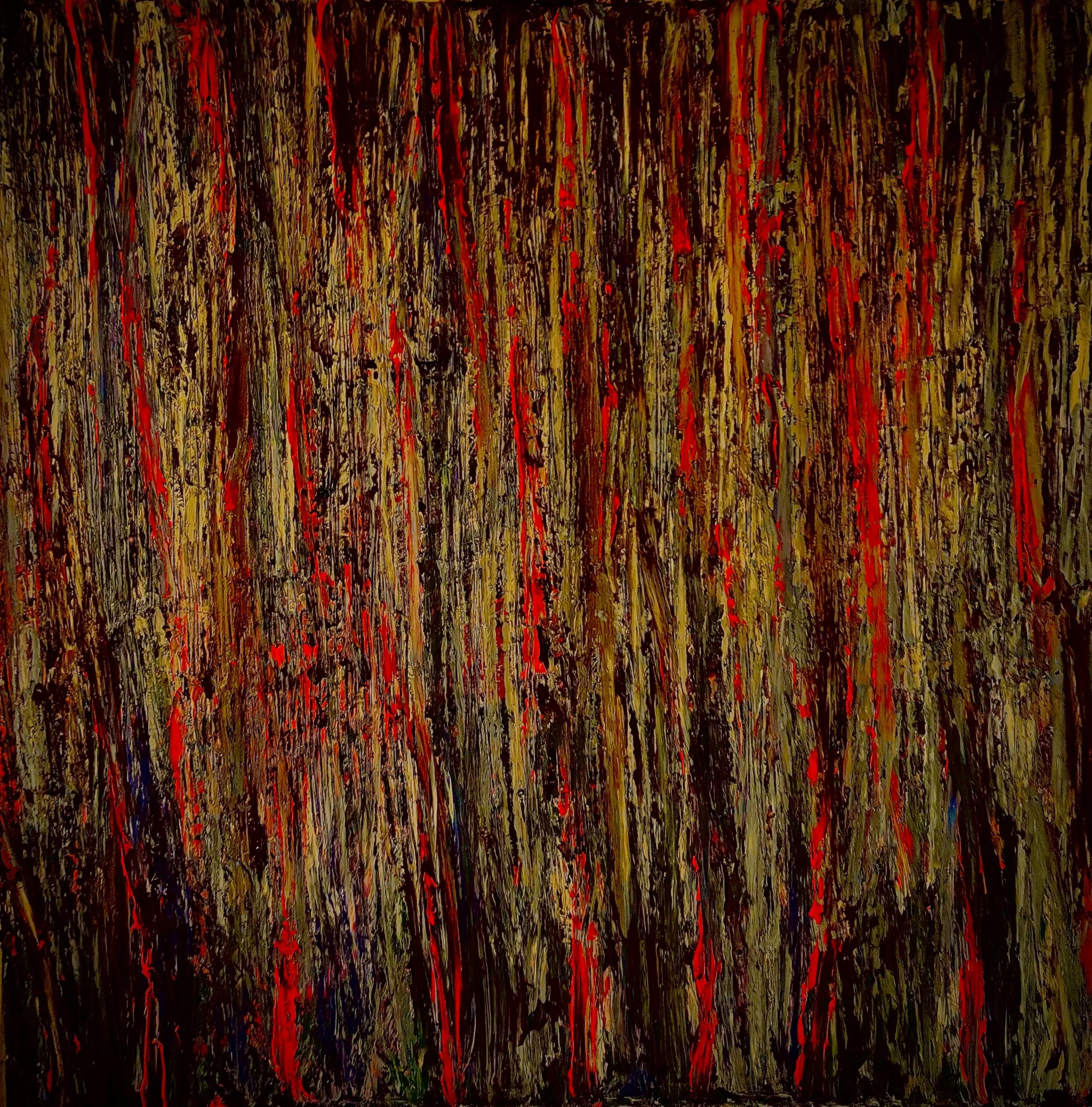
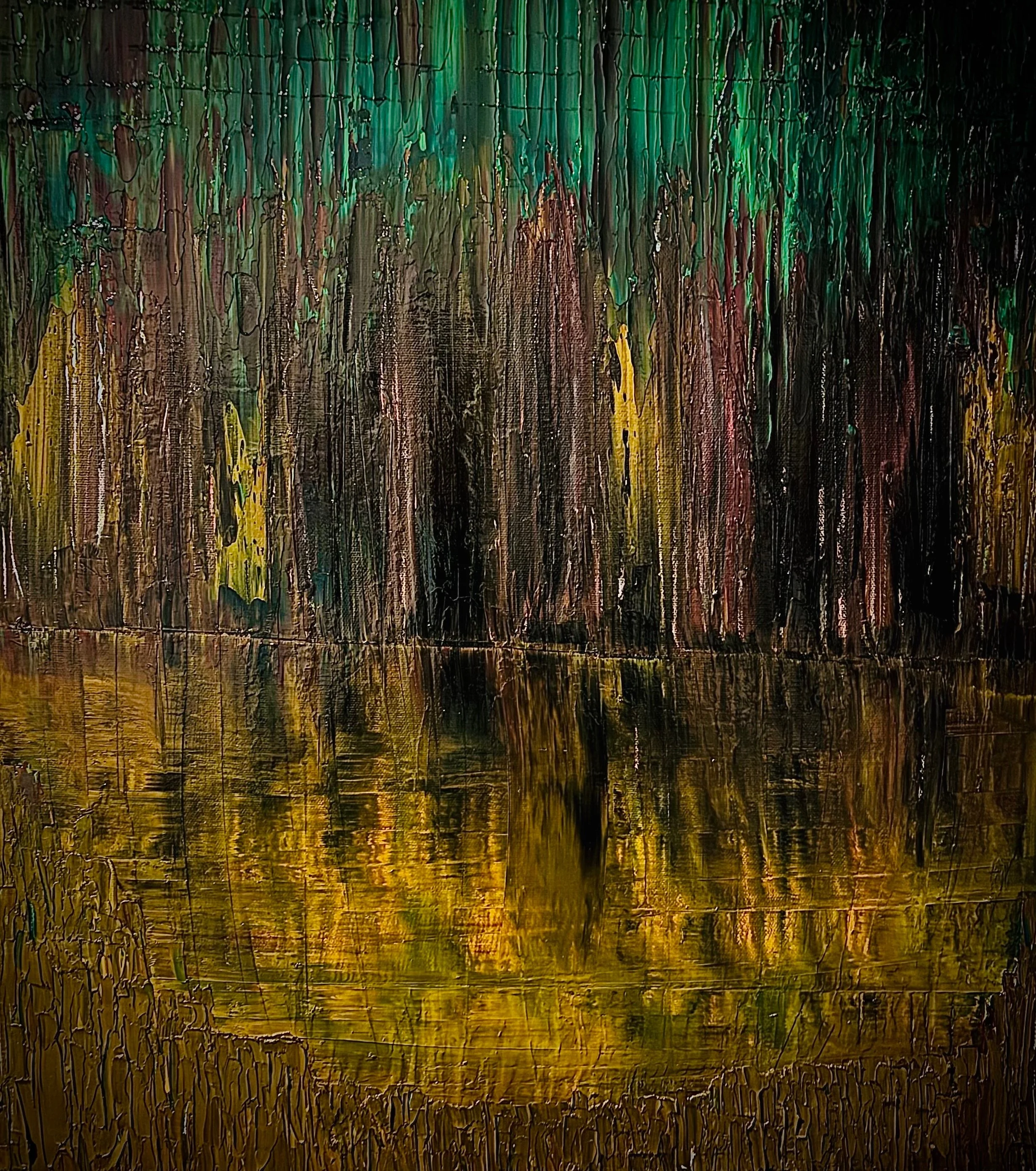
Each painting functions independently, but the series is connected by a shared interest in emotional process. Feraro’s paintings hold tension between fracture and cohesion, between what is controlled and what is allowed to emerge. Their surfaces carry evidence of construction, revision, pressure, and return.
Most of the work is made at Kirkbride Arts in Bridesburg, Philadelphia. Feraro works primarily in oil paint, using palette knives to build thick impasto surfaces. He layers, scrapes, covers, and reshapes the paint, allowing each action to remain part of the final object rather than concealing the work’s development.
Texture is central to this language. It is not an added effect or decorative finish. It becomes one of the ways the paintings register emotional intensity, sustained attention, and change over time.
The Personal Context of the Work
This body of work developed during a period of significant personal change. Feraro came to painting later in life, and the studio became a place to process experiences that did not easily translate into words. His cancer remission, his care for his elderly mother, and a renewed sense of purpose through painting have all influenced the direction of the work.
Early Work
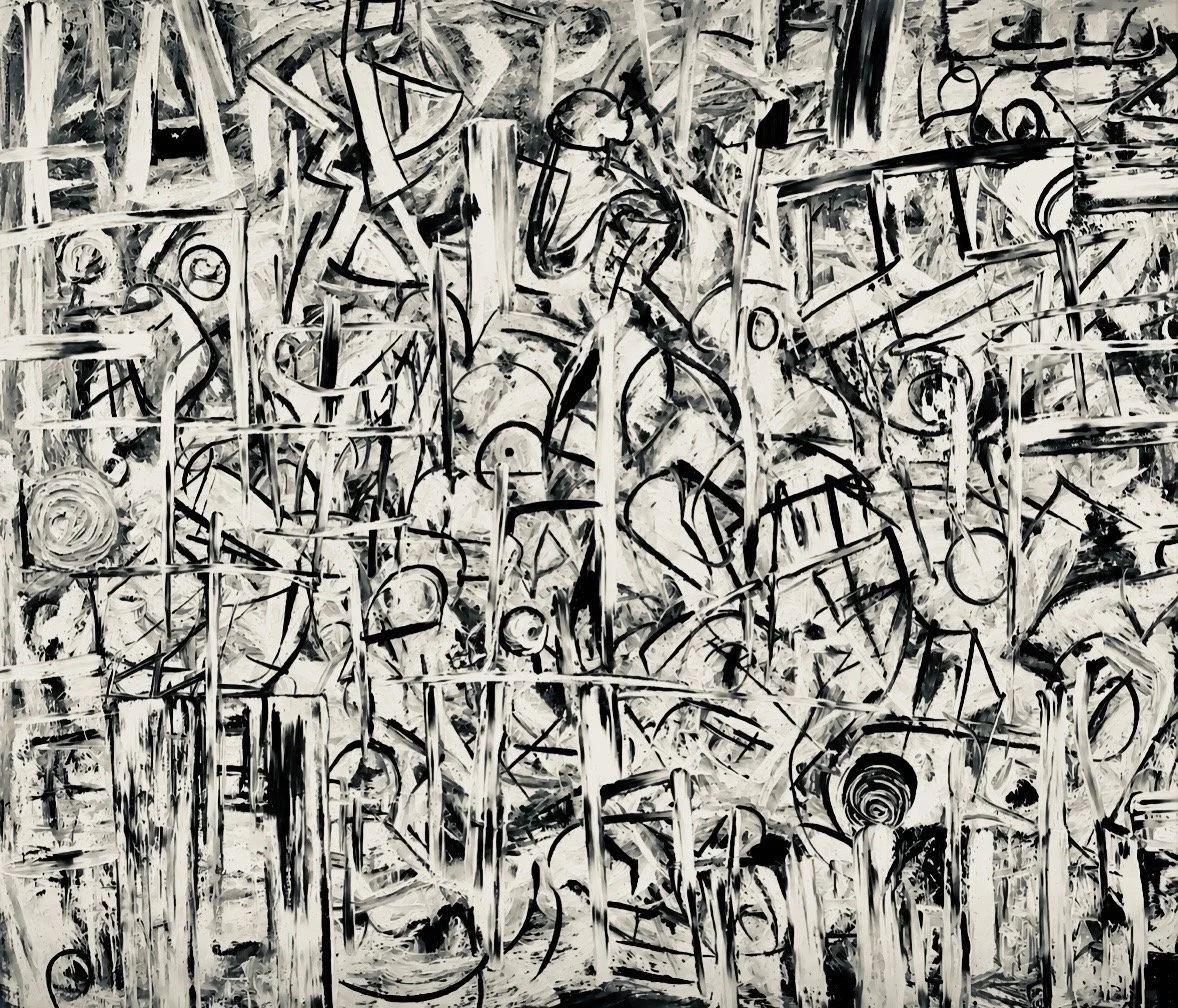
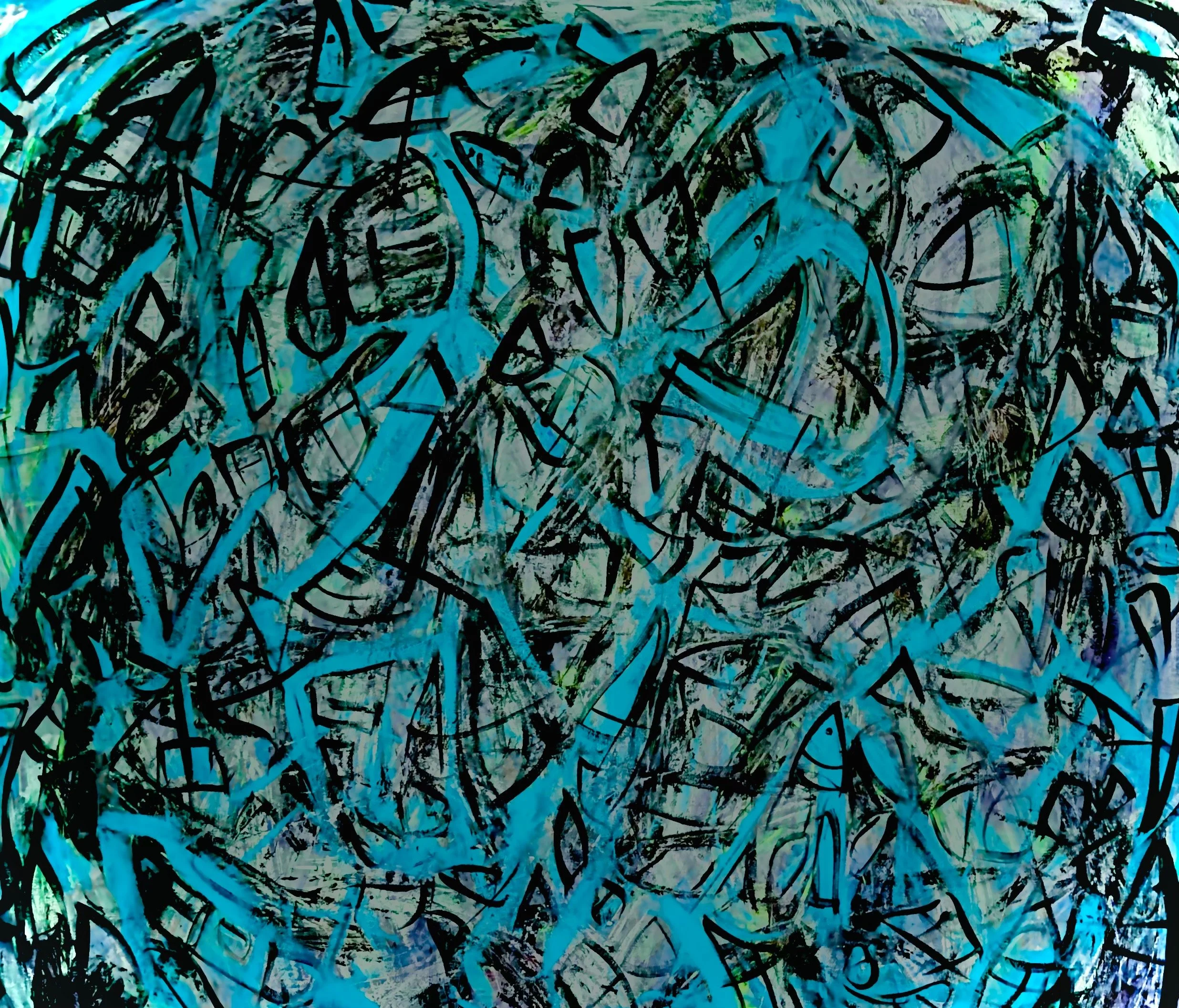
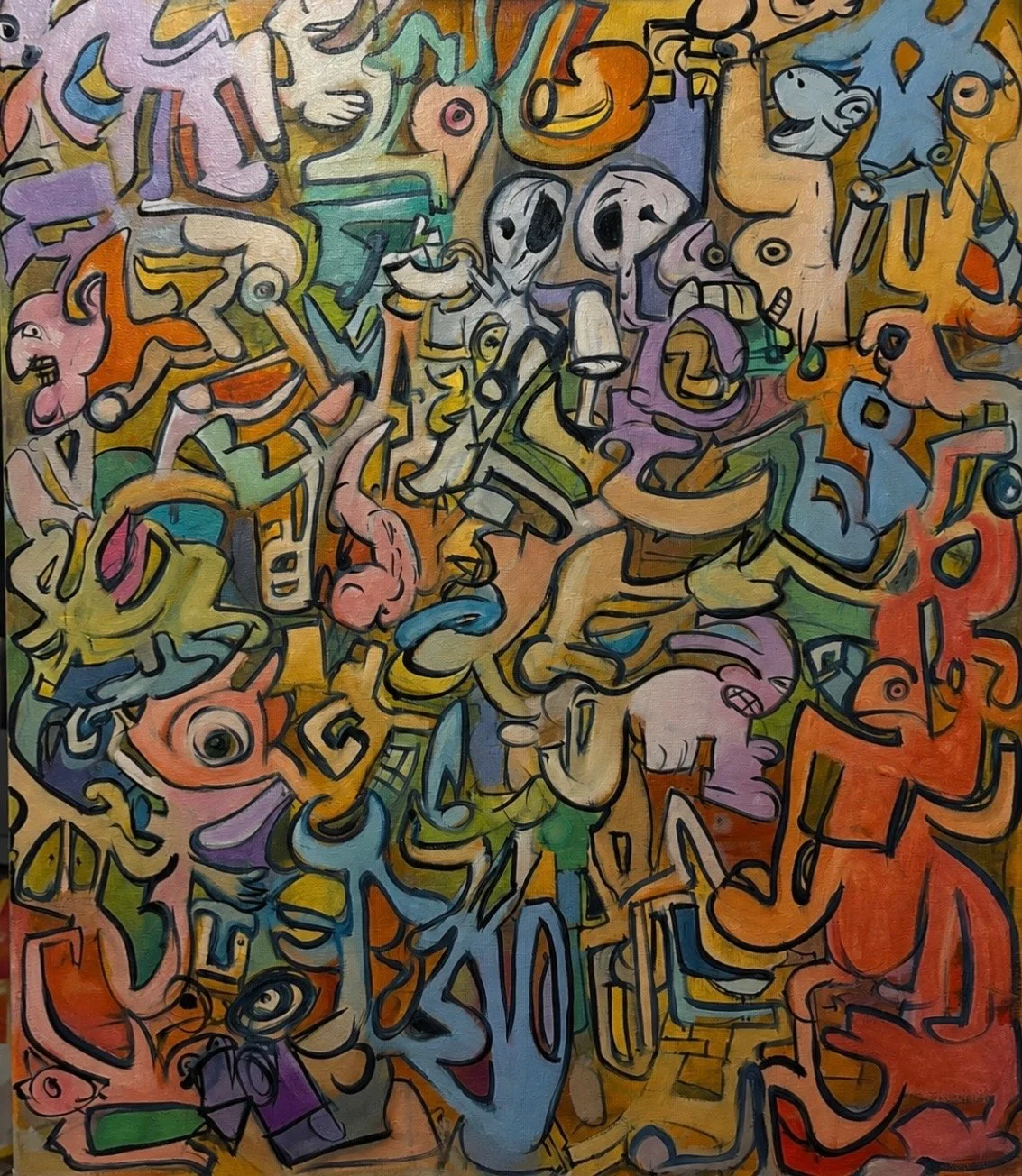
My early work embraced improvisation, filling the canvas with interconnected organic forms, expressive lines, and imagined characters that emerged through instinct rather than planning. Inspired by the gestural freedom of Willem de Kooning and the playful spontaneity of John Burgerman, these paintings laid the foundation for the more contemplative abstract landscapes I create today.
These experiences are not illustrated directly. Instead, they shape the conditions from which the paintings emerge: a concern with endurance, pressure, repair, and the possibility of continuing after difficult periods. Feraro’s paintings are grounded in personal experience, but they remain open enough to allow viewers to bring their own histories to the surface.
The physical structure of the work reflects this approach. Layers of paint accumulate as memories and experiences do, sometimes visible and sometimes partly covered. Fractured passages, revisions, and imperfections are not treated as flaws to correct. They are part of the record of how the painting came into being.
Beginning Without a Fixed Image
Feraro rarely begins with a detailed plan. A painting may start from a feeling, a memory, a particular tension, or a loose sense of color. The initial stages establish broad fields of movement rather than a resolved composition.
At this point, the surface can appear chaotic. Paint is built up and scraped away, creating a foundation that may look very different from the eventual work. Feraro allows these early layers to remain active within the painting’s later stages, where they continue to influence color, texture, rhythm, and structure.
Additional Remarks
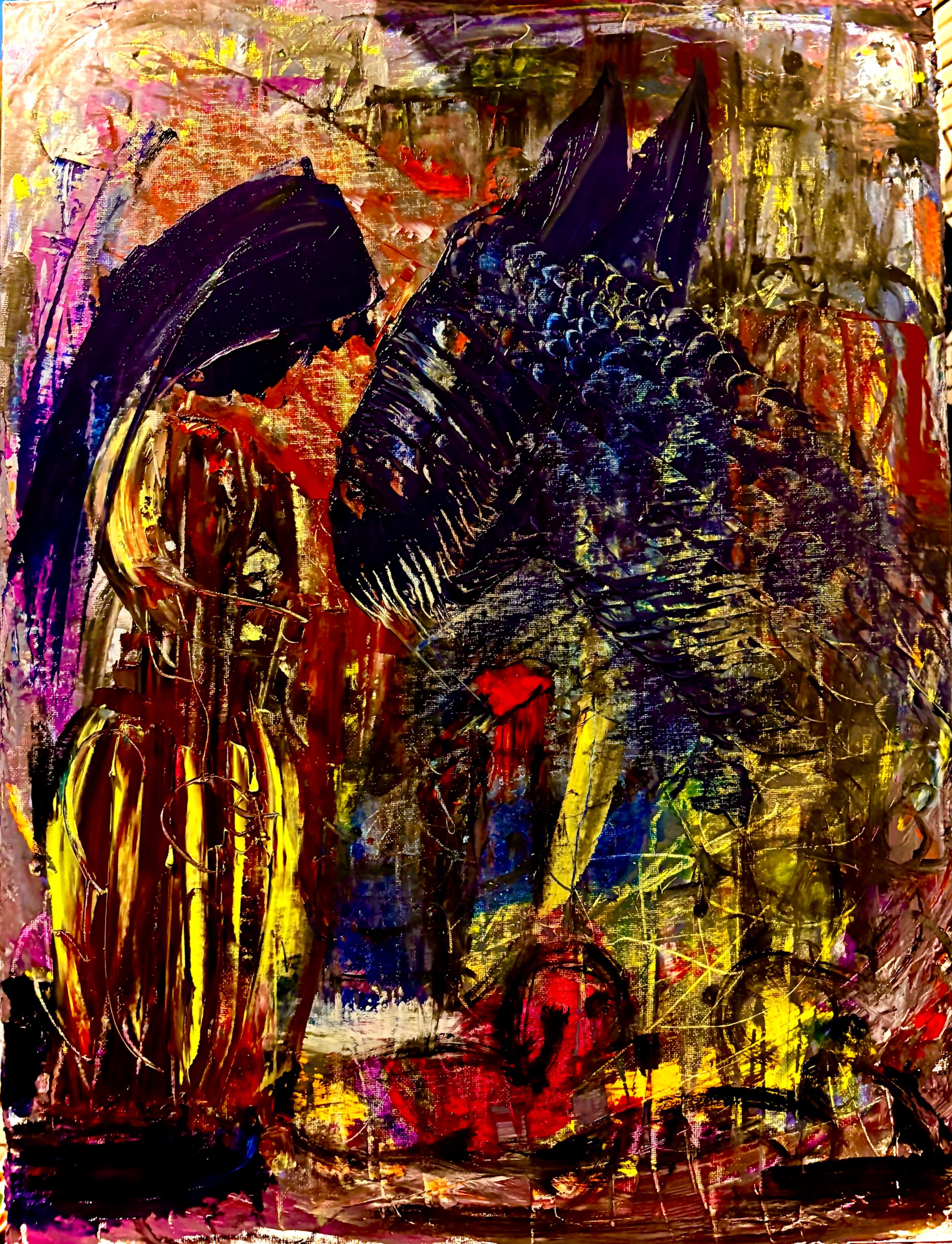
Temptation explores the meeting point between vulnerability and strength. A young figure kneels before a dragon-like presence, symbolizing the courage to face the unknown and the transformative power of confronting our inner fears.
The process balances intuition with deliberate decision-making. Feraro responds directly to what is happening on the canvas while making ongoing choices about contrast, composition, light, and the relationship between different areas of the surface. Passages may be painted over many times before they feel right.
What remains constant is the search for emotional resonance and movement. Texture, layered color, and the interplay of tension and harmony persist even when the original idea is abandoned. “Some of the strongest moments emerge only after I’m willing to let go of the original idea,” Feraro explains, allowing the painting to redirect the process.
Building the Surface
The paintings evolve through distinct stages, though the sequence is not linear. Early work is instinctive, with broad applications of color, gesture, scraping, and layering used to establish an emotional atmosphere rather than a defined image.
As a work develops, Feraro becomes more deliberate. Palette-knife marks, deeper impasto, vertical movement, and other structural elements are introduced to create a more focused tension between chaos and order. These techniques have become increasingly important in his recent practice, particularly his interest in the painting as an object with weight, texture, and physical presence.
Feraro wants viewers to feel the surface as well as see it. The accumulated paint records the movement of the palette knife and the energy of repeated decisions. A painting is not only an image to be viewed from a distance. It is a built form whose material history remains accessible.
Oil paint creates its own constraints. Thick layers have weight, and gestures cannot always be easily reversed or removed. Feraro has learned to work with that resistance rather than against it. Accidents, unevenness, and unexpected results often become the parts of a work that make its final direction possible.
Rest, Revision, and Resolution
Feraro frequently allows paintings to rest before deciding whether they are finished. Returning after time away makes it possible to see when a work needs a substantial change and when one adjustment might be enough to reorganize the entire composition.
A painting feels resolved when its elements begin to communicate with one another. Color, marks, texture, and structure arrive at a balance that does not erase the original emotional tension. Resolution is not smoothness or visual calm. It is a point at which the work can hold its conflicts without becoming incoherent.
The most consequential decisions often come through surrender. A painting may begin with a particular intention, but its materials can lead it elsewhere. Feraro’s process depends on recognizing when the work has developed its own direction and responding to that development rather than forcing a predetermined outcome.
Repetition and immersion support this way of working. In the studio, layering paint becomes a sustained physical rhythm, shaped by silence, music, reflection, and time. The studio is where memory and material meet, and where personal experience can be translated into a surface that remains open to others.
Painting as Transformation
Feraro’s work is concerned with transformation, but not as a simple movement from difficulty toward resolution. The paintings retain the evidence of weathered, hidden, or fractured material. They ask how those conditions can be brought into a form rather than erased.
The result is a practice in which surface and subject are inseparable. The paint does not merely represent an emotional landscape. Through its layers, revisions, and physical buildup, it becomes the terrain itself.