Returning to a Cast
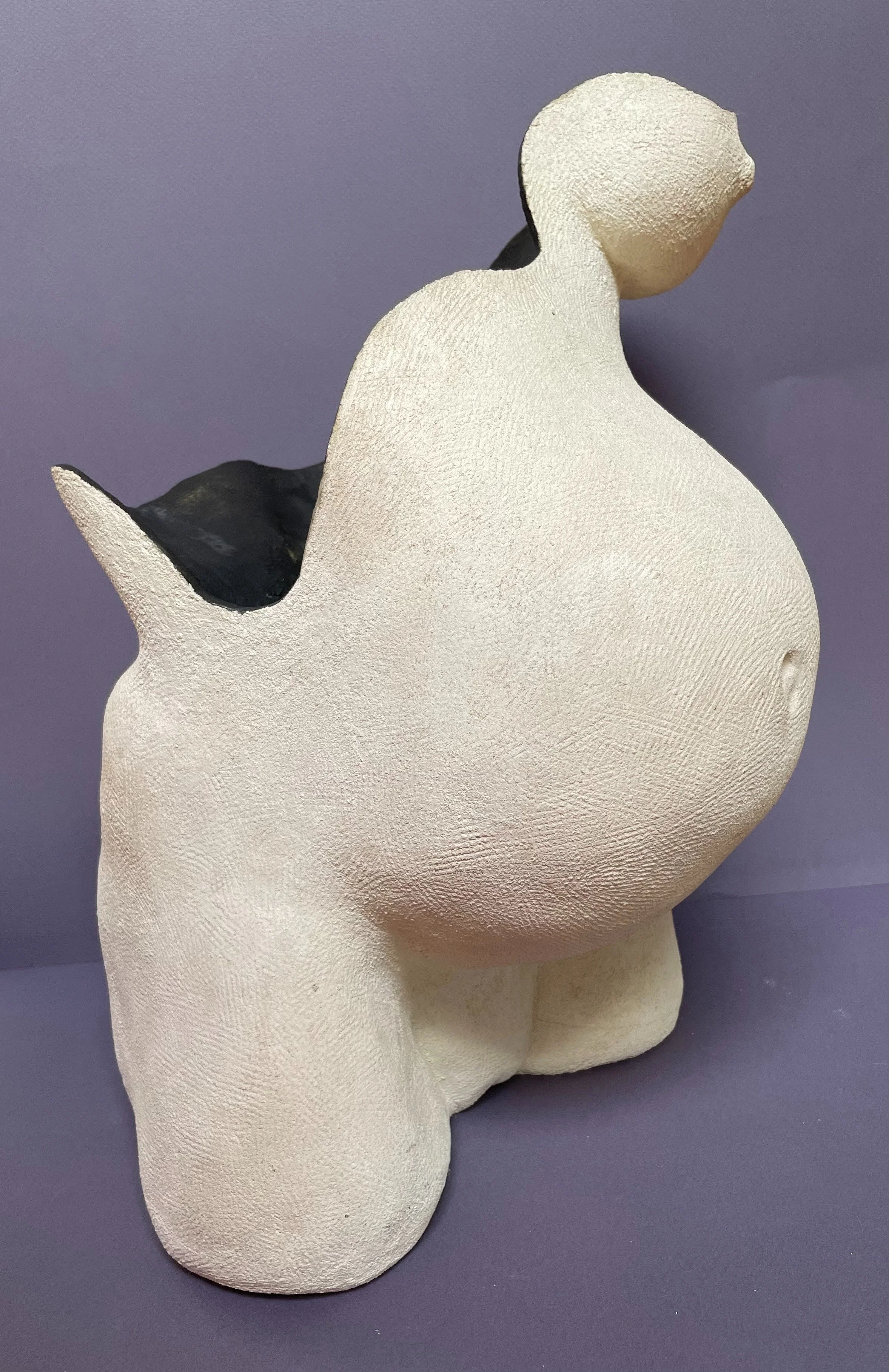
Claudia Priori’s Listen…She Speaks began with an old plaster cast of a woman’s body, made three decades earlier and rediscovered in the studio. Priori initially considered discarding it and making a new cast. Instead, she began to ask what might happen if the body were allowed to speak through its own surface.
Completed Series
The question shifted the work away from an idealized figure and toward texture, aging, damage, sensuality, and visibility. Priori was interested in what a woman’s body might look like if emotional wounds and scars were made materially present. Beyond the mythology of beauty, youth, and sexualized femininity, could a body marked by time still carry beauty?
The first sculpture in the series, Listen…She Speaks 1, was made in 2000. The remaining works developed in 2026 after the original plaster cast was found again. Returning to the material after twenty-five years of teaching art allowed Priori to revisit questions that had remained active since the earlier piece.
Form, Texture, and Resistance
Listen…She Speaks 1 is a partial pregnant female form with a roughened surface. Priori describes the work as expressing the sensuousness of the body while making it “unavailable for consumption” by the viewer. That tension remains central to the later works.
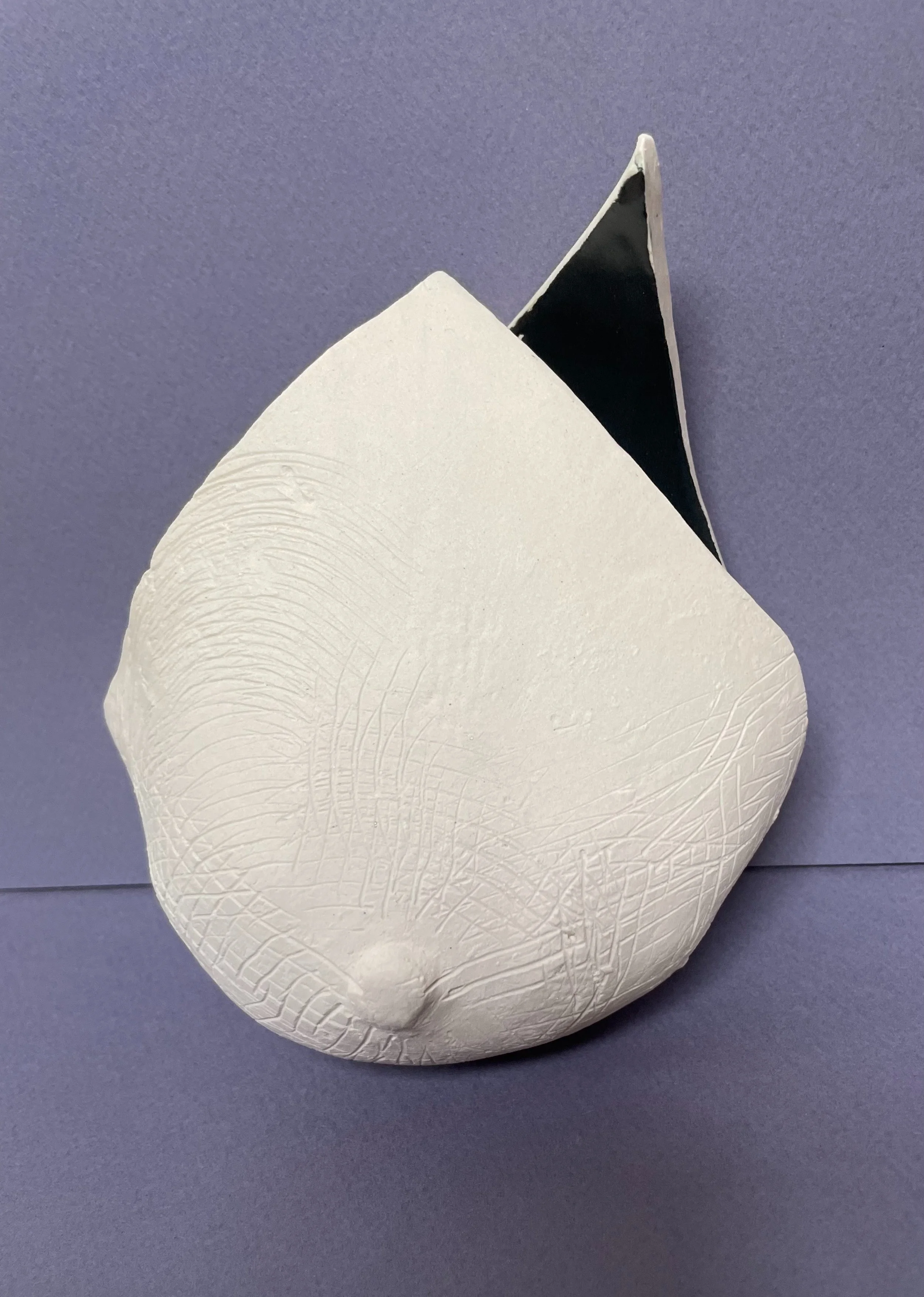
The old plaster cast had become damaged and worn, and its condition became productive. When Priori pressed slabs of clay into it, the cast created scoured, scratched surfaces. She sometimes intensified those marks with a metal scraper, setting the roughness of the clay against the softness of the breast form.
Early Work
Single breasts that have been scoured and scarred.
The resulting sculptures do not attempt to smooth away this dissonance. An undulating backing form, reminiscent of vaginal labia, is attached to the body, creating a new composite form when the work is viewed as a whole. Priori describes this emerging form as carrying experiences, hardships, loves, and caresses.
Each sculpture differs because the clay does not reproduce the cast identically. “The clay speaks how it wants to be formed,” Priori says, “it speaks how it wants to be caressed or scarred.” The material remains active in determining the final work, rather than serving only as a neutral vehicle for a fixed image.
Clay, Firing, and Material Risk
Priori works primarily with midfire clay, chosen for the density and natural sheen it achieves when fully vitrified. The clay provides a finished surface without requiring stoneware temperatures, reducing wear on the kiln while retaining the desired strength and presence.
Once a sculpture is formed, it rests in a plastic bag so moisture can equalize across joins and areas of different clay thickness. After several days, Priori carefully sponges the surface, smoothing some areas while roughening others. Fine linear details are pressed into the clay, edges are refined, and the work is allowed to dry gradually under a loosely placed plastic bag.
The work is then checked again before being left to reach bone dryness, the point at which it is no longer cold to the touch and is ready for the first, or bisque, firing. This stage requires patience. The clay’s joins and varying thicknesses carry tension, and cracks can appear at any point in the process.
Work in Progress
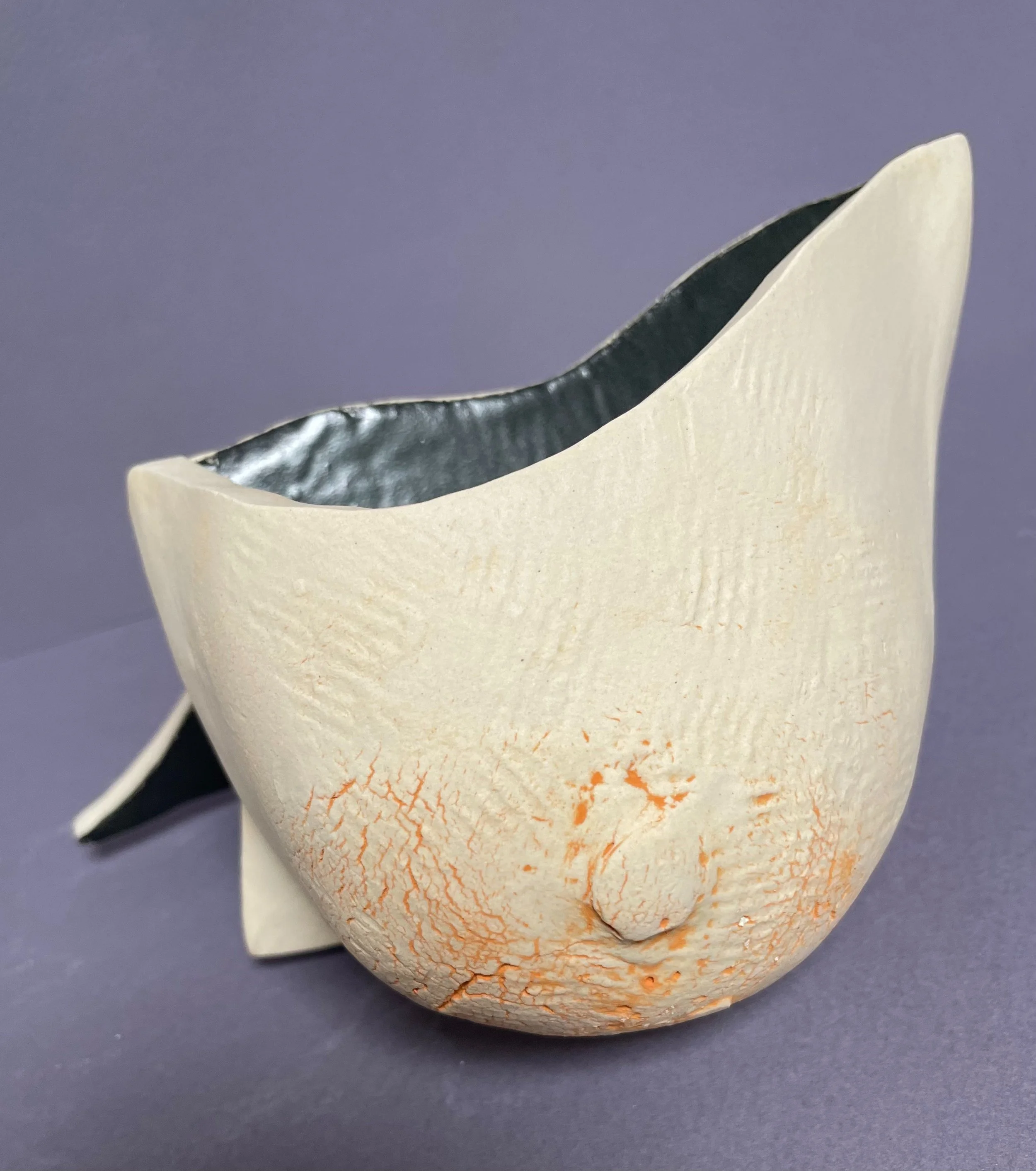
If a crack appears before bisque firing, Priori can repair it. Cracks that emerge after firing present a different decision: discard the work or accept the fracture as part of the sculpture. Her current rate of loss is approximately one piece in eight. Works that cannot continue often find another life as ornaments in her garden.
After bisque firing, the sculpture is painted with wax resist along its edges, and the interior is glazed black. The wax creates a sharp boundary between white clay and black glaze. The work then returns to the kiln for a three-day midfire firing, bringing the sculpture to its final material state.
A Different Account of the Female Form
Priori hopes viewers encounter the aesthetic beauty of the female form without expecting smoothness, youth, or bodily perfection. The work insists that real bodies are scarred, uneven, and marked by experience, while retaining what she describes as a deep, lasting, and bittersweet sensuousness.
The series does not present change and transition as conditions that reduce a woman’s value. Instead, Priori approaches the female form as a place of embodied knowledge, inner strength, and wisdom. Her intention is for viewers to consider women’s bodies differently, beyond fixed ideas of desirability or surface perfection.
The balance of smooth and rough clay is important to that aim. It allows the work to be physically attractive while withholding easy idealization. Texture becomes a record of pressure and experience, not a flaw to be removed.
Priori is currently preparing for a 2027 exhibition with artist Kristi Johansen, whose charcoal work also explores the female form in nature. The exhibition will raise funds for breast cancer research in Australia, a cause Priori identifies as personally significant as a breast cancer survivor. Within that context, Listen…She Speaks continues its central concern: how a body can be visibly changed, materially vulnerable, and still fully present.