A Series Found in the Paint
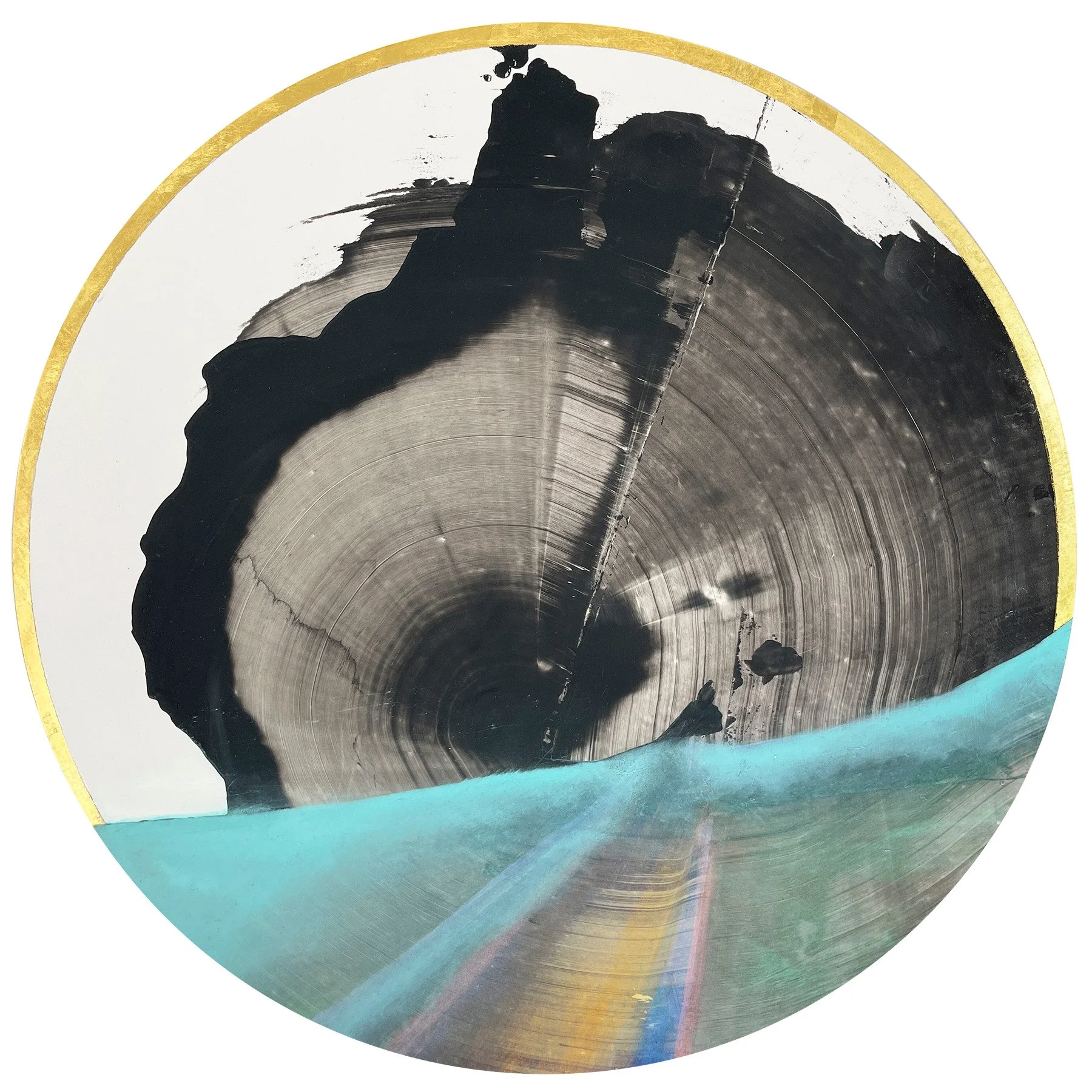
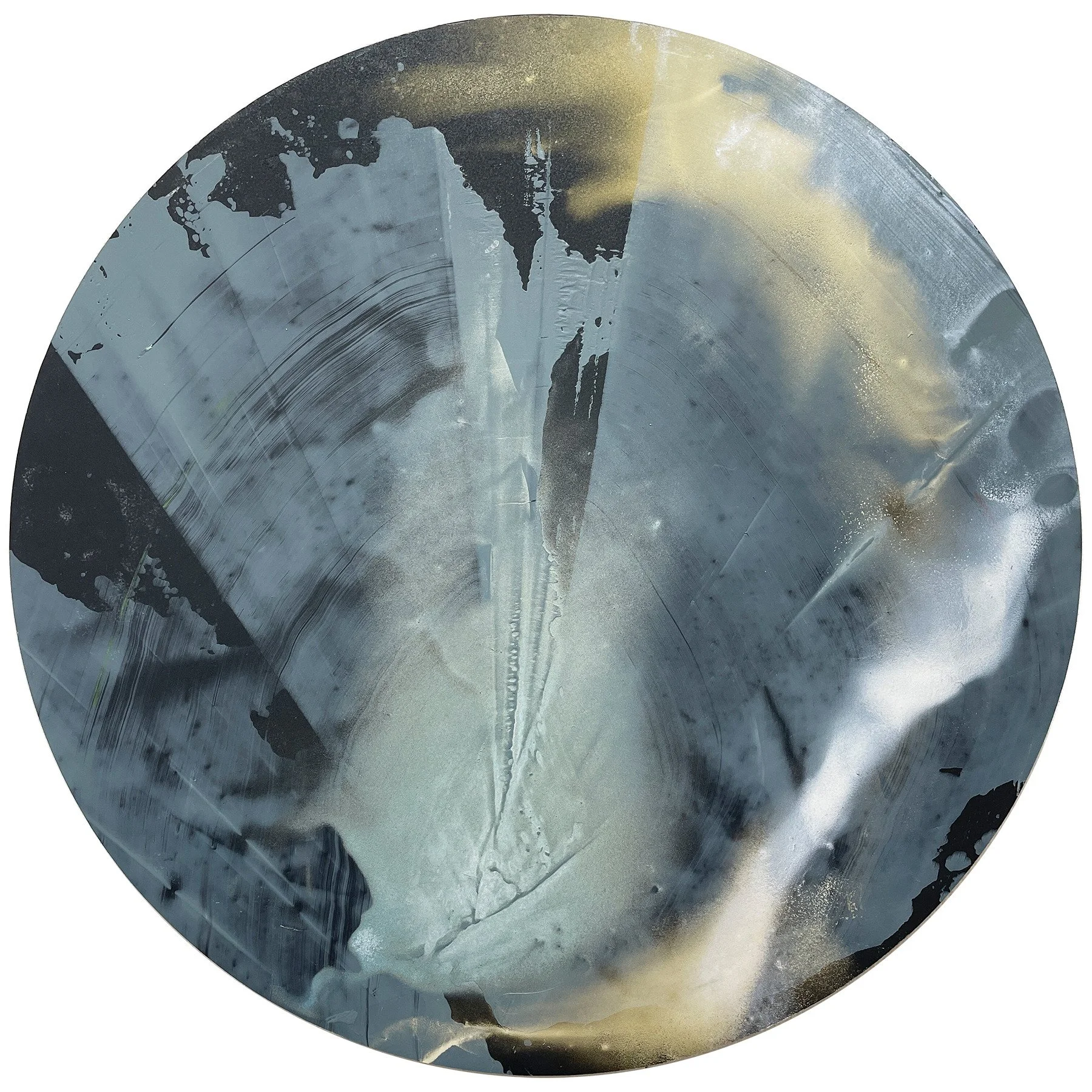
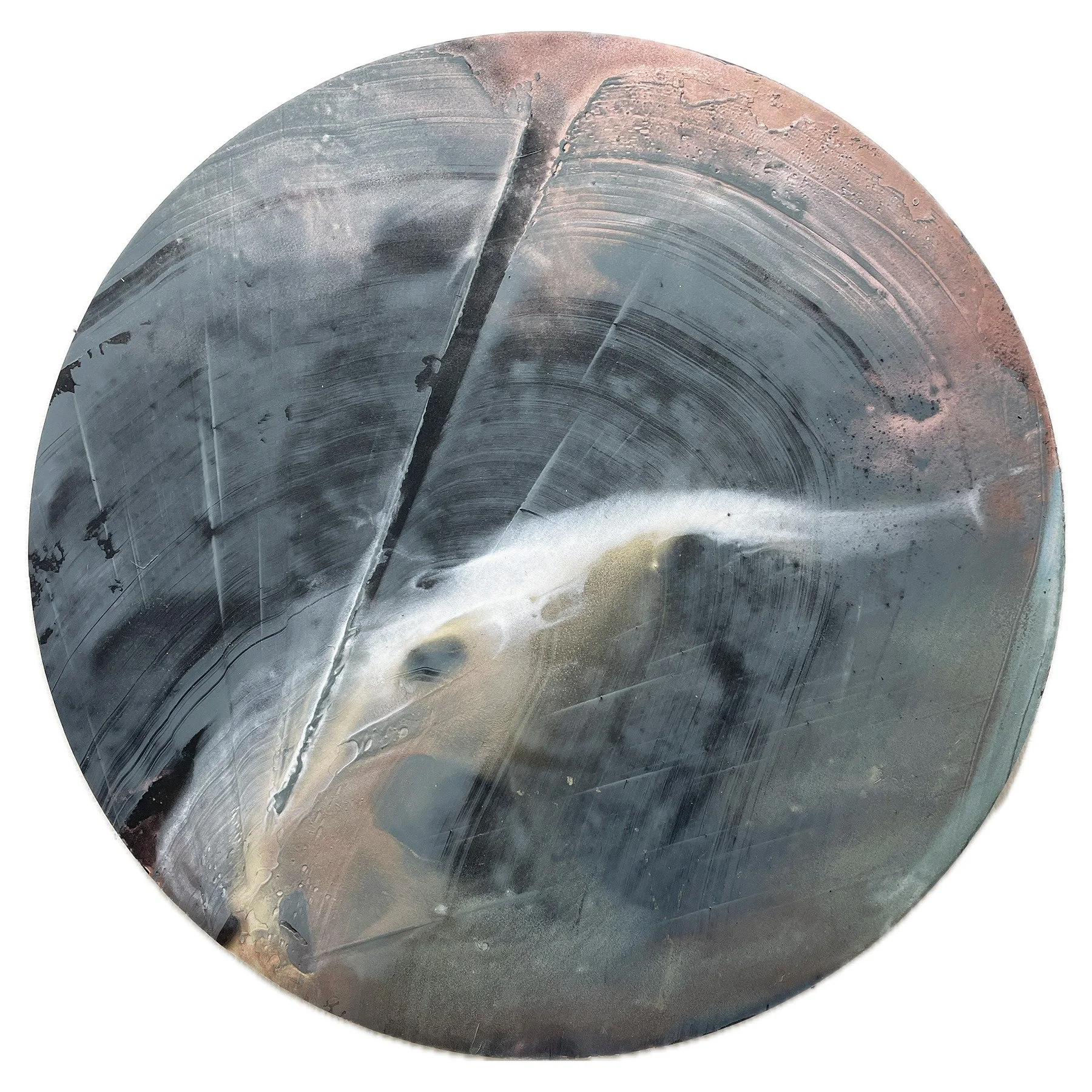
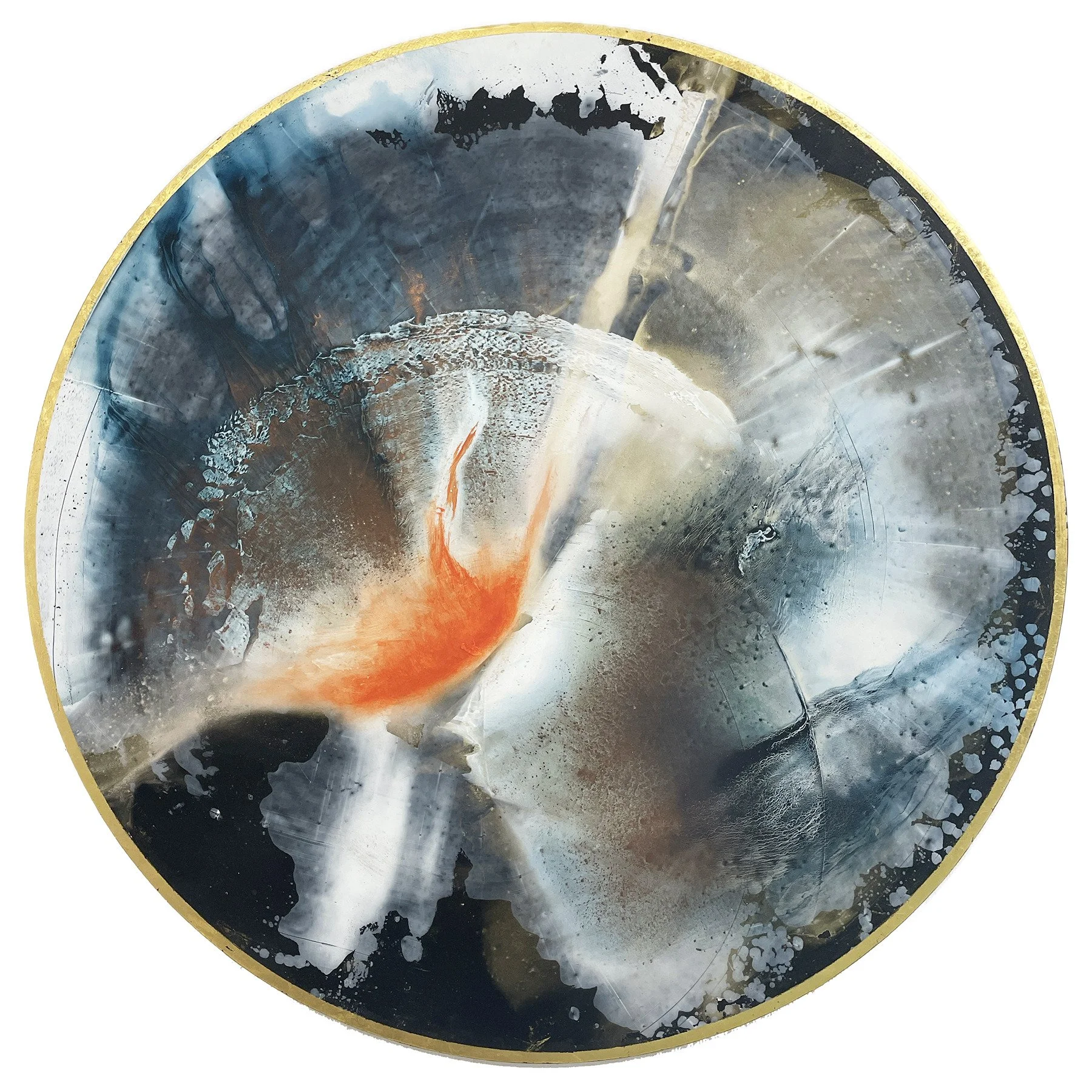
Karen Fitzgerald’s Bird of the Universe is a set of round paintings made in her Woodside, Queens studio over four months at the beginning of 2026. Each work evokes a bird in flight within a field of cosmic energy, though none is representational in a conventional sense. The forms are abstracted, partial, and suggestive rather than descriptive.
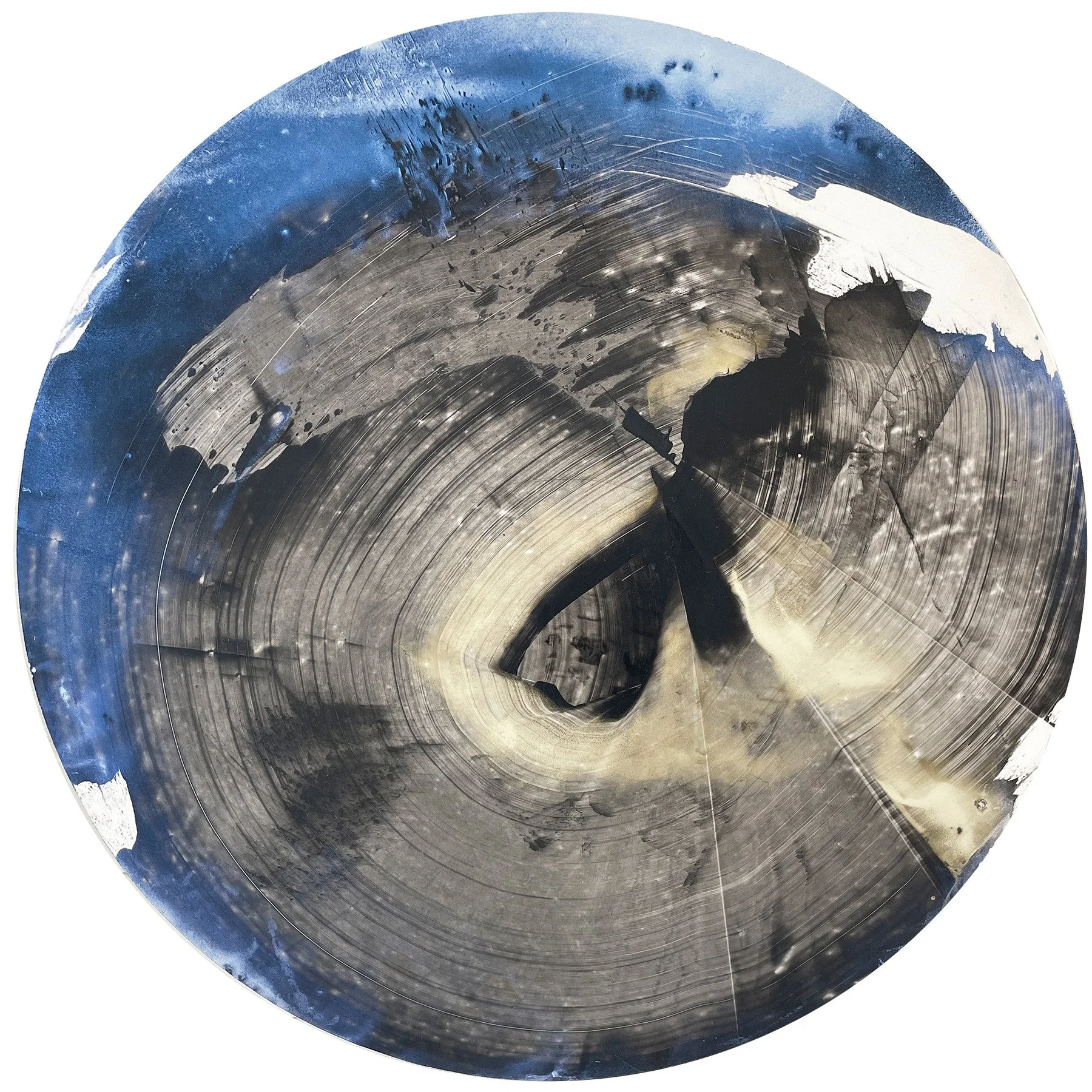
Completed Series
Bird of the Universe 7, 24" diameter, oil paint, mica, Venetian plaster with 23k gold on yupo mounted on panel, .5" thick.
The series began unexpectedly. While working one day, Fitzgerald recognized a bird within a field of paint. Rather than suppressing the image or returning the surface to abstraction, she followed the possibility it presented. The decision led to a sustained exploration of bird forms, drawing on a subject she had previously addressed more than twenty years earlier in a series of representational bird paintings.
These newer works retain no obligation to likeness. The bird is an emergent presence within paint, material, space, and movement. Each painting is circular, a format that supports the sense of motion and unbounded field surrounding the forms.
Material and Surface
The paintings begin on Yupo paper, which is later mounted onto thin wooden panels. Fitzgerald uses Venetian plaster, mica, and, in some works, 23-karat gold. Oil paint may also enter the process, while certain pieces begin with a black spray-painted ground.
The materials are not used to produce an image from a predetermined plan. Venetian plaster is mixed in a chosen color and applied with a large trowel in a single pass. That first layer is then sealed, becoming the surface from which the rest of the painting develops.
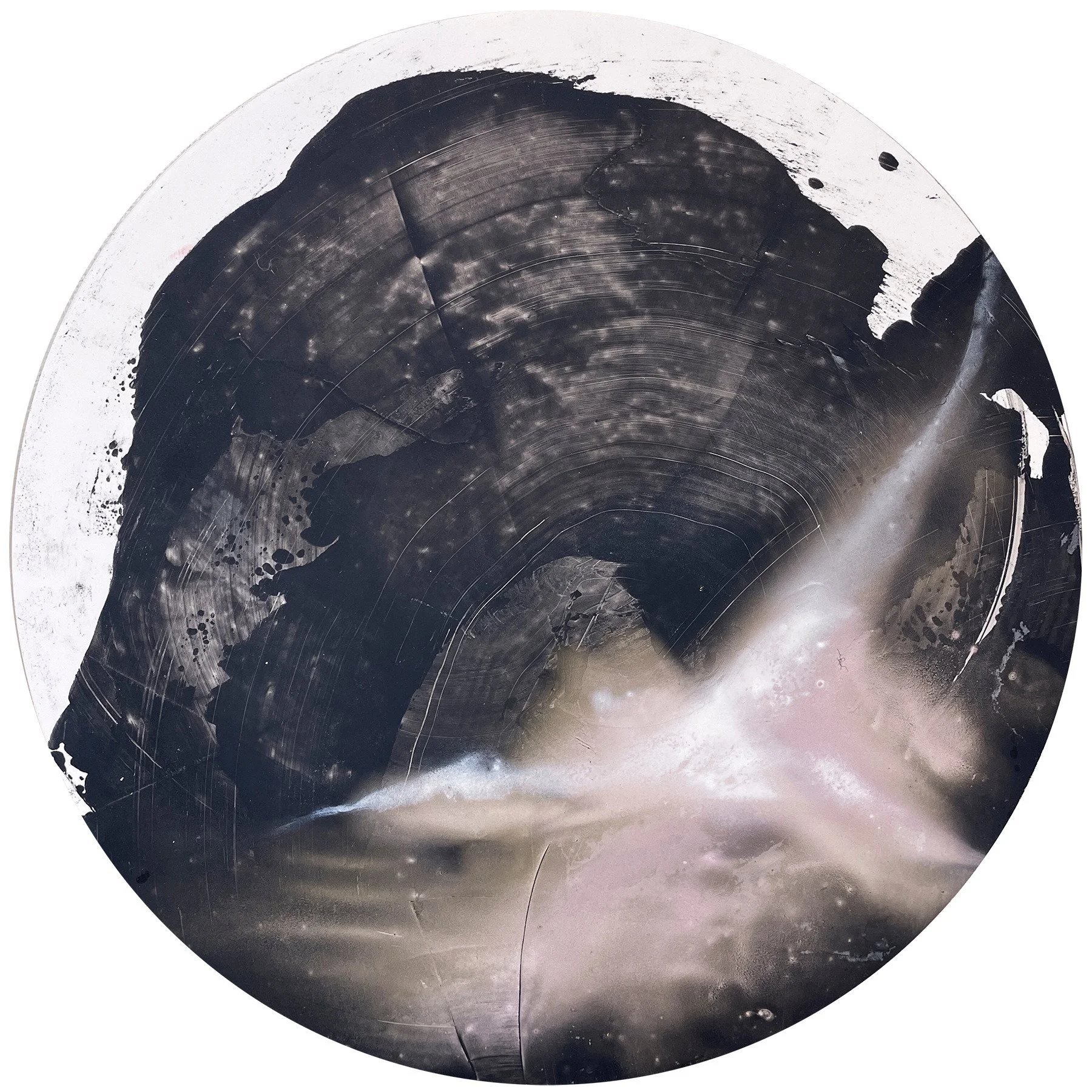
Work in Progress
Bird Of The Universe, 11" diameter, Venetian plaster with mica on yupo mounted on panel.
This initial gesture matters because it cannot be fully controlled or repeated. The trowel deposits color, texture, and movement at once, establishing a field that Fitzgerald then studies and responds to. The painting begins not with a drawn outline or fixed composition, but with a material event.
Fitzgerald also works with highly fluid media. Mica is mixed with gelatin until it has the consistency of clear water, while oil paint is thinned to a runny, puddling state. These materials introduce further movement and unpredictability. They create conditions rather than predetermined effects.
Working Without a Fixed Image
Fitzgerald sometimes begins paintings with an idea, but Bird of the Universe did not originate that way. The series emerged through working, looking, and allowing imagery to appear. Her approach is deliberately intuitive and largely without language while the painting is underway.
“I work without much planning and with zero language,” she says. Words may arrive later, once she has spent time with the work and begins to consider its next stage. In the studio, the process is more immediate: a conversation with materials, surface, and the image gradually coming into view.
As a painting develops, its spatial quality becomes clearer. Fitzgerald does not force this clarity. She follows what the work seems to require, making each successive decision in response to what is already on the surface. The relationship is cumulative, with the painting changing through material additions, shifts of color, and evolving forms.
For Fitzgerald, a successful painting cannot simply remain what it was expected to be at the start. “I consider a painting a failure if it remains as I thought about at the beginning of making it,” she explains. Transformation is not a secondary feature of the process. It is the reason for continuing.
Listening, Revision, and the Studio Environment
Fitzgerald describes a painting as something that can continue to “talk” to her over time. It indicates what it needs next, and the work proceeds through that exchange. When the conversation stops, she does not necessarily push the piece toward completion.
Some paintings are set aside. Others are eventually recycled into new works. Occasionally, they are destroyed. These decisions are part of a process that refuses completion for its own sake. A painting must remain active enough to generate another response.
The setting of the studio is also part of the work’s atmosphere. Fitzgerald’s space has east and west light and opens onto a garden filled with birds. Time spent working in the garden brings the actual presence of birds into proximity with the abstracted, airborne forms developing inside.
Bird of the Universe does not translate those birds into literal images. Instead, the series takes flight, movement, light, and the surrounding environment as material for a more open form of painting. The result is a body of work shaped by recognition, chance, and a willingness to let an image become something other than what it first appeared to be.