David Chan: National Identity 4.0 and Generation Lost
Inherited Narratives
David Chan’s ongoing National Identity 4.0 examines how Singaporean national identity is constructed, inherited, and repeatedly revised. Developed over approximately four years, the series began with a concern that familiar national stories can seem stable through repetition even when their histories are more complicated.
The work does not approach identity as a settled inheritance. It asks how official narratives, public symbols, historical images, and cultural behaviors are absorbed across generations, and what happens when they no longer align comfortably with lived experience.
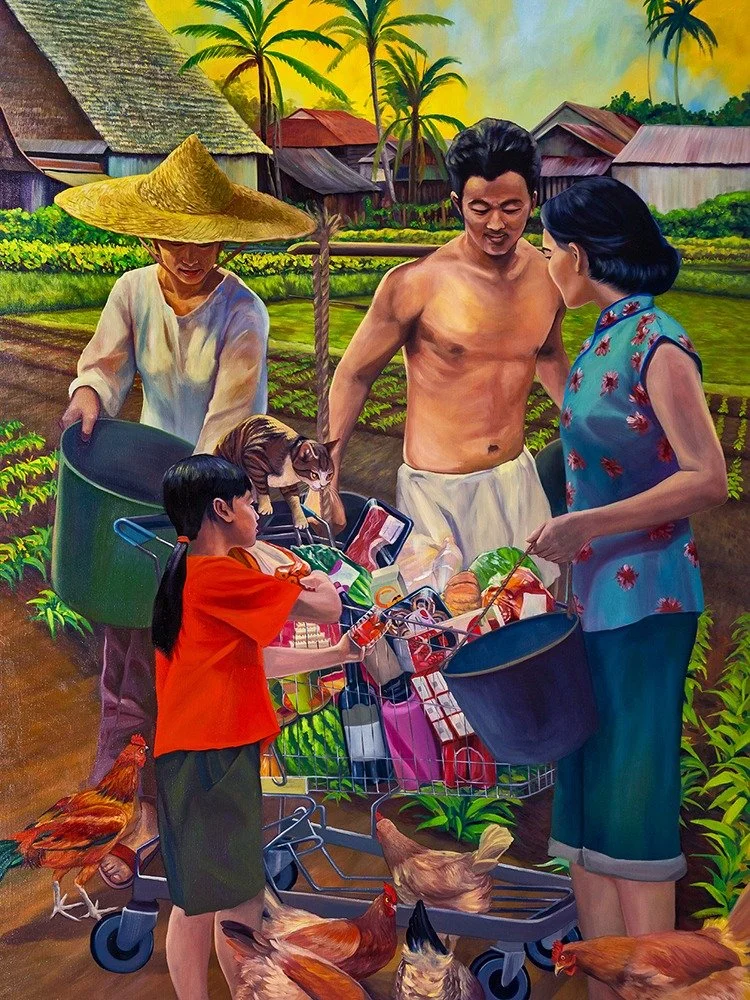
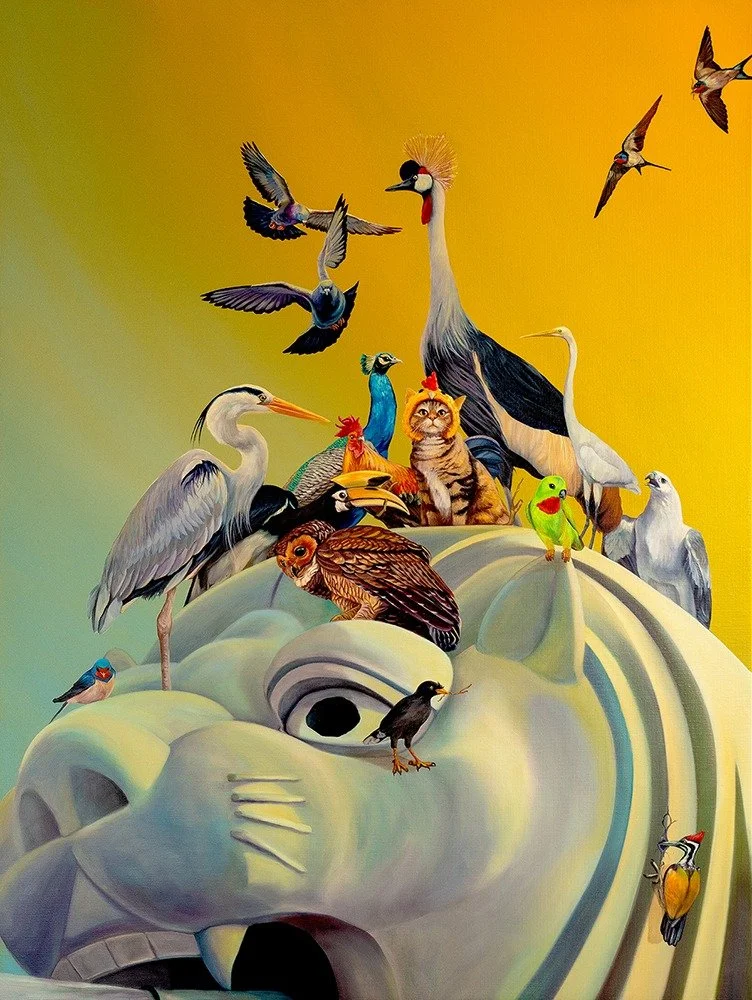
Completed Series
A plentiful harvest 120x160cm oil on linen 2025, One people, one nation 160x120 oil on linen 2024
Generation Lost, developed from 2026 onward, extends this inquiry to children born in the 2010s. These young people are digital natives, raised within an advanced technological environment while being asked to inherit traditions, histories, and cultural expectations shaped by earlier generations. Chan’s concern is not simply that tradition is disappearing. It is that tradition can remain highly visible while becoming emotionally distant or difficult to reconcile with contemporary life.
A Position Across Generations
Chan’s relationship to this material is shaped by several overlapping roles. He is a Singaporean artist who grew up with the national narratives he now examines. He is also an educator working with younger generations and a parent observing how his own children relate to the same cultural material.
Born in the late 1970s, Chan has witnessed changes in culture and tradition across three generational positions: his parents’, his own, and his children’s. He does not describe his children’s relationship with culture as necessarily weaker. Instead, it is mediated through different technologies, visual systems, and social values.
This perspective has shifted the work’s focus. What began as an examination of official narrative has become a consideration of the widening emotional distance between inherited identity and everyday experience. The series asks not whether young people will preserve tradition in the same form, but how inherited culture changes when the conditions of life, communication, and belonging have changed around it.
Researching Contradictions
A Chan work often begins with a contradiction. He may encounter a historical image, costume, public narrative, object, or cultural gesture that is familiar but does not fully fit the accepted account. The work begins by staying with that tension rather than resolving it immediately.
Research follows through archival sources, museum references, news reports, personal accounts, material culture, visual motifs, and conversations. Chan is interested in the point at which two versions of a story overlap: what is collectively remembered, and what documentary evidence or lived experience suggests.
The earliest stage is rarely a finished sketch. More often, it is an accumulation of image references, written fragments, screenshots, historical sources, material samples, and rough compositional studies. At this point, Chan is mapping relationships rather than choosing a final visual form. Repeated motifs gradually become anchors for the work.
The research does not function as illustration. It provides the historical and cultural weight necessary for the artwork to operate, but Chan does not want the final piece simply to explain what he has found. “The method gives the work its foundation,” he says, while intuition allows it to remain ambiguous, affective, and open.
Translation Across Media
Chan’s practice moves between studio work and research, using drawing, painting, sculptural studies, digital image-making, and conventional or contemporary production tools according to what the work requires. No single medium is central in itself. The essential process is translating a researched image or object into something capable of carrying a second, contemporary meaning.
This translation involves a mix of methodical and intuitive work. Research determines the historical context of an image before Chan uses it. Once he begins making, however, scale, surface, color, material behavior, and unexpected visual associations can redirect the piece.
A historical object, gesture, costume, or cultural motif may survive from beginning to end because it carries the conceptual weight of the work. What often disappears is the first composition, especially if it explains the premise too neatly. Literal symbolism and decorative references tend to be reduced once Chan identifies which elements are necessary.
The gap between subject and delivery is important to him. An image or narrative can lose information, exaggerate certain details, or take on an unexpected meaning when transferred into an artwork. These transformations are not simply technical side effects. They become part of the interpretation.
Different materials also create different relationships with the viewer. A sculpture physically intrudes into space, while a painting may require slower, more passive reading. For Chan, choosing a medium is partly a question of what kind of response or interaction the work needs to generate.
Adjustment, Revision, and Uncertainty
The work develops through broad phases: research and collection, visual planning with material and compositional testing, and then direct adjustment within the artwork itself. The sequence is not rigid. Chan jokes that an artwork often has “a life of its own,” with elements that appeared convincing in planning failing to work once made.
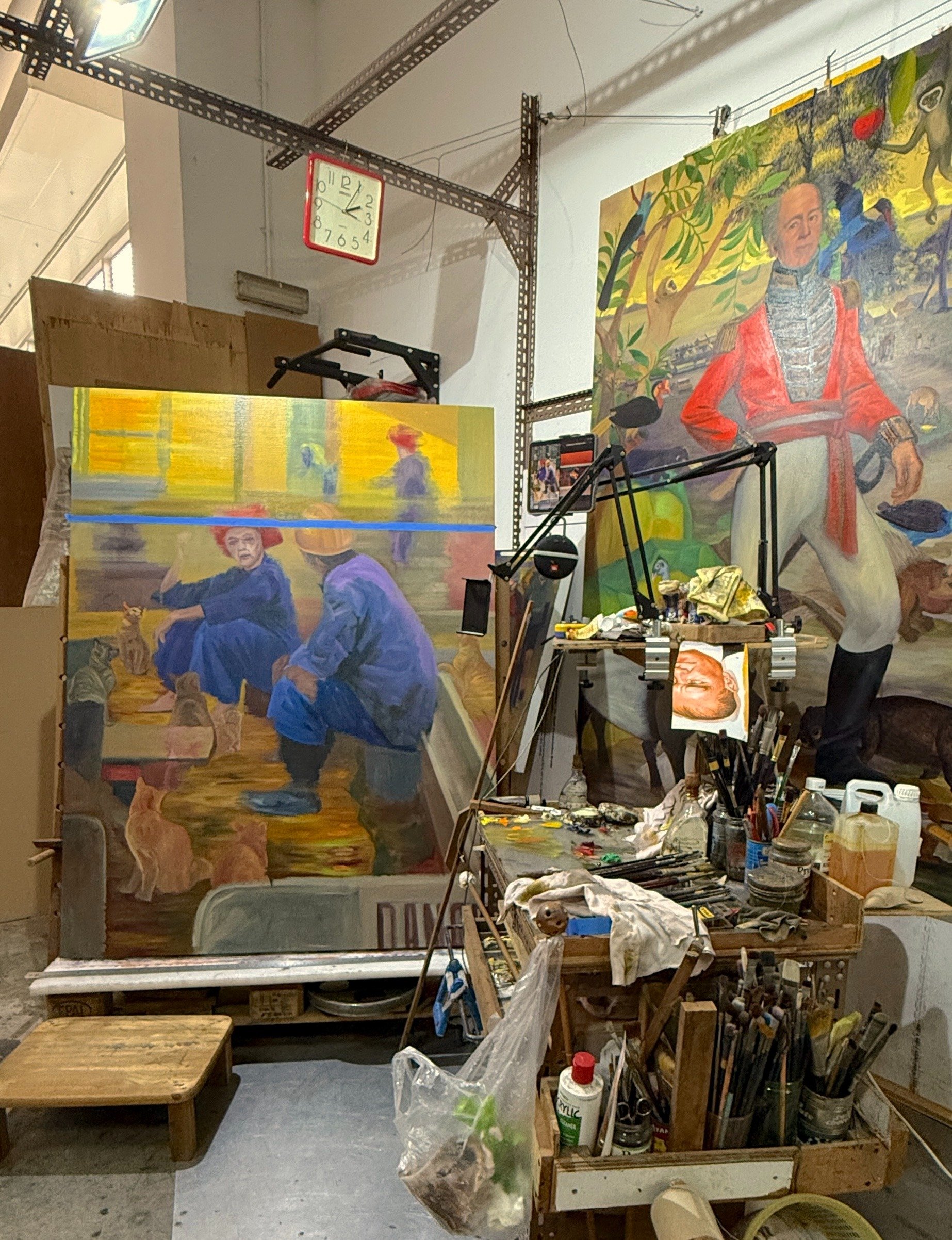
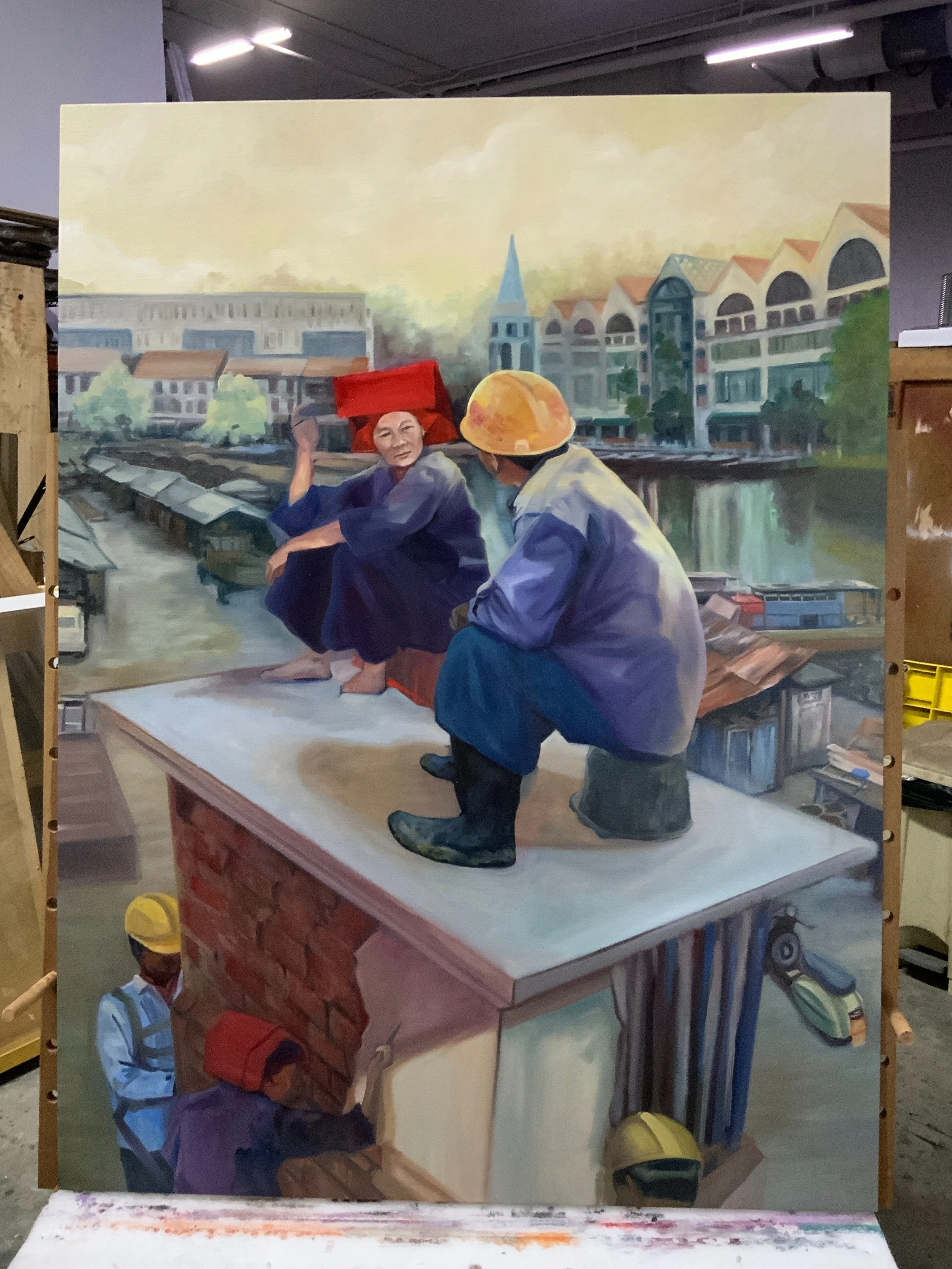
The discovery of a more complicated historical connection can reshape a work substantially. Chan does not regard this as a problem. If research reveals that an initial premise is incomplete or overly convenient, he would rather let the work become less certain than force it to support an argument that no longer holds.
This willingness to shift is fundamental to the series. Chan does not usually revisit completed artworks, but he does return to topics as new developments, influences, and historical information emerge. Some works remain unresolved for a long time because, as he puts it, they “don’t speak to me.” Resolution arrives when a work feels compositionally balanced and narratively dense, rather than when it merely restates the original plan.
Audience response can also become part of this extended process. Sometimes feedback comes too late to alter a completed work. Rather than attempting to retrofit the piece, Chan makes note of the response and considers a follow-up artwork in the future.
Fragmented Time and Sustained Attention
Chan’s working conditions are shaped by the overlapping routines of artist, educator, and parent. Research, reflection, and studio production are often fragmented rather than occurring in a single continuous block of time.
Repetition becomes useful in this context. Returning to an image or object over different periods can reveal associations that are not visible at first encounter. Chan values long periods of looking and thinking even when they do not immediately produce a physical result. Years in the field have also made him receptive to influence across disciplines, genres, and areas of research.
Within National Identity 4.0 and Generation Lost, this sustained attention is inseparable from the subject. The work considers how cultural narratives are repeated, modified, and carried forward. Its own process follows a similar pattern: returning to familiar materials, testing their assumptions, and allowing new evidence or visual decisions to change what they can mean.