Dylan Rivera: The Matriarch
Presence, Power, and Material History
Dylan Rivera’s The Matriarch considers presence, power, reverence, and honor through a sculptural form shaped by drapery, fracture, and material contrast. The work approaches the matriarch not as a quiet symbol of authority, but as a figure of “powerful elegance,” with a poise that commands and asserts.
The sculpture uses epoxy putty, plaster, adhesive, and joint compound to create surfaces that recall fabric while resisting its softness. Rigid folds and billowing drapes emerge from materials associated with polymer, repair, and construction. This tension is central to the work’s conceptual structure.
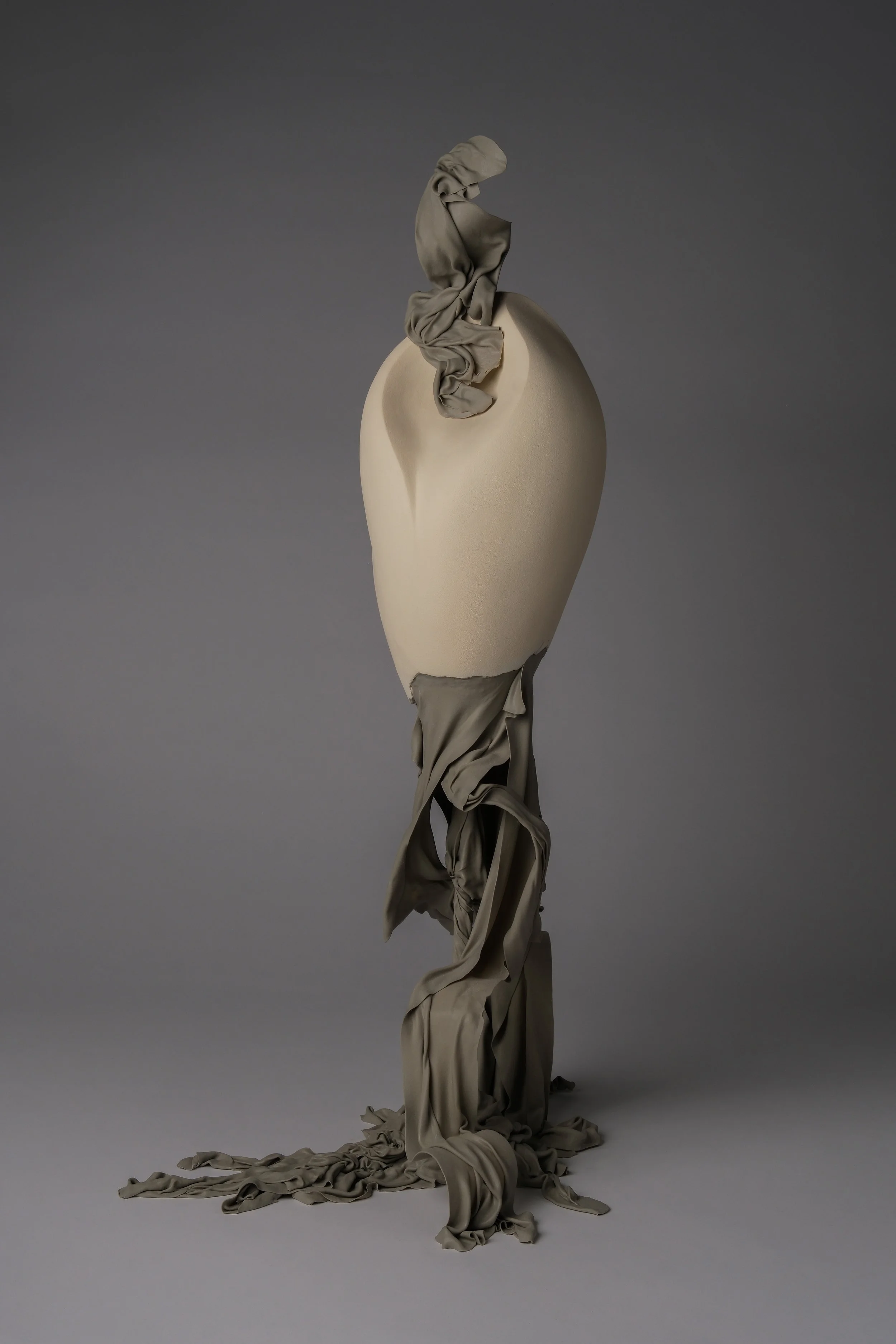
Completed Series
These photos are from a commercial shoot for a few of my sculptures. I think the lighting and gray background really serves the mood of the piece.
Rivera connects the work’s materials to changing histories of the body and ornament. Fabrics associated with earlier eras become polymers, while the powdered flesh of ancient royalty becomes, in the artist’s formulation, a hollow calcified plaster shell. The sculpture brings these material associations into conversation with a contemporary idea of the matriarch, one shaped by plasticity as much as permanence.
Beginning with a Blueprint
Rivera’s process usually begins with models, material studies, and sketches. The earliest version of a work is what the artist calls a sculpture blueprint, a diagram that establishes an initial direction before construction begins.
That blueprint is rarely reproduced exactly. Rivera works intuitively and allows design elements to fall away when they no longer feel active or compelling. The original plan for The Matriarch was substantially different from the final sculpture.
This willingness to depart from the initial design is part of a wider commitment to experimentation. Rivera regards a consistent state of material exploration as necessary for keeping the work open to innovation. The sketch is a point of departure, not a contract.
The Crack as a Structural Decision
The Matriarch was made within a three-week critique cycle, which meant that material problems had to be addressed quickly. During the process, the sculpture cracked at its base because a hydrophobic layer of adhesive had been placed between the plaster and the form.
The crack could have been patched and concealed. Instead, it redirected the sculpture. Rivera began to consider whether drapery could emerge from the opening itself, allowing the fracture to become a formal source rather than a mistake to erase.
This was a turning point in the work. Rivera describes the piece as the point at which they became more comfortable using accidental hurdles as part of the process. The crack changed the final structure of the sculpture and made visible the role of error, repair, and adaptation within its construction.
The drapery therefore does more than refer to fabric. It appears to flow from the damaged area, connecting the sculpture’s material instability to the movement and authority of the figure it evokes.
Experiment, Deadline, and Resolution
Rivera notes that work often changes most significantly when mistakes and unintended accidents appear. Intuitive making can release raw imagination, but it can also produce technical hurdles that require a more grounded response. In the studio, some works may remain unfinished for years before the artist finds a reason to return to them.
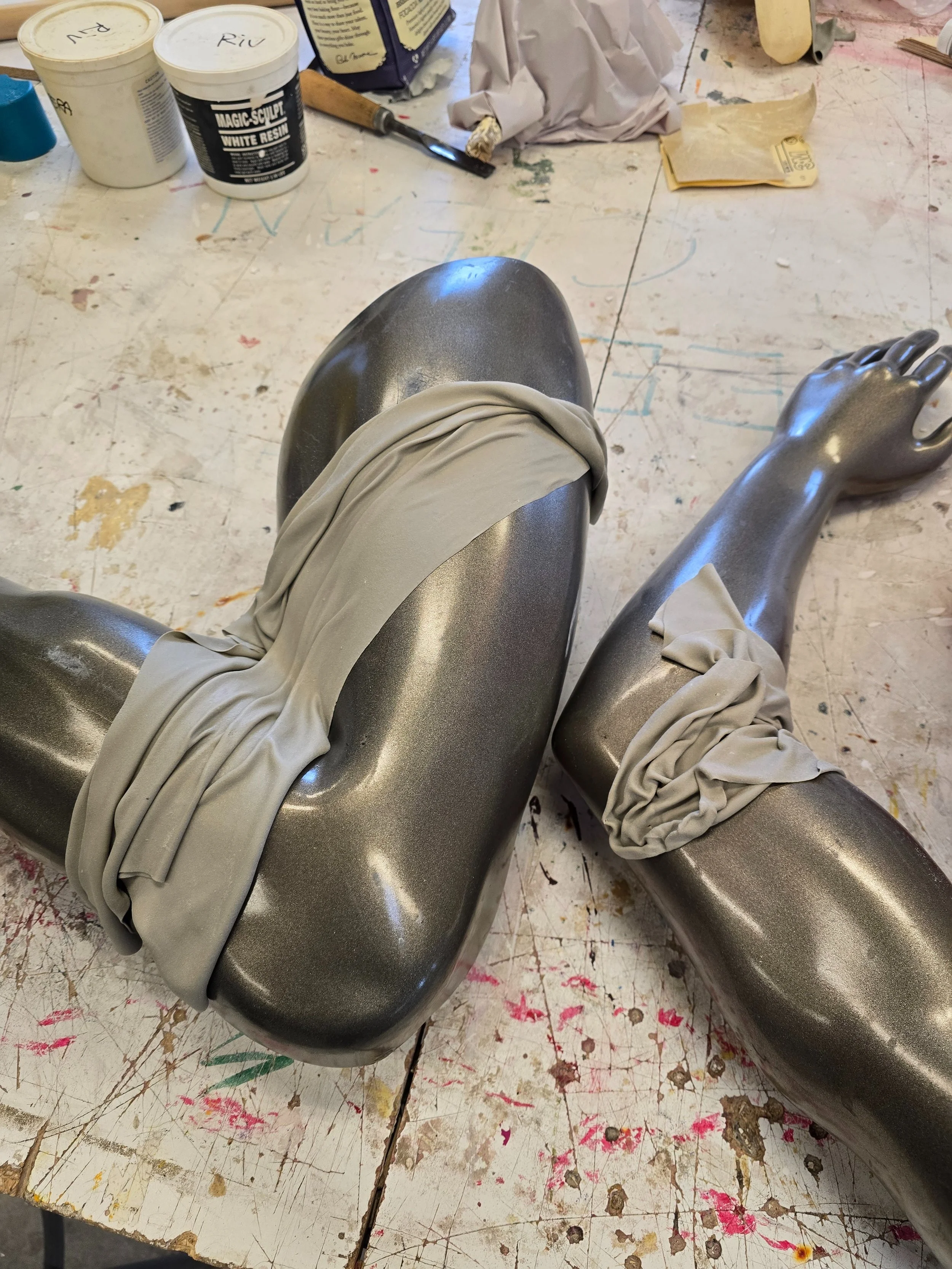
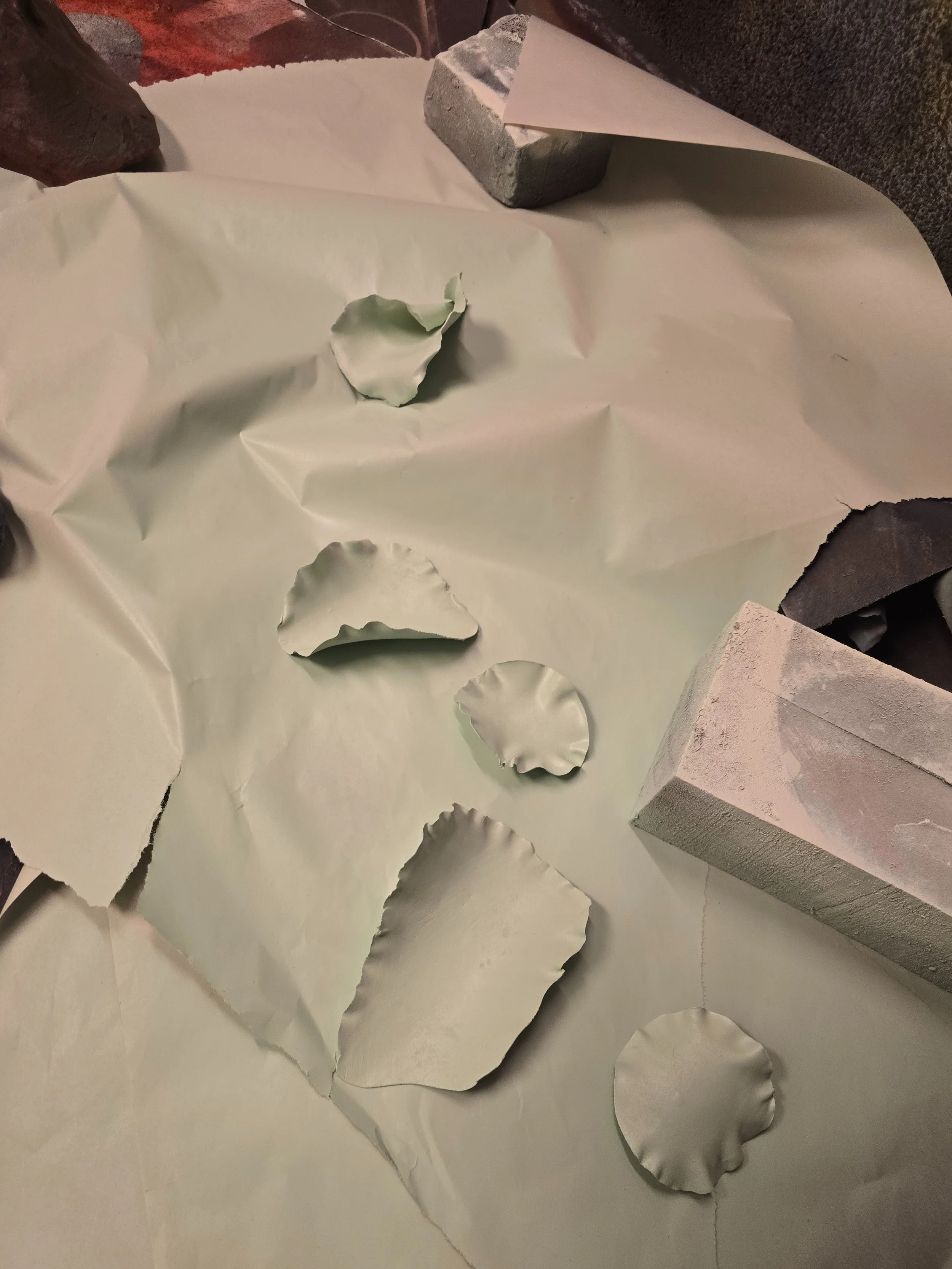
Work in Progress
These photos are from a commercial shoot for a few of my sculptures. I think the lighting and gray background really serves the mood of the piece.
The Matriarch required a different rhythm because of its deadline. In that context, the work began to feel resolved when the available experimental measures had been exhausted. Completion is not simple. Rivera describes wrapping up a sculpture as one of the most difficult parts of making, particularly because every finished work can seem as though it might have been improved or made differently.
Still, finishing is necessary. It allows the artist to step back and understand what worked, what did not, and what can carry into the next project. The original idea is almost never replicated. Instead, iteration, experimentation, emotional state, and material behavior determine the work’s final direction.
Material Demands
For Rivera, material limitations are not merely restrictive. They can create opportunities for unconventional reintegration, transformation, and disruption. The demands of a material can be stubborn, but they can also reveal formal possibilities that were unavailable in the initial design.
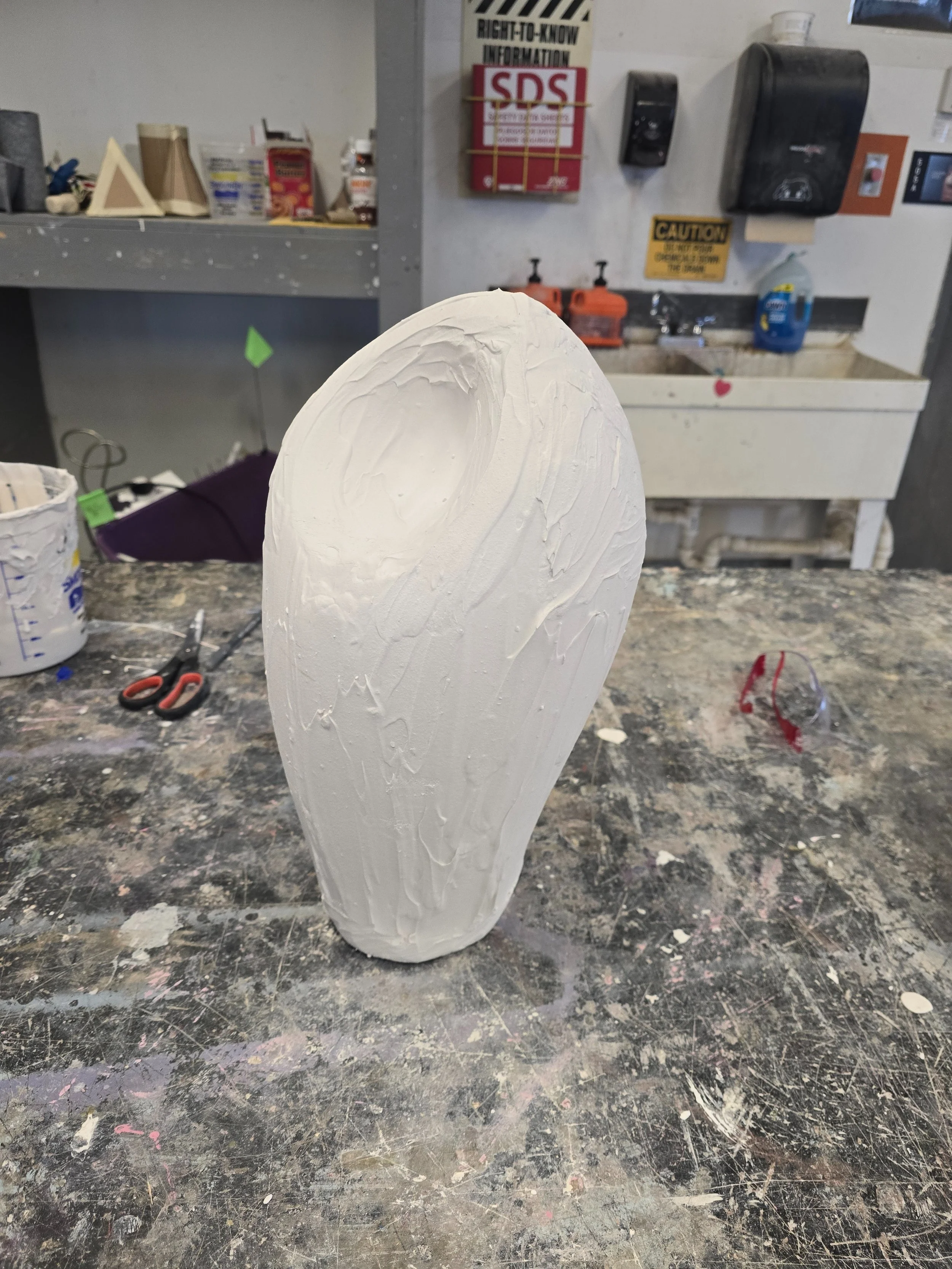
Rivera’s Reflection
It was definitely a challenging process for this piece, but the learning curve from the making of Matriarch was invaluable.
Recent technical experimentation has included a process learned from a friend: covering the form in plaster before applying the final joint-compound layer. This creates a smoother finish and prevents the artist from cutting into the filling substructure during later work.
The in-progress studies for The Matriarch record this combination of testing and troubleshooting. They show a process in which materials are not made to disappear behind a finished surface. Their failures, resistances, repairs, and changes of direction remain active in the final sculpture.
In The Matriarch, the crack is not an interruption to the work’s meaning. It is one of the conditions that allows the work to become what it is.