The Wilderness
by Joy Tirade
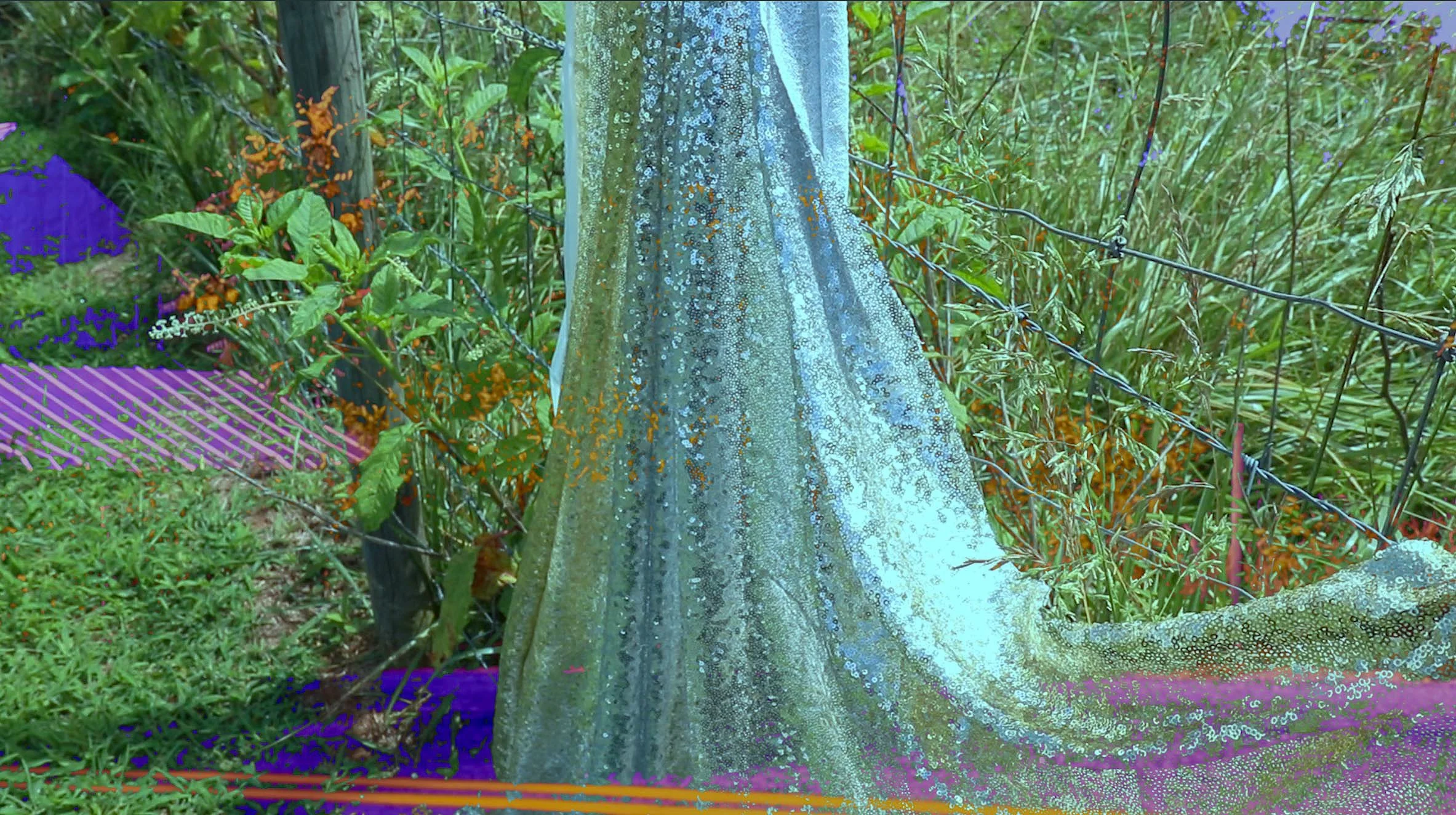
“I am deeply interested in time, perception, and memory, ideas that have shaped my work for as long as I can remember. I often return to the sense of solitude and wonder I felt growing up within a vast, untamed landscape. That environment left a lasting imprint on me, especially during a period of personal transition: moving from New York to Virginia to live with my grandparents while my father was away at sea and my mother was ill. Experiences of absence and displacement continue to inform my practice, shaping how I approach embodiment, recollection, and longing. Working across immersive video and hybrid, process-based painting that often incorporates photography, I am drawn to spaces where materiality meets absence and where the personal overlaps with the collective. Influenced by art history, speculative fiction, and emerging technologies, I use my work to imagine alternate futures while holding space for what has been lost, transformed, or only partially remembered. The Wilderness extends these concerns through a meditation on the relationship between place, lived experience, and human emotion. As we return to a site over time, experience reshapes it. Layers of recollection accumulate in the landscape, while the land itself scripts new forms of remembering. In this way, a place becomes a depository of feeling that shifts and dissolves alongside environmental change. Duration is understood not as linear chronology but as a process of accumulation and erosion, revealed through slow looking, repetition, and return. Through repeated visits to the same site, including field recordings captured exactly one year apart, the work allows duration to register as both recurrence and change. Across this work, landscapes function as quiet witnesses, holding traces of prior presence while registering the effects of weather, time, and human intervention. I explore presence and absence as carriers of meaning, forms of communication that gesture toward what persists just beyond visibility. The environments I engage are not passive settings but living systems that respond, adapt, and retain, shaping consciousness as much as they are shaped by it. Attending to cycles of decay, regrowth, erosion, and care, my work values forms of knowledge rooted in observation, listening, and sustained attention. Within this framework, I question inherited hierarchies between nature and culture, permanence and vulnerability, allowing for more interdependent and embodied ways of understanding the land to emerge. In video, I work with saturated overlays to heighten these tensions, emphasizing trace, atmosphere, and subtle shifts over spectacle. What is revealed and what is obscured reflects the fragility of both ecological and emotional systems under pressure. Through The Wilderness, I consider landscapes and bodies as sites of transmission shaped by climate, duration, and memory. The images function as quiet messages, carrying echoes of past and future narratives and inviting viewers into a slower, more attentive relationship with the environments they inhabit.”