Maia Engel: Mythic-Surrealist Dreamscapes
Building an Interconnected Visual World
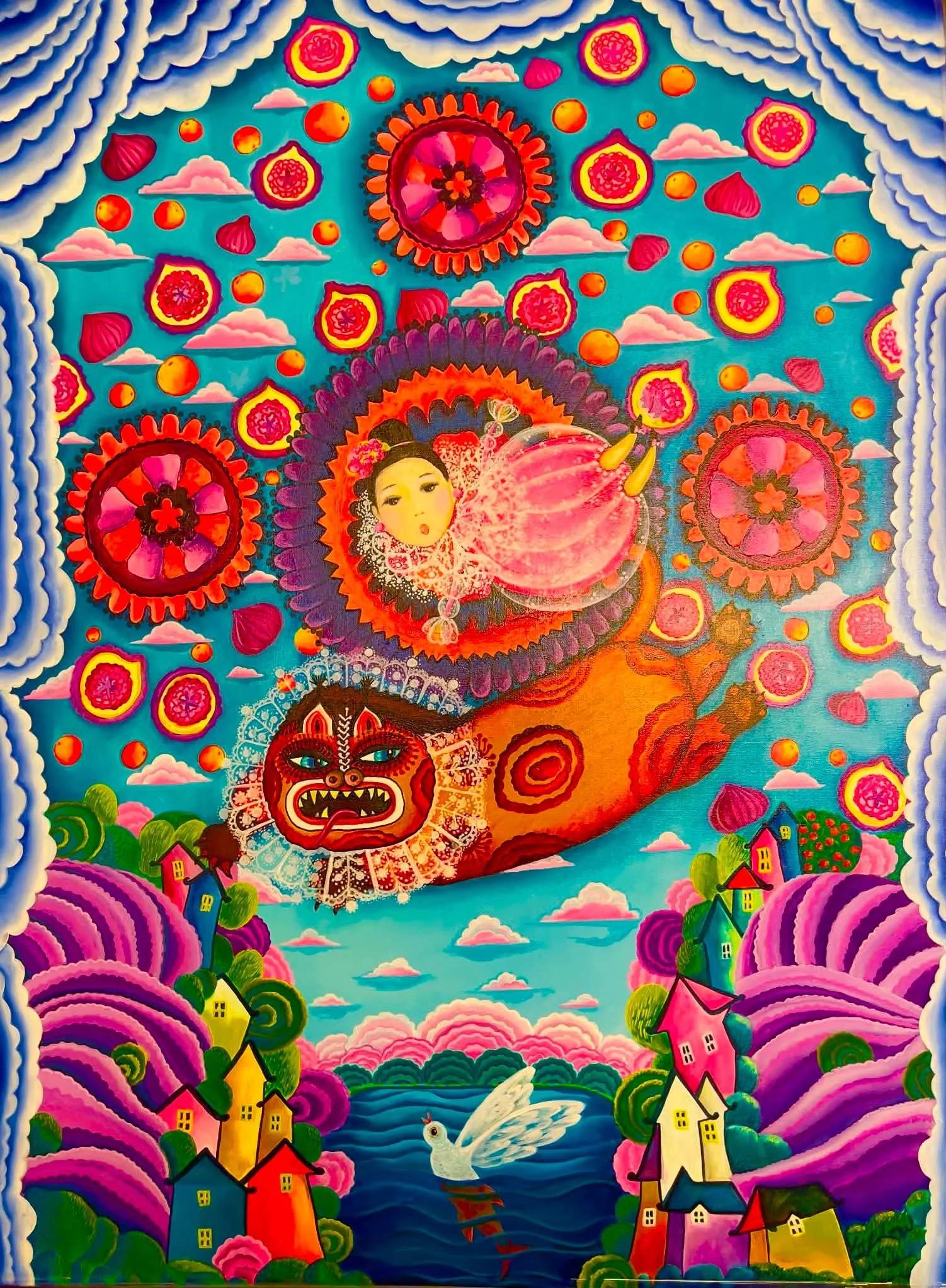
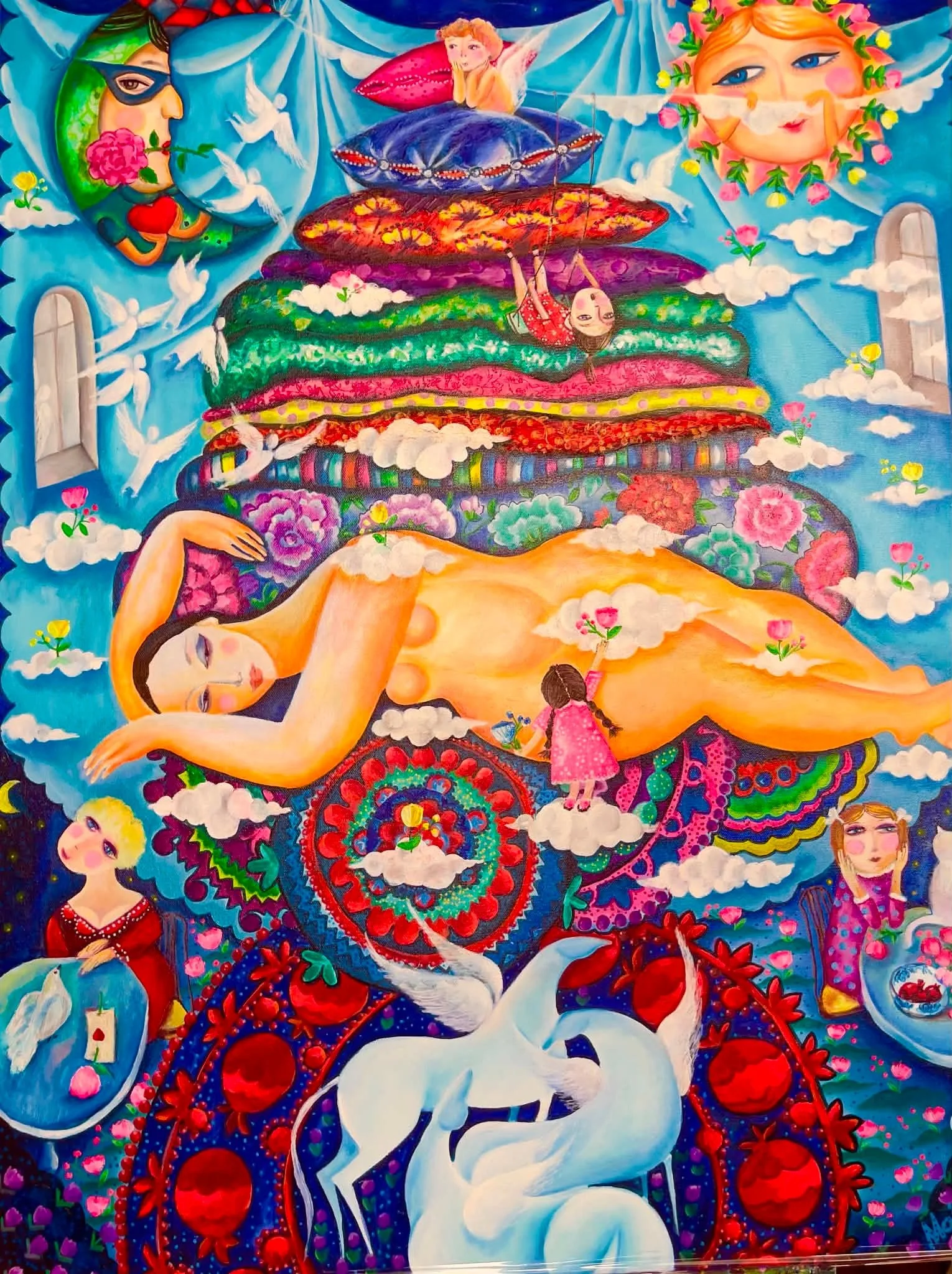
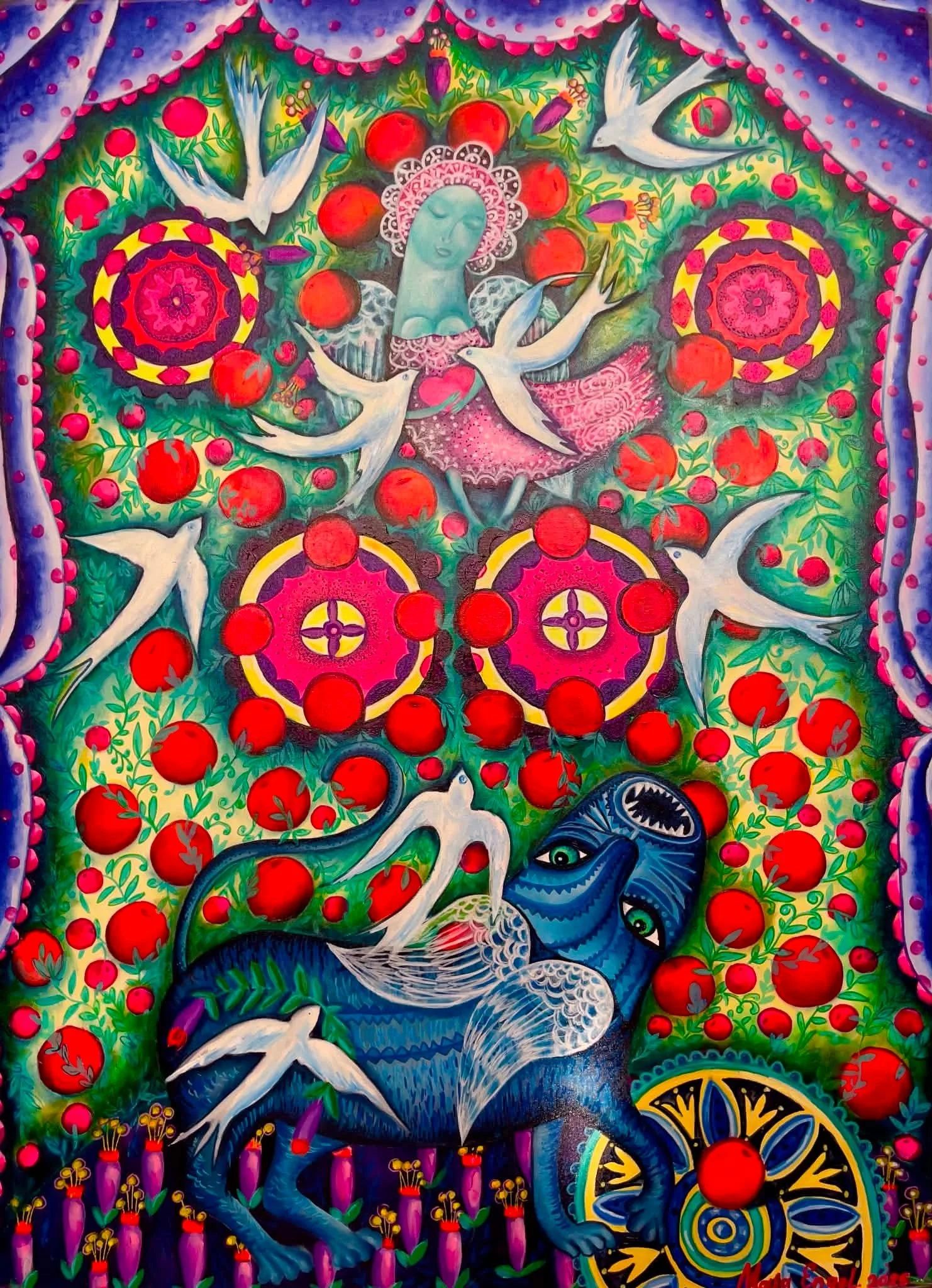
Maia Engel’s recent series brings human, animal, and celestial figures together within vivid mythic-surrealist paintings. Pomegranates, birds, mandala motifs, cats, hybrid creatures, and fantastical figures recur across richly patterned dreamscapes. The individual works are distinct, but together they form an interconnected visual world shaped by folklore, fantasy, spirituality, and decorative detail.
The series developed over a focused six-month period. It began as a set of experiments combining symbolic figures, fruit, birds, mandalas, and hybrid forms. As these elements returned from painting to painting, they became the vocabulary of a larger universe.
Engel’s longstanding interest in folklore, spirituality, and emotional narrative informs the work’s progression. Color, pattern, and fantastical imagery are used to address transformation, protection, and inner life, without reducing those concerns to literal illustration.
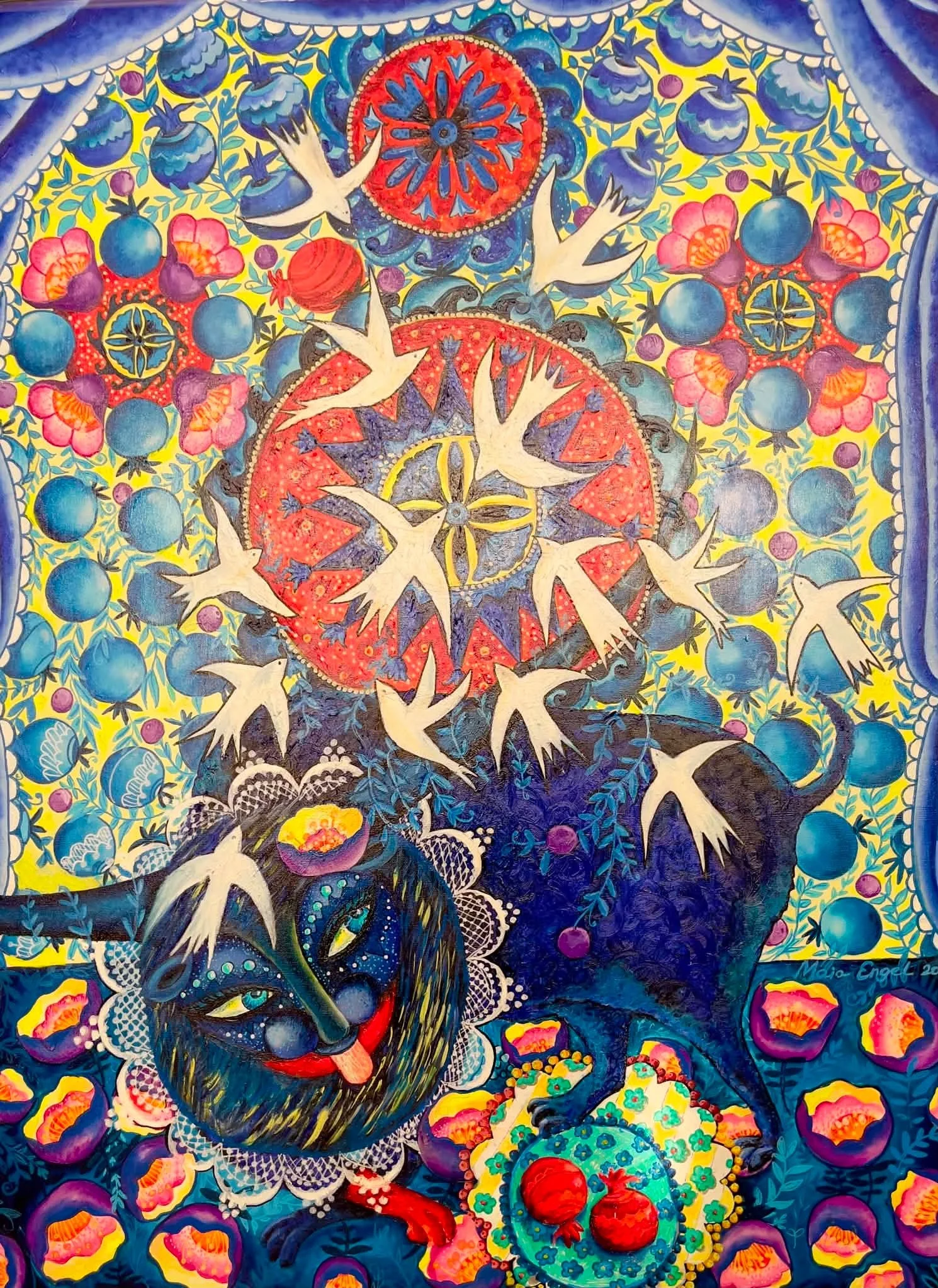
Completed Series
All four works form a single mythic‑surreal universe where hybrid figures, celestial beings, animals, and symbolic motifs like pomegranates, mandalas, and birds interact in richly patterned dreamscapes. Together, they create a vivid narrative world that blends fantasy, folklore, and inner emotional symbolism into one continuous visual mythology.
Scale, Materials, and Surface
The paintings are made in a home studio on large 36-by-48-inch canvases. Engel works with oil and acrylic, building the surfaces through successive layers of color, texture, and ornamental detail.
Brushes are used for intricate patterning, while palette knives introduce texture and more immediate shifts in the surface. Intuitive mark-making establishes figures, creatures, and motifs before the paintings move into more deliberate stages of refinement.
The process balances instinct and structure. Loose, gestural forms are allowed to emerge at the beginning, then developed through repeated layers, color decisions, and smaller decorative elements. This gradual buildup gives the works their dense, symbolic atmosphere.
Beginning with an Image
A painting often begins with an intuitive spark: a creature, symbol, or fragment of myth that appears before the larger composition is clear. That first image becomes an anchor around which the rest of the work develops.
The earliest version is minimal. It may consist only of a few symbolic shapes, a cluster of birds or pomegranates, or the first outline of a figure. These early marks establish the work’s emotional register and mythic setting without determining every later decision.
As the painting grows, Engel expands outward from this core through layered color, narrative relationships, and pattern. The symbolic elements remain present throughout the work, but their scale, position, and role can change significantly as the composition develops.
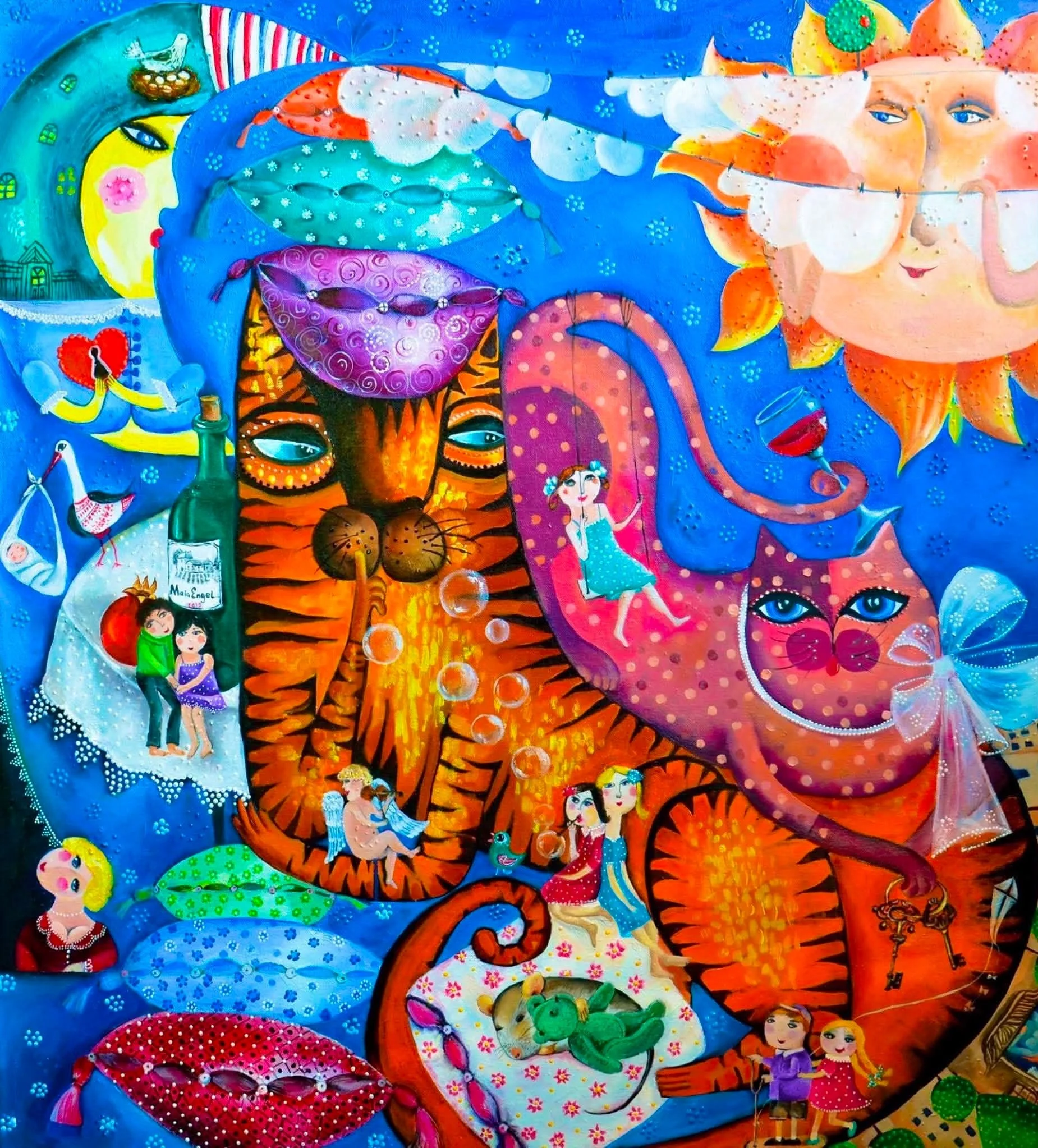
Cats Beneath the Sun and Moon
Rigid compositions and literal ideas are often abandoned early. Once the internal world of the painting begins to form, elements that do not support its dreamlike narrative fall away. The work is allowed to move beyond the initial image as long as it remains connected to the symbolic core that prompted it.
From Gesture to Detail
The work shifts gradually from loose marks into refined figures, denser patterning, and more complex color relationships. The final stages introduce small details that lock the visual world together: birds, fruit, faces, atmospheric touches, and ornamental forms.
Engel revisits paintings primarily in their early stages, when the central figures or symbols do not yet feel convincing. Once those foundational elements are in place, later decisions focus on refinement and relation rather than wholesale revision.
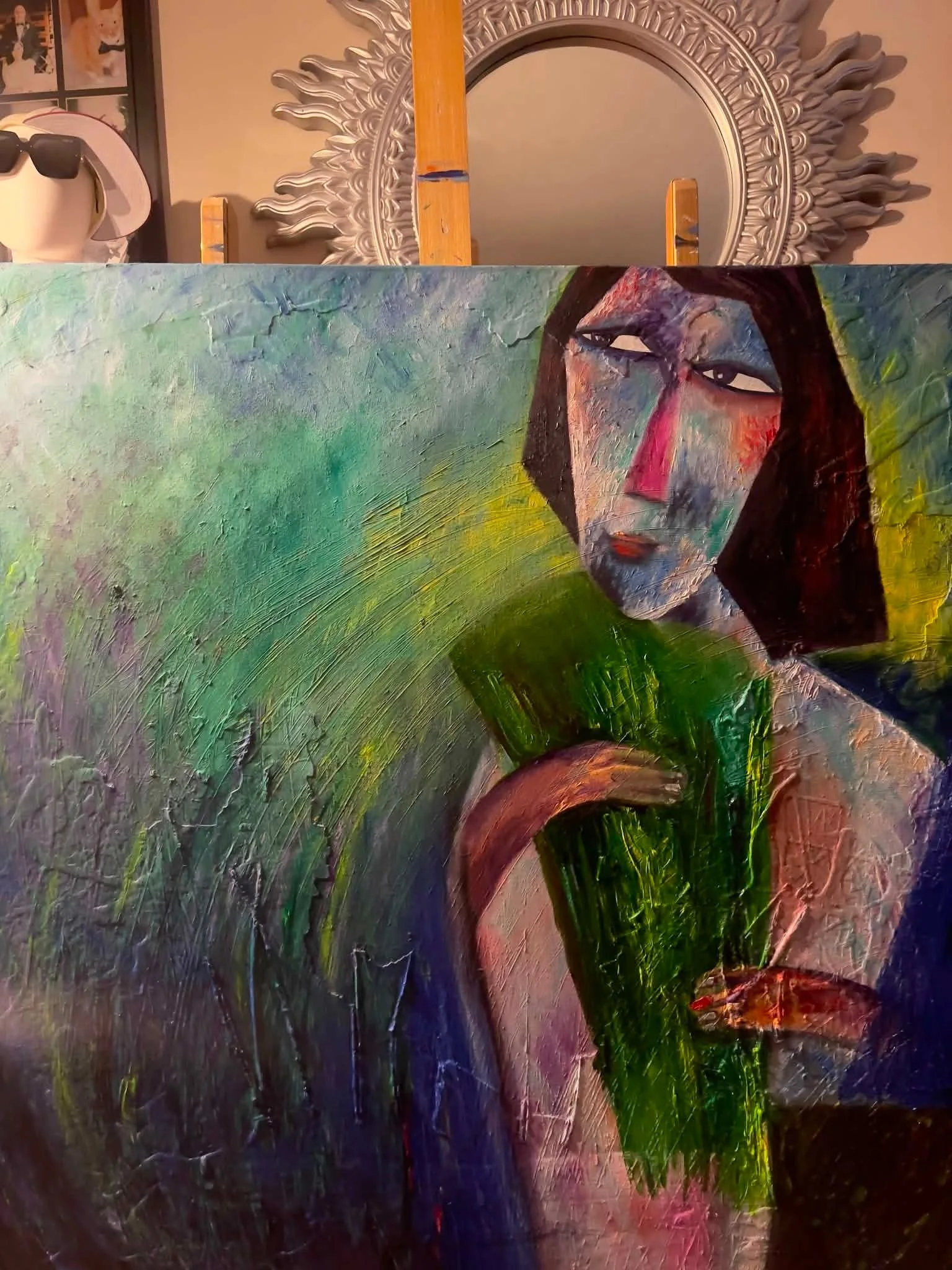
The Quiet Weight
A work begins to feel resolved when the final details no longer seem to ask for further additions. The figures, patterns, color fields, and smaller symbols establish a coherent internal logic, and the painting’s world feels complete without becoming overexplained.
The most substantial changes often come from altering the scale or role of a central figure. Cats, celestial bodies, and symbolic objects can reshape a painting’s emotional logic simply by becoming larger, smaller, more dominant, or more peripheral. The work may drift from its initial intention, but Engel treats this drift as expansion rather than contradiction.
Rhythm, Constraint, and Density
Engel’s environment shapes the rhythm of the work. Long, quiet stretches in the studio make space for the larger forms and central figures to emerge, while shorter sessions are used for smaller symbolic details. Silence or music can influence the mood of the palette and patterns, while repetition helps maintain continuity across the series.
Routine keeps the larger visual universe coherent, but interruptions can also be productive. A break in the work may introduce an unexpected shift in imagery or color that changes the direction of a painting.
Material limitations affect the density of the final image. When time, space, or paint is limited, the work becomes more distilled, with fewer figures, clearer symbols, and broader color fields. When materials are more available, the paintings expand through additional layers, small interactions, and celestial or mythic details.
These constraints do not prevent the work from developing. They determine how elaborate the visual world can become and redirect its energy toward either concentration or abundance.