The Series
Amy McLaren’s Sock Puppet series is a body of oil paintings developed primarily in the studio over the past year. Each work is built through a layered process of adding, removing, and reworking paint, allowing the image to remain responsive rather than fixed from the outset. The paintings are not simply carried from sketch to completion. They are repeatedly adjusted as their forms, relationships, and emotional registers emerge.
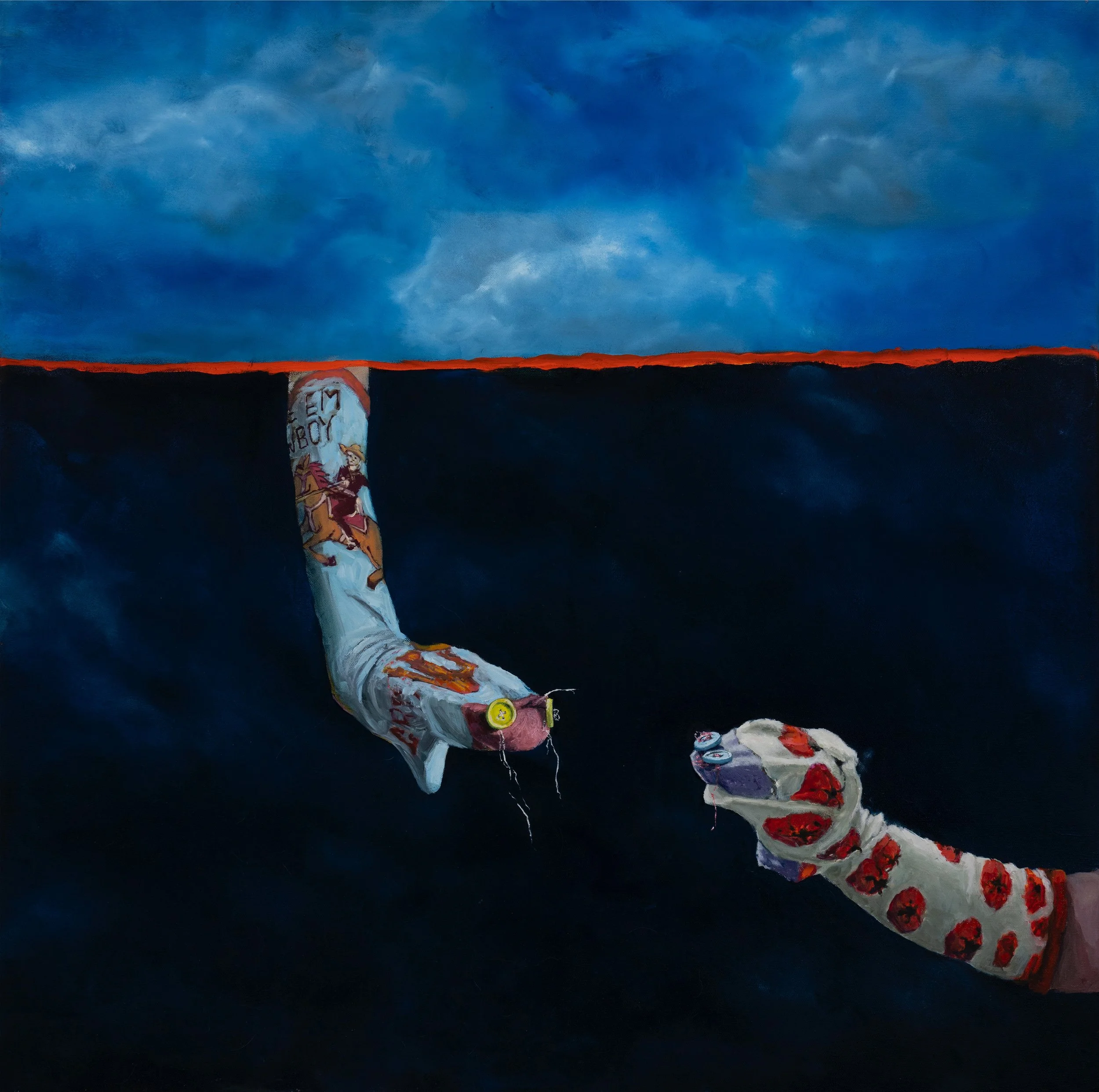
Completed Series
A quiet, emotionally charged exchange between two sock puppets, suspended in a dark, open space beneath the sky. Their fragile, imperfect forms suggest connection and vulnerability.
The series developed from McLaren’s ongoing interest in representing emotional and psychological states without relying on a stable or literal figure. Earlier works included masked figures, but over time the figure itself was removed. The sock puppets that replaced it operate as stand-ins: suggestive of the human condition, but without the specificity of an identifiable person.
This shift gives the work a particular kind of openness. The puppets retain a playful visual charge, but they are not treated as comic devices. Their simplified forms allow McLaren to consider vulnerability, tension, connection, and distance without assigning these conditions to a fixed identity. The series explores what is shared between people as well as what separates them.
The paintings hold these questions without resolving them into a single story. The images remain deliberately open, allowing the figures and their relationships to carry different associations for different viewers.
Beginning a Painting
McLaren usually begins with a loose idea, a feeling, or a vague sense of tension rather than a completed image. The initial composition is simple, often limited to placement and gesture. This provisional beginning is important because it leaves the painting room to change as it develops.
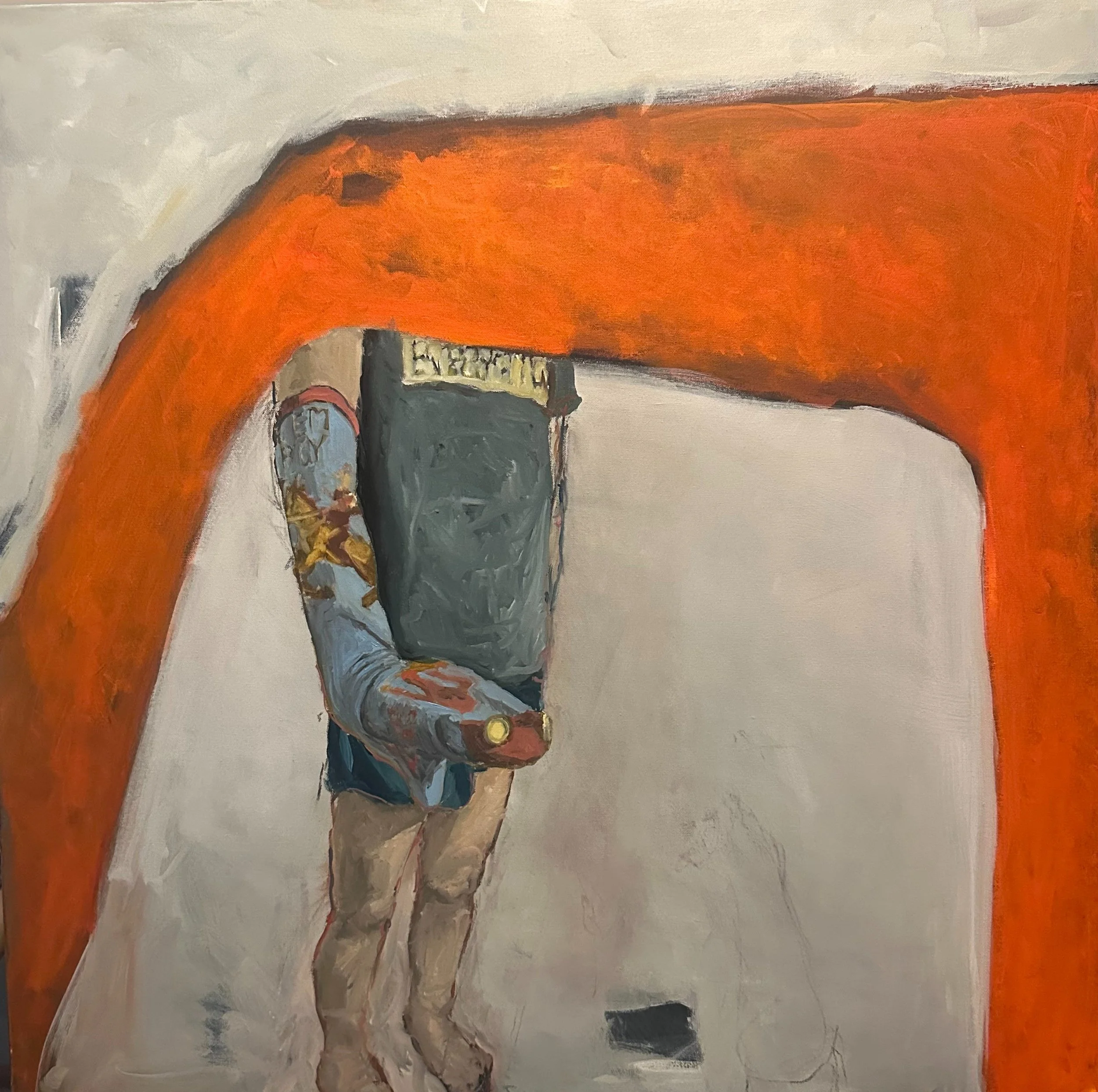
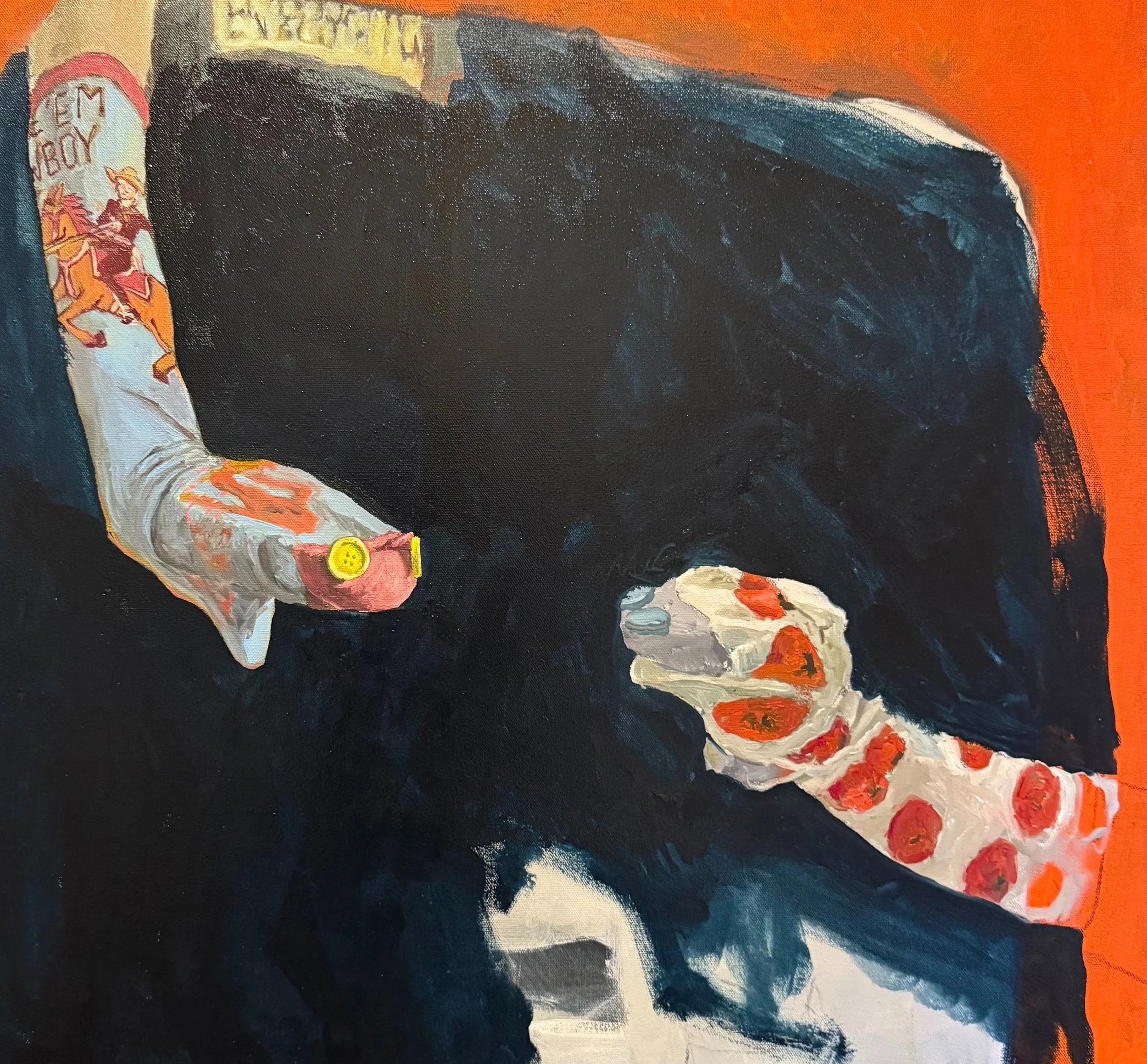
Work in Progress
Different stages of painting The Cowboy of Today
The earliest stage is raw and unresolved. Forms are blocked in loosely, while the sock puppets are only partially established. At this point, the work is less concerned with detailed description than with mood, space, and the relationship between the elements on the canvas. The uncertainty is not a problem to be corrected immediately. It is part of the structure that allows the work to remain alive.
“I rely on instinct to guide decisions in the moment,” McLaren explains, though instinct is not the only force at work. The process also requires control: the gradual development of the composition, the refinement of forms, and an awareness of when the surface needs to be opened back up rather than further resolved.
What stays consistent across these changes is the work’s emotional core. The original sense of vulnerability, tension, or connection remains present even as the visible arrangement shifts. McLaren often removes or reduces elements to prevent the image from becoming too closed or explanatory. This creates space for ambiguity and for the viewer’s own experience to enter the work.
Revision, Change, and Resolution
The paintings move through distinct phases. In the early stages, McLaren focuses on the larger formal decisions: composition, color, shape, and the general energy of the surface. Narrative remains open. The work has not yet settled into a final meaning or stable image.
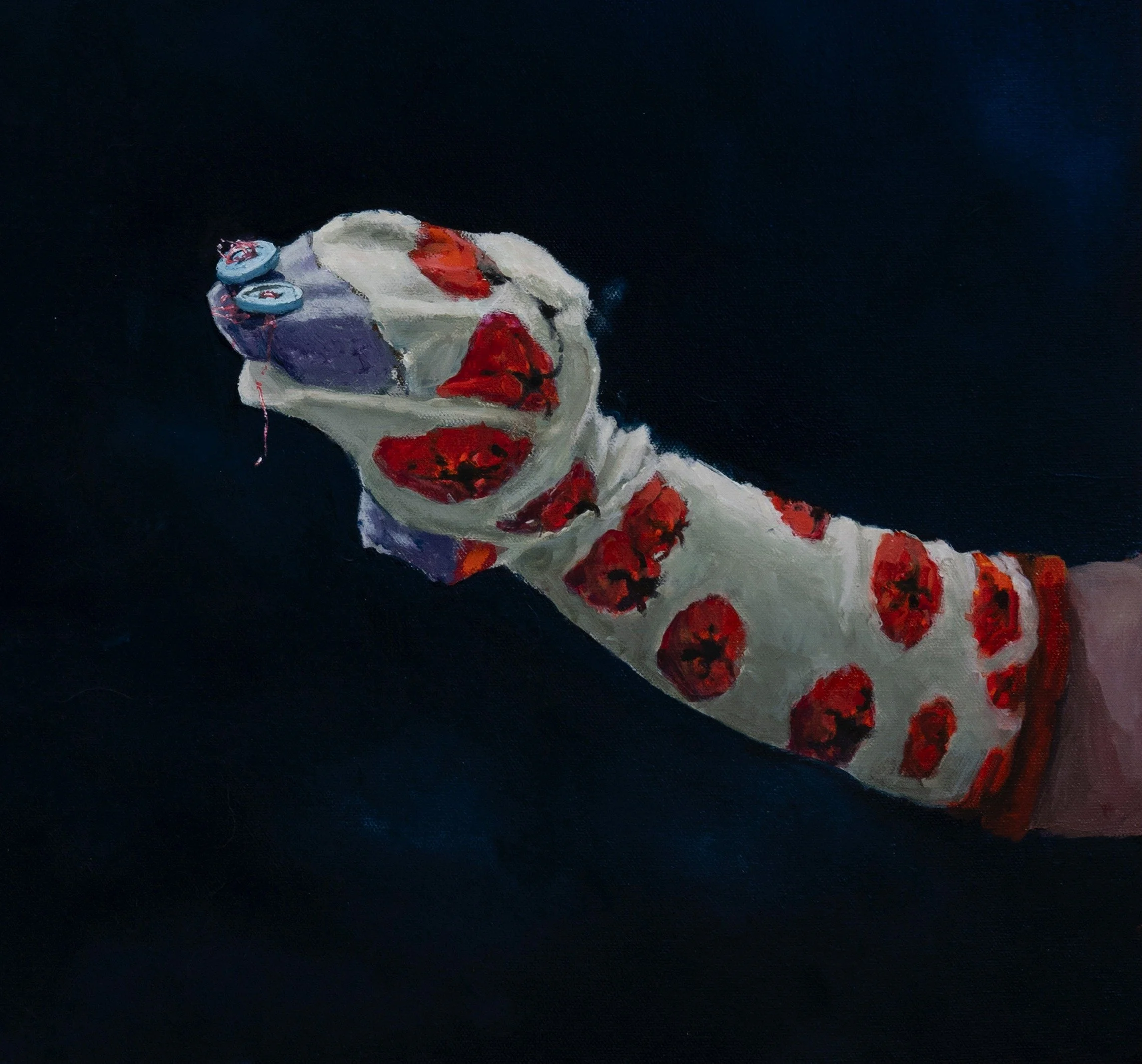
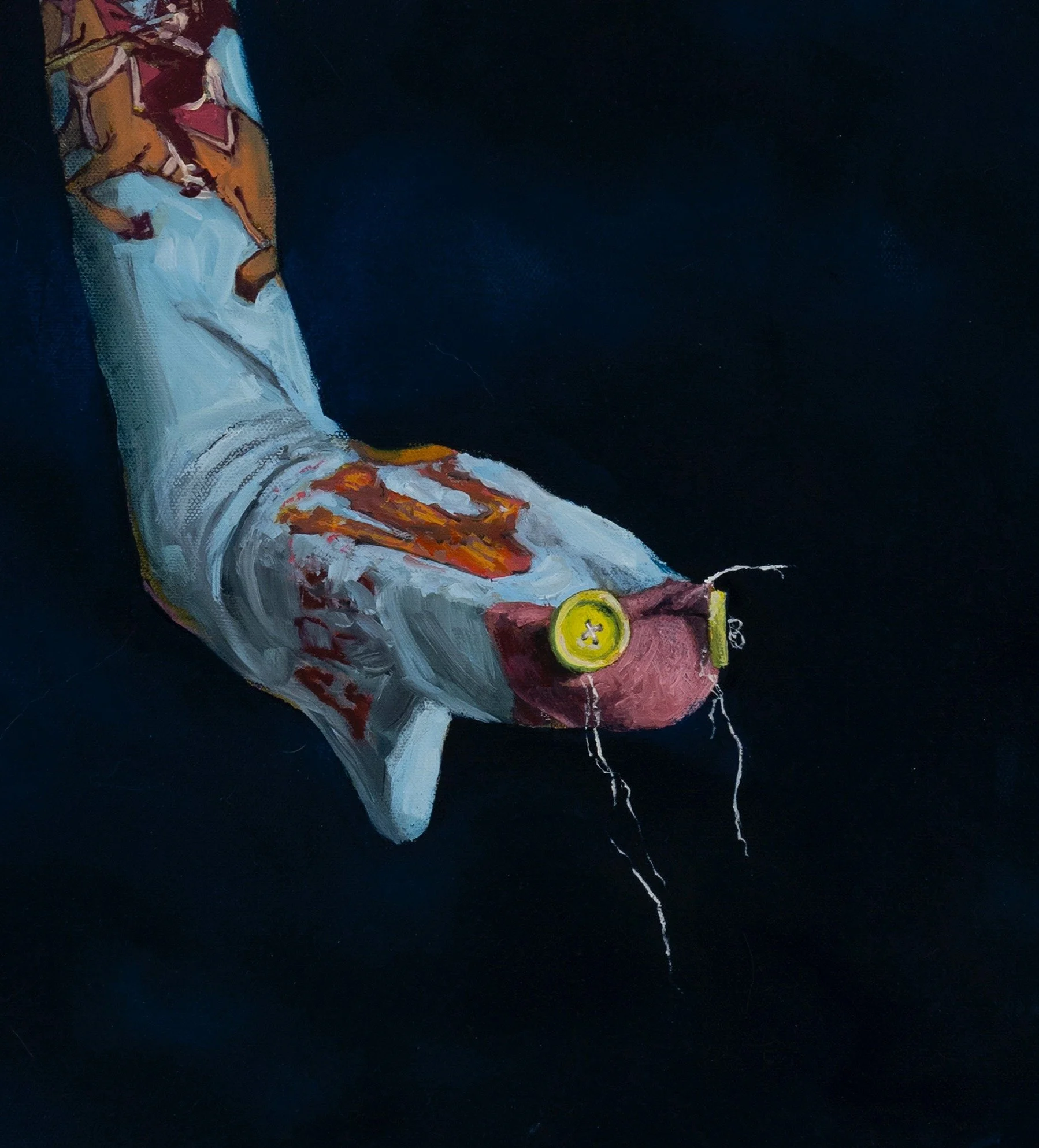
Detail of puppets
As the painting develops, the process becomes more deliberate. Edges are refined, forms clarified, and a stronger sense of presence is built. Still, the painting rarely remains tied to its original conception. Shifts in color and composition can substantially redirect the work, sometimes producing an outcome that feels more direct than the first idea.
McLaren describes the point at which a painting develops “its own logic.” At that stage, the task is not to force the surface back toward a predetermined result, but to recognize the direction the work has taken and respond to it. Revision becomes a way of following what the painting requires rather than imposing what it was expected to become.
This willingness to revise is central to the Sock Puppet series. The layered surfaces preserve the record of decisions made, altered, and reconsidered, while the final paintings retain the openness of their beginnings. Their meaning does not depend on a literal figure or a fixed narrative. Instead, it develops through the shifting relation between form, feeling, and the viewer’s own interpretation.