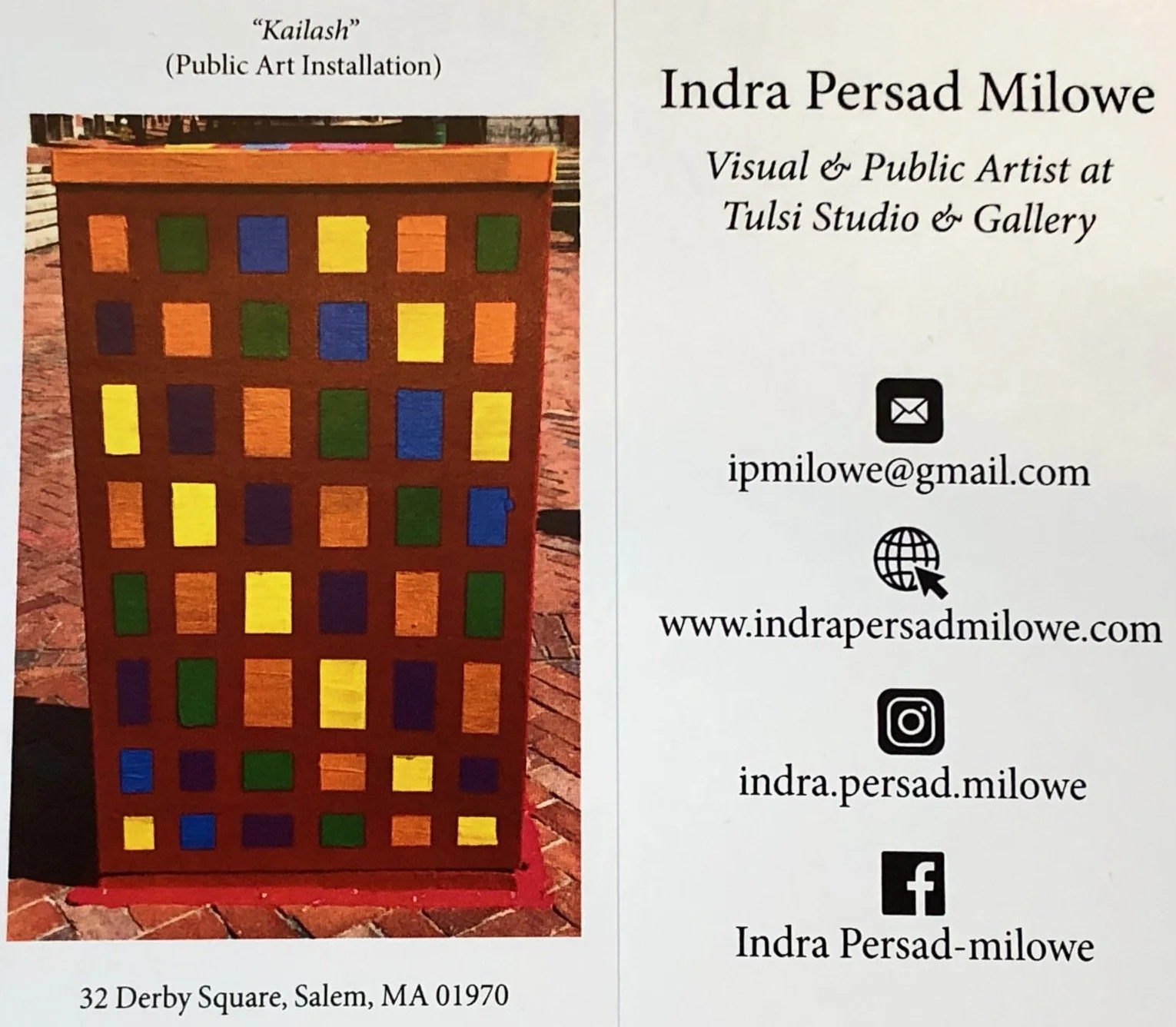
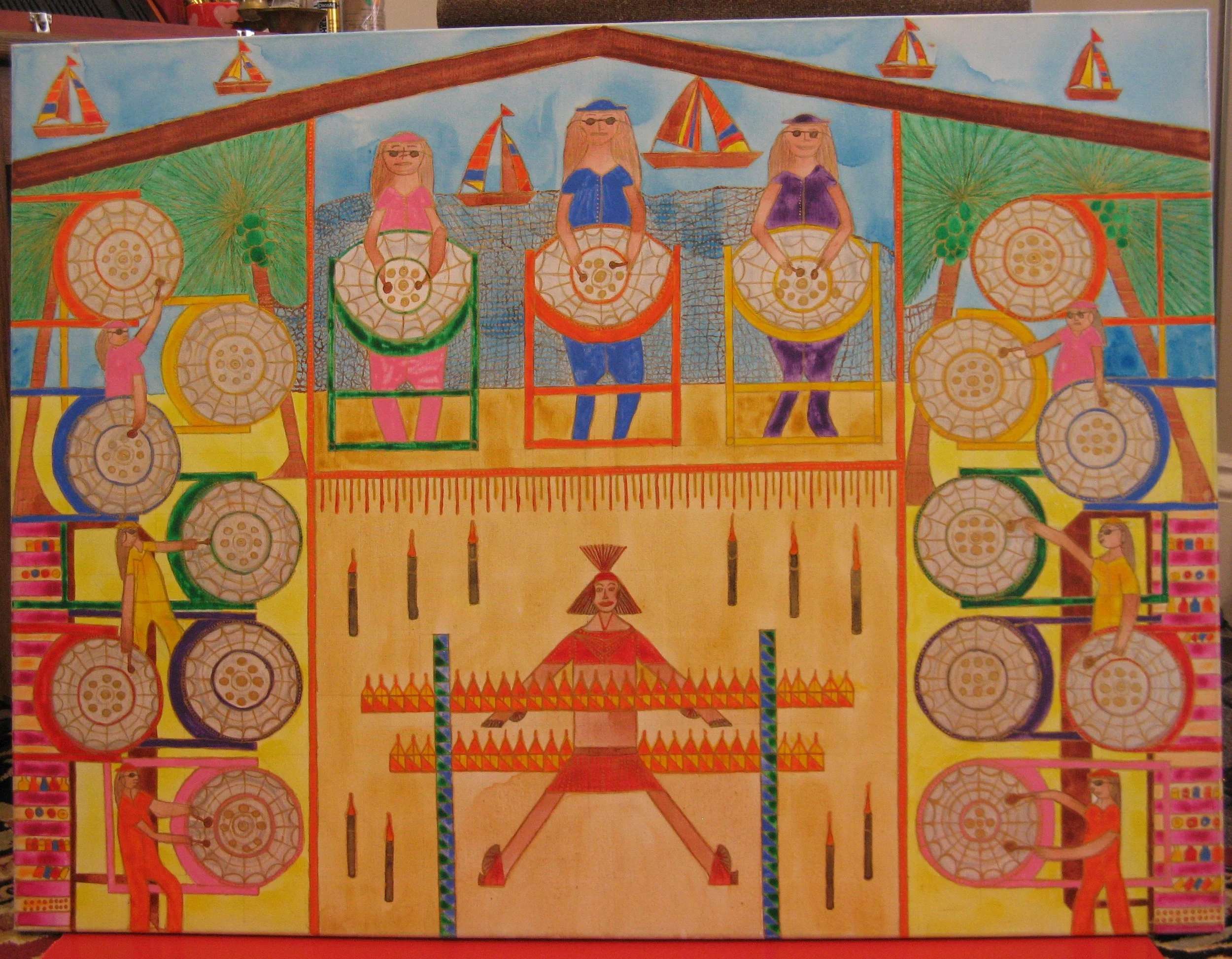
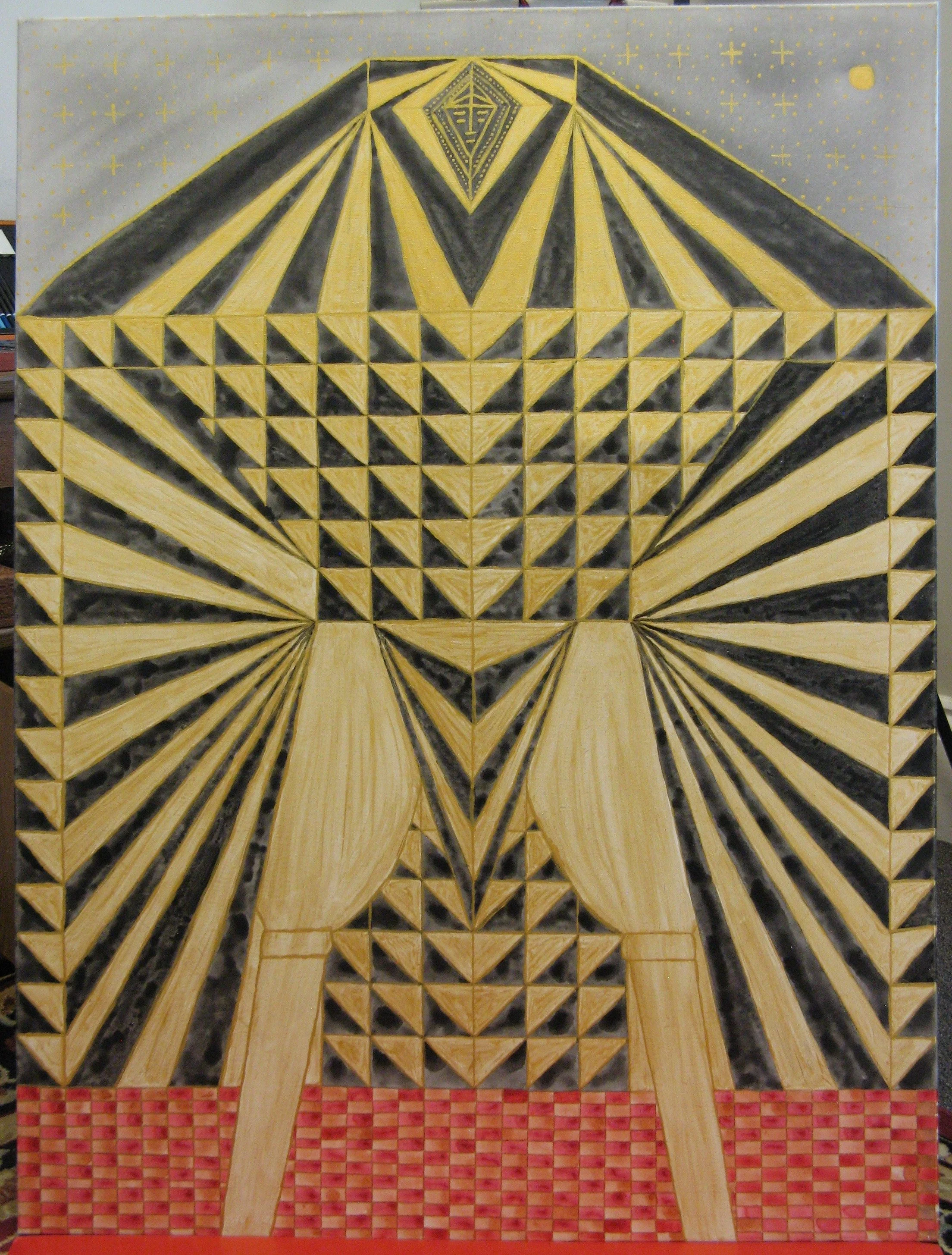
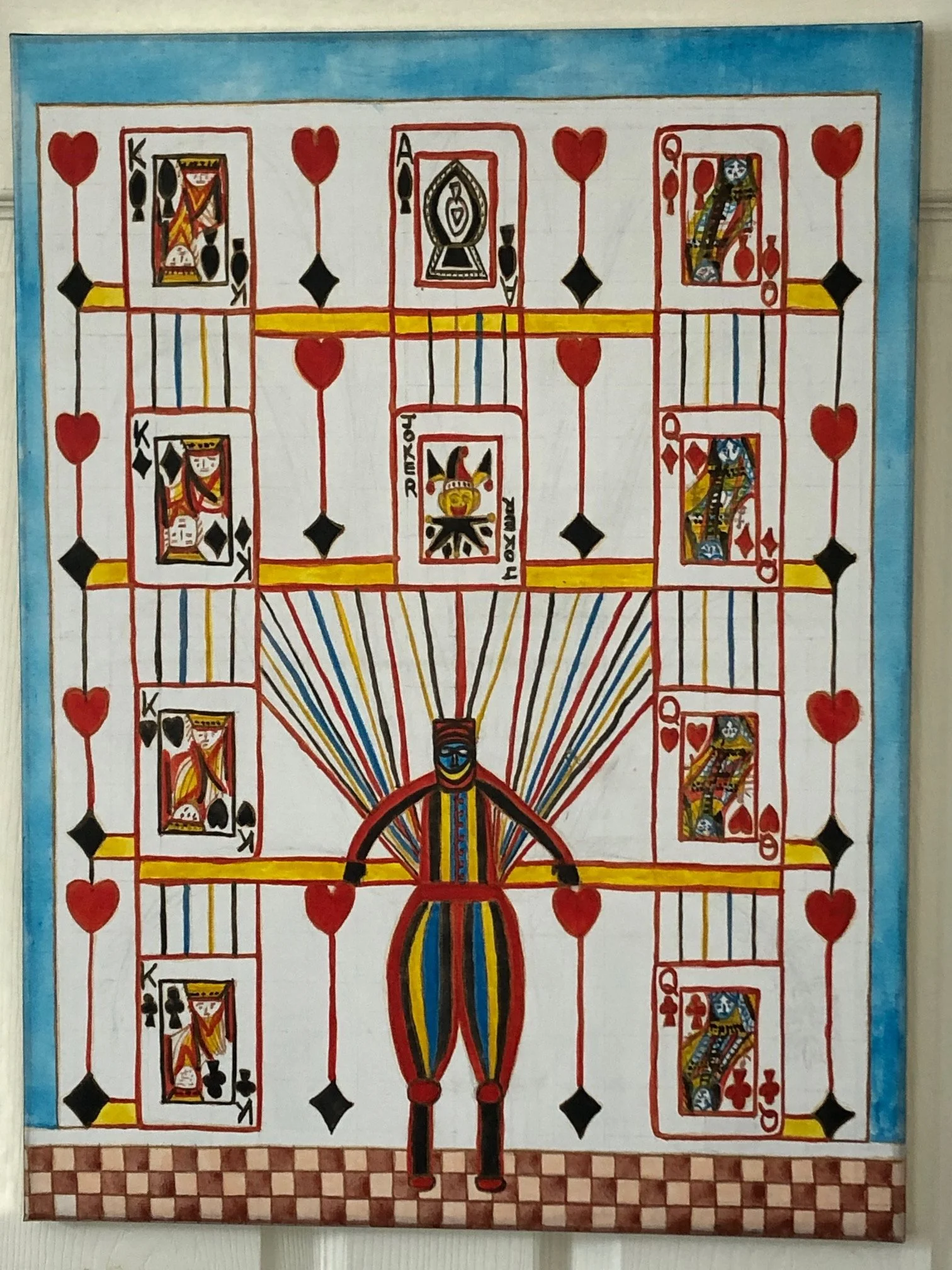
Indra Persad Milowe makes acrylic paintings that draw from travel, food, ritual, celebration, and the cultural traditions of Trinidad and Tobago. Her work is shaped by close observation of place and by an interest in sharing the histories behind the images. Vibrant color, patterned detail, and scenes of communal life recur across her series.
Milowe grew up in Trinidad and Tobago and attended St. Augustine Girls High School, where she studied in an art program led by the Madrid-born artist and teacher Helga Mohammed. On the first day of class, Mohammed wrote on the board, “Art is not just a painting hanging on the wall; art is in every aspect of your daily life.” The statement has remained important to Milowe, informing not only her artistic practice but also the way she thinks about clothing, food, domestic spaces, and daily choices.
Her family history is central to her work. Her paternal grandmother’s kitchen, which she later painted as Agee’s Kitchen, provided the starting point for her collection Festivals & Folklore of Trinidad, West Indies. The kitchen held memories of food prepared for religious celebrations and family gatherings, along with the specific practices that surrounded its making.
Milowe recalls that the home had no electricity or running water. Each morning, her grandmother lit a diya and performed arati before cooking for the family. Four earthen chulhas were used for dhal, rice, vegetables, and roti, with a tawa placed over one stove for flatbread. The kitchen was also a place of instruction and social ritual. To be considered ready for marriage, a young woman was expected to puff a paratha successfully. Only then could she place a handprint on the kitchen wall and be permitted to prepare a meal there under Agee’s supervision.
These details are not incidental in Milowe’s work. They provide a record of practices, customs, and lived traditions that might otherwise remain private or disappear from view. Her paintings are intended both to please the eye and to communicate what she has learned about cultural life.
Art gained further importance in high school when Milowe’s work was published twice in the school magazine. The recognition gave her confidence to pursue an artistic path. She completed five years of high-school art study and later took summer classes at the University of the West Indies.
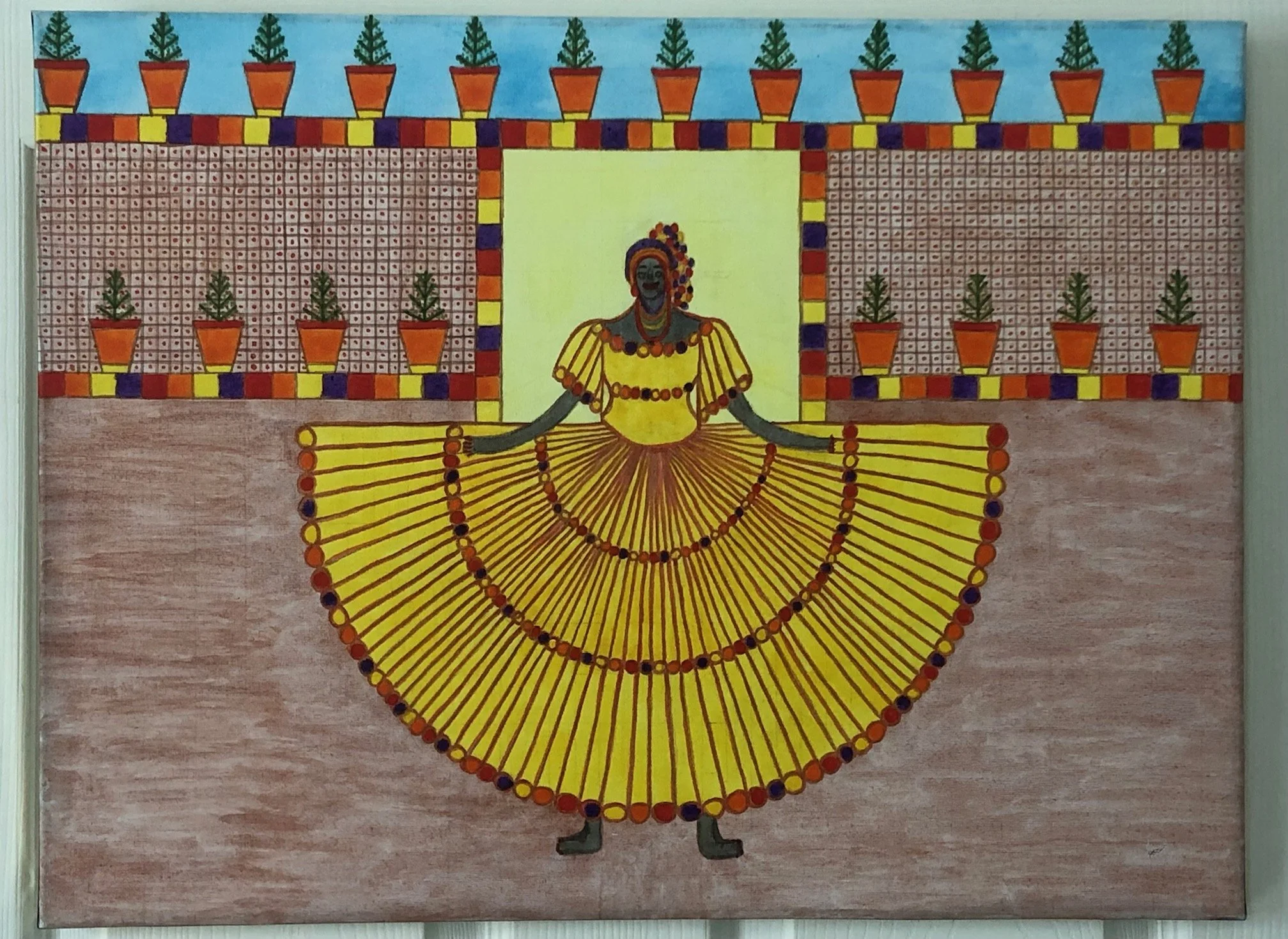
Acrylic paint is her primary medium. She values its durability and straightforward handling, using multicolored and gold acrylic on canvas for studio work. For two public-art projects supported by grants from the City of Salem, Massachusetts, she worked with latex paint, a material suited to outdoor settings.
Milowe cites Georgia O’Keeffe, Yayoi Kusama, and Frida Kahlo as important influences. She responds to their distinct visual languages, use of color, and ability to develop work from nature, identity, cultural reference, and personal experience. Her own practice is similarly committed to a recognizable style, though she encourages emerging artists to learn from others without giving up their individuality.
Travel remains an ongoing source of material. Museums, galleries, natural environments, and the cultural settings of different places all inform her work. She has created collections titled Beautiful Ubud Bali, Festivals and Folklore of Trinidad, West Indies, and My Journey to Morocco, each developed through travel and research.
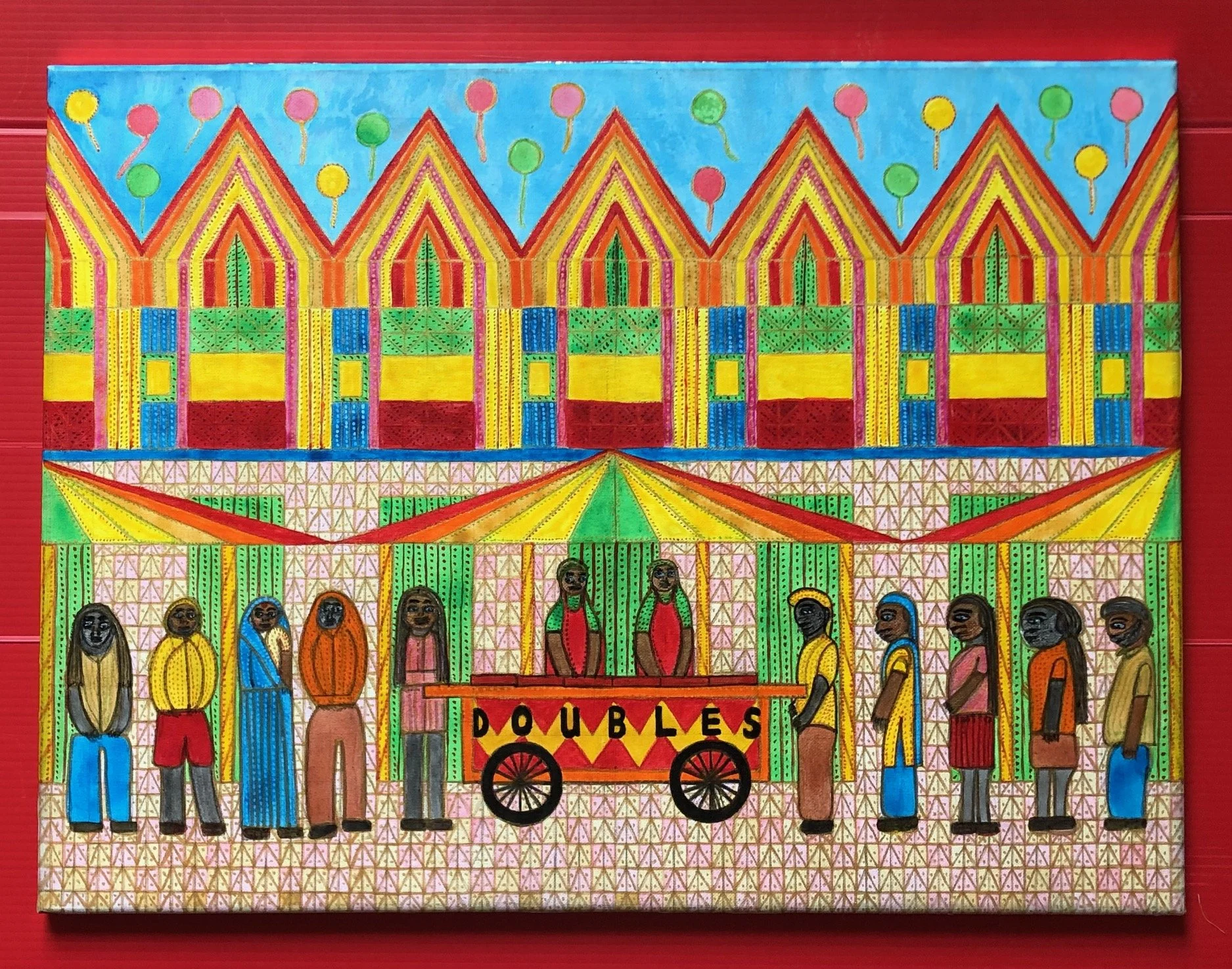
Her routine often begins in stillness. Milowe lies near a large window and watches clouds move across the sky, waiting for an idea or visual prompt. She also keeps a sketchpad near her bed, where flashes of new projects can be recorded. A balanced breakfast precedes the day’s work at the canvas. When inspiration slows, she turns to childhood foods, including doubles, dahlpuri, curried mango, and curried chataigne.
One particularly demanding painting was Moko Jumbie, which took weeks to sketch and paint because of the intricate folds in the character’s costume. Another work, Jab Molassie, came from a vivid childhood memory of Trinidad Carnival. At eight years old, Milowe watched Blue Mas performers outside her family home in Curepe. Their whistles, blue paint and molasses, horns, wings, wire tails, chains, and percussion created an unforgettable scene. Her painting draws from that experience while acknowledging the tradition’s historical associations with slavery and sugar production.
Milowe has shared her work through eighty-five exhibition venues and digital exhibitions, as well as eighty-six interviews in international magazines and newspapers. She is currently researching another trip abroad for a new collection. Her advice to artists remains practical: be yourself, learn continuously, and travel as widely as possible.